The dust-caked messenger stumbled into the Carthaginian camp outside Zama, his horse foaming at the mouth. In his trembling hands, he clutched orders that would seal the fate of an empire. But as the weary soldiers gathered to hear their commander's final instructions before the decisive battle, something impossible happened. The words emerging from the messenger's lips weren't just in their native Punic—they were spoken in the exact cadence, the precise dialect, even the personal speech patterns of Hannibal himself.
What the Carthaginian troops didn't know was that the man before them wasn't their messenger at all. He was a Roman operative, trained by a general who had spent three years mastering not just the art of war, but the very language of his enemies. This was psychological warfare at its most devastating—and it would help decide the fate of the ancient world.
The Unconventional Education of a Future Legend
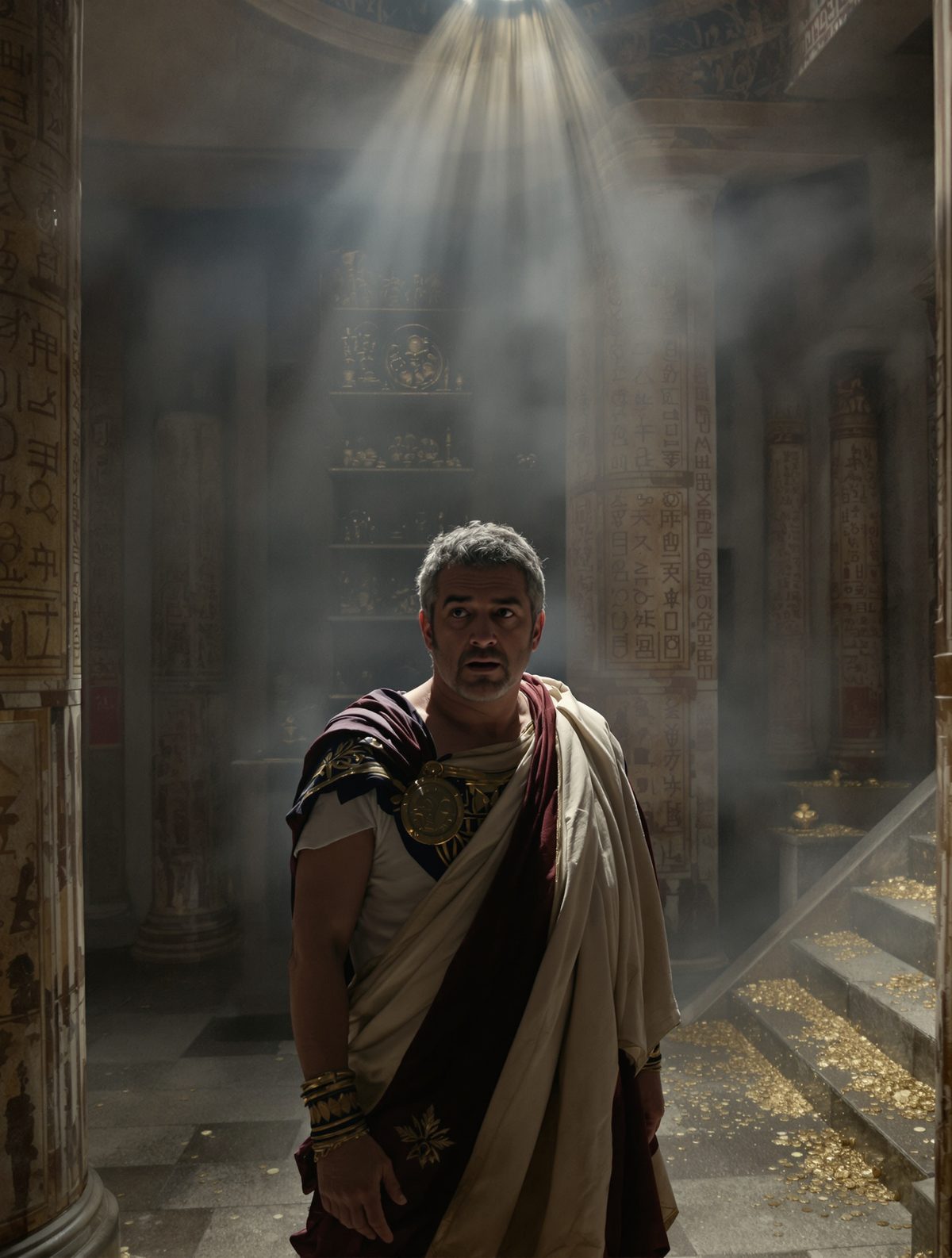
While most Roman generals studied tactics and logistics, Publius Cornelius Scipio—later known as Africanus—embarked on an educational journey that his peers considered borderline treasonous. In 205 BC, as Hannibal's elephants still cast long shadows over Italian soil, the 29-year-old Scipio made a decision that would revolutionize ancient warfare: he would learn to think, speak, and fight like a Carthaginian.
Scipio's unconventional approach began with Carthaginian prisoners of war. Rather than executing or enslaving them, he established what historians would later call the first known military intelligence academy. In a heavily guarded compound outside Rome, captured Carthaginian officers found themselves in an extraordinary position—teaching their captor the intimate details of their own military culture.
The curriculum was exhaustive. Scipio didn't just learn Punic vocabulary; he studied regional dialects, military terminology, and even the subtle differences in pronunciation between Carthaginian social classes. His prisoners taught him the traditional Carthaginian battle cries, the formal language used in military dispatches, and most crucially, the personal speech patterns and favorite expressions of Carthaginian commanders—including Hannibal himself.
But Scipio's linguistic espionage went deeper than mere language acquisition. He studied Carthaginian psychology, learning how their commanders motivated troops, how they structured their chain of command, and what cultural symbols held the deepest meaning for soldiers far from home. By 203 BC, Roman scouts reported something unprecedented: Scipio could deliver a rousing speech in Punic that was indistinguishable from that of a native Carthaginian general.
The Network of Voices
Scipio's masterstroke wasn't working alone—he created an entire network of Romans fluent in Punic. His most trusted centurions underwent the same intensive linguistic training, creating what military historians now recognize as the first specialized psychological warfare unit in recorded history. These men, dubbed linguarii by their contemporaries, became Scipio's secret weapons.
The linguarii weren't just translators; they were actors, spies, and propagandists rolled into one. They could infiltrate Carthaginian camps, intercept communications, and most devastatingly, impersonate enemy commanders with chilling accuracy. Ancient sources describe Romans who could mimic not just Hannibal's voice, but his legendary brother Hasdrubal's distinctive stutter and his lieutenant Maharbal's habit of ending commands with a particular Punic oath.
This network proved its worth long before Zama. During the siege of Utica in 203 BC, Scipio's men intercepted Carthaginian supply orders and, reading them aloud in perfect Punic, redirected three entire supply convoys to Roman camps. The hungry Carthaginian defenders never realized their own supply lines had been turned against them until it was too late.
The Psychological Battlefield
As Hannibal finally returned to Africa to defend Carthage itself, Scipio's linguistic weapons reached their full potential. The Roman general understood something that had eluded his predecessors: in an age before reliable long-distance communication, a commander's voice was his most powerful tool. Control that voice, and you could control his army.
In the weeks leading up to Zama, Scipio's linguarii launched what can only be described as an ancient misinformation campaign. Disguised as Carthaginian messengers, they delivered conflicting orders to different units of Hannibal's army. Some troops were told to advance; others to retreat. Supply units received orders to redistribute rations in ways that favored some divisions over others, creating resentment and suspicion within the Carthaginian ranks.
The psychological impact was devastating. Carthaginian soldiers, already demoralized by years of fighting, began to question whether their own commanders were competent—or even loyal. Some units reported receiving orders that contradicted messages they'd received just hours earlier. The confusion was compounded by the fact that all orders came in flawless Punic, spoken with the authority and mannerisms they'd grown accustomed to following.
Perhaps most brilliantly, Scipio used his linguistic skills to exploit the multi-ethnic nature of Hannibal's army. Carthaginian forces included not just Punic speakers, but Numidians, Iberians, and Gauls. Scipio's men, now fluent in multiple languages, began spreading rumors in each group's native tongue—rumors that suggested other ethnic groups within the army were receiving better treatment, better equipment, or larger shares of plunder.
The Deception at Zama
October 19, 202 BC dawned clear and windless—perfect conditions for the battle that would determine whether Rome or Carthage ruled the Mediterranean. But as the two armies faced each other across the plains of Zama, Scipio had one final linguistic trap to spring.
As Hannibal's forces prepared for battle, a group of messengers arrived with what appeared to be last-minute tactical adjustments. The orders, delivered in Hannibal's own distinctive speaking style, seemed routine: repositioning of the war elephants, adjustments to cavalry formations, minor changes to the infantry arrangement. But these weren't Hannibal's orders—they were Scipio's.
The Roman general had spent months studying captured Carthaginian tactical manuals, learning not just how Hannibal communicated with his troops, but how he thought about battlefield strategy. The fake orders weren't randomly destructive; they were carefully crafted to disrupt Carthaginian coordination while appearing tactically sound to individual unit commanders.
When the battle began, the results were catastrophic for Carthage. Elephant charges that should have devastated Roman lines instead foundered in confusion as their handlers received conflicting signals. Cavalry units found themselves out of position, unable to support infantry advances. Most devastatingly, when Hannibal attempted to rally his troops with battlefield commands, some of his soldiers hesitated—they had been conditioned by weeks of contradictory orders to question even direct commands from their legendary general.
The final blow came when Scipio himself, mounted on a captured Carthaginian horse and wearing authentic Punic commander's insignia, rode close enough to confused Carthaginian units to shout orders in flawless Punic. Ancient sources describe the surreal scene of Roman and Carthaginian soldiers momentarily fighting side by side, as Scipio's perfect mimicry convinced some enemy troops that their own lines had shifted.
The Surrender That Wasn't
The most dramatic moment came as Hannibal's army began to collapse. A group of Carthaginian veterans, surrounded and cut off from their main force, suddenly heard their general's voice cutting through the din of battle. The voice—which was actually that of Scipio's most skilled linguarius—delivered a formal surrender in the ancient Carthaginian military tradition.
These hardened soldiers, who had followed Hannibal across the Alps and through years of Italian campaigns, laid down their weapons not because they were defeated, but because they believed their own commander had ordered them to surrender. The psychological impact rippled through the remaining Carthaginian forces. If Hannibal himself was surrendering, what hope did they have?
The actual Hannibal, fighting desperately to maintain order among his remaining troops, found himself in the impossible position of trying to convince his own soldiers that he hadn't given orders he never gave, in a voice they swore they recognized. By the time the confusion was sorted out, the battle was lost and the Carthaginian Empire was finished.
The Echoes of Ancient Espionage
Scipio's victory at Zama didn't just end the Second Punic War—it introduced a new dimension to human conflict that reverberates to this day. In an age of deepfakes, sophisticated propaganda, and information warfare, the Roman general's insight seems remarkably modern: the enemy's own voice, turned against them, can be more powerful than any weapon.
Modern military historians studying Scipio's techniques have identified tactics that wouldn't seem out of place in contemporary psychological operations. His systematic study of enemy communications, his creation of specialized linguistic units, and his understanding that battlefield confusion could be as devastating as direct attack all prefigure modern approaches to information warfare.
But perhaps Scipio's most enduring lesson is simpler: in any conflict, the side that best understands its enemy—not just their tactics or their weapons, but their language, their culture, and their psychology—holds an almost insurmountable advantage. At Zama, Rome didn't just defeat Carthage's armies; it defeated the very idea that military might alone determines victory.
The next time you hear politicians debating foreign language education or military leaders discussing cultural intelligence, remember the Roman general who learned Punic. In the end, Scipio Africanus didn't just conquer an empire—he proved that sometimes the most devastating weapon in warfare isn't a sword or a siege engine, but the simple power to make your enemy doubt their own voice.