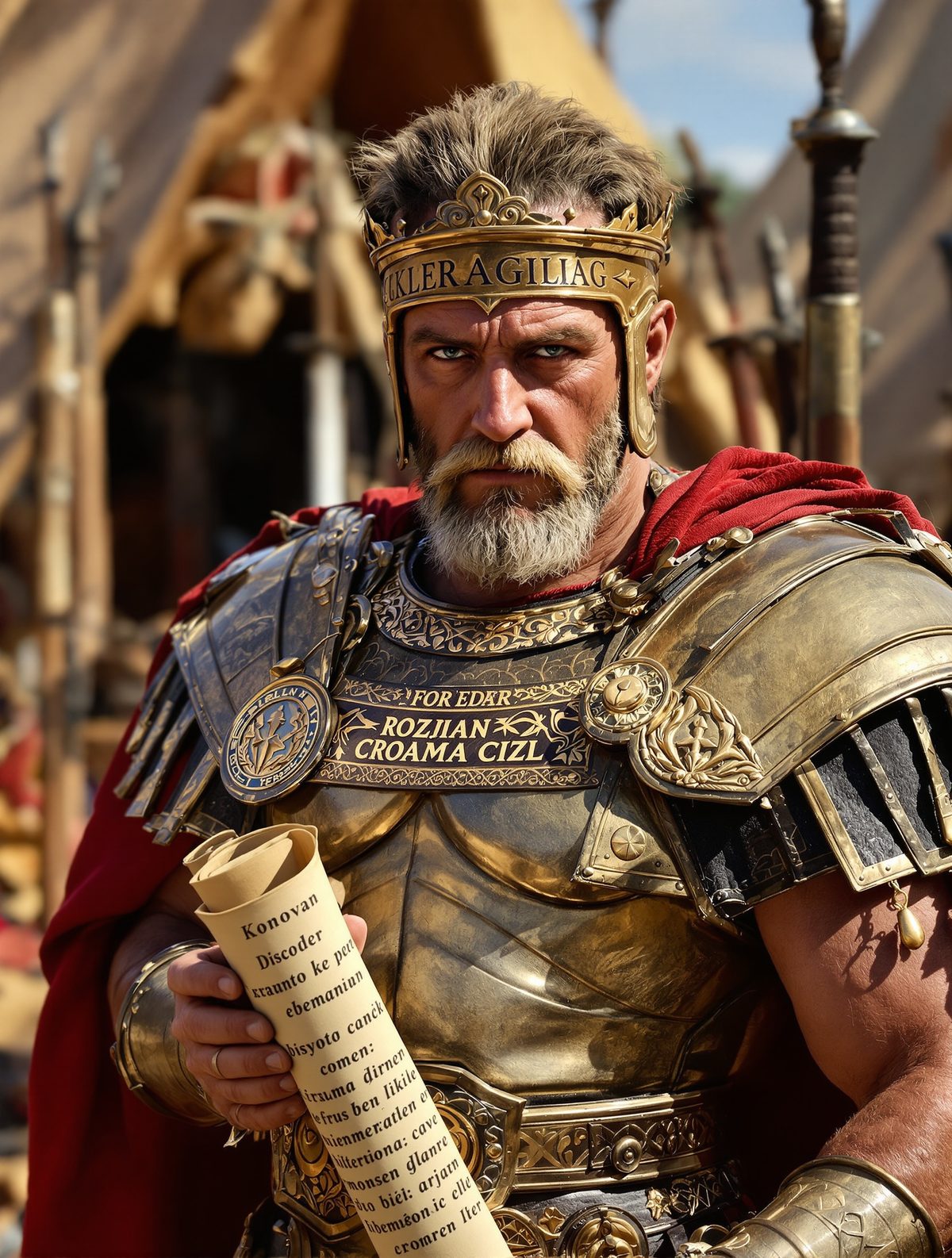
The morning sun cast long shadows across the blood-soaked plains of Cunaxa as Prince Cyrus the Younger knelt beside his brother's lifeless body. The Persian king Artaxerxes II lay sprawled in the dirt, his golden armor glinting in the October light of 401 BC. Around them, the sounds of a dying battle echoed—the groans of wounded men, the clatter of abandoned weapons, the distant shouts of soldiers demanding their pay.
What happened next would shock even the battle-hardened Greek mercenaries who witnessed it. Faced with 10,000 unpaid warriors threatening mutiny and his claim to the Persian throne hanging by a thread, Cyrus made a decision that would define him as either the most pragmatic or most ruthless prince in Persian history. He began stripping the golden armor from his brother's corpse.
The Brother War That Split an Empire
The road to this gruesome moment began years earlier in the labyrinthine politics of the Achaemenid court. When Darius II died in 405 BC, the succession should have been straightforward—Artaxerxes II, the eldest son, would inherit the throne. But Cyrus the Younger, named after the empire's legendary founder, had other plans.
Unlike his bookish older brother, Cyrus was a warrior prince who'd earned his spurs governing the fractious satrapies of Asia Minor. He'd forged alliances with Spartan generals, commanded respect from hardened soldiers, and most crucially, he'd learned the power of Greek gold. The problem was simple: he didn't have enough of it.
Cyrus's rebellion required an army, and the best soldiers money could buy were Greek hoplites—professional warriors who fought for whoever paid them. These weren't patriots fighting for homeland and hearth; they were businessmen of battle who expected their wages in gleaming coin, not royal promises. By 401 BC, Cyrus had assembled nearly 13,000 Greek mercenaries under the leadership of the Spartan general Clearchus, but keeping them loyal meant keeping them paid.
The Battle That Decided Everything
The two brothers met at Cunaxa, about 70 kilometers north of Babylon, in October 401 BC. Artaxerxes commanded the might of the Persian Empire—perhaps 40,000 troops arrayed in the traditional formation that had conquered half the known world. Cyrus countered with tactical innovation, placing his feared Greek phalanx on the right wing while he led a cavalry charge at the center, aiming directly for his brother.
What followed was both a tactical masterpiece and a strategic disaster. The Greek mercenaries smashed through the Persian left wing like a bronze-tipped spear through silk. Their disciplined phalanx formation, shields locked and spears bristling, proved unstoppable against the Persian infantry. But while the Greeks were winning their part of the battle, Cyrus was losing his.
In a moment of either supreme courage or fatal recklessness, the young prince spotted his brother's position and charged directly toward the royal standard. Ancient sources describe a furious melee around the king's person, with Cyrus fighting like a man possessed. He came tantalizingly close to his goal—close enough to wound Artaxerxes with his own hand—before a javelin found its mark. The pretender prince fell dead within sight of ultimate victory.
When Victory Becomes Catastrophe
Here's where the story takes its bizarre turn. The Greek mercenaries, having demolished their opponents, returned to camp expecting celebration and bonus pay. Instead, they found their employer dead and their cause lost. Without Cyrus, the rebellion was finished—but their contracts certainly weren't.
Professional soldiers have professional attitudes about payment, and the Greeks made their position crystal clear: they'd fought, they'd won their part of the battle, and they expected their wages. The fact that their paymaster was currently bleeding out on a Persian battlefield was not their problem. They had families to feed, debts to pay, and no intention of marching home empty-handed.
The surviving Persian nobles found themselves in an impossible position. They controlled a dead prince's cause but faced very much alive and very well-armed mercenaries who showed no interest in the finer points of succession politics. These weren't the type of men you could fob off with promissory notes or appeals to honor.
The Unthinkable Transaction
What happened next reveals both the desperation of Cyrus's supporters and the strange pragmatism that could flourish in the ancient world. Someone—sources disagree on whether it was Cyrus himself in his final moments or his panicked lieutenants—made a decision that would have scandalized Persian nobles but struck the Greeks as perfectly reasonable business practice.
They stripped Artaxerxes II's body of its magnificent royal armor.
This wasn't grave robbing in the modern sense—this was liquidating assets. The Persian king's panoply wasn't just ceremonial decoration; it represented a fortune in worked gold, precious gems, and masterful craftsmanship. The breastplate alone was worth more than most soldiers would see in a lifetime, while the helmet, greaves, and ceremonial weapons represented the accumulated wealth of the world's richest empire.
The Greeks, with their practical view of warfare as business, saw nothing inherently wrong with the transaction. Dead kings, like living ones, were subject to the basic economic principle that armies required payment. If Cyrus's estate couldn't cover the debt in conventional currency, then unconventional assets would have to suffice.
The Price of Ambition in Persian Gold
The exact details of the sale remain murky—ancient historians were more interested in the moral implications than the market mechanics. But we know the transaction satisfied the immediate crisis. The Greeks received enough payment to prevent outright mutiny, though not enough to inspire continued loyalty to a dead cause.
What makes this episode even more remarkable is how it was recorded by Xenophon, one of the Greek officers who participated in the expedition. His Anabasis, the famous account of the Greeks' fighting retreat from Persia, treats the armor sale as a necessary if distasteful expedient. There's no moral hand-wringing, no claims of dishonor—just the practical recognition that even failed rebellions have financial obligations.
The irony wasn't lost on contemporary observers: Cyrus had sold his brother's corpse not for personal enrichment, but to pay the very soldiers who might have made him king. It was ambition financing its own funeral, quite literally.
Legacy of a Desperate Gamble
The story of Cyrus the Younger didn't end with his death at Cunaxa—in many ways, it was just beginning. The Greek mercenaries, partially paid but stranded deep in hostile territory, began one of history's most famous fighting retreats. Their march to the sea became the stuff of legend, inspiring everyone from Alexander the Great to modern military strategists.
But perhaps the real lesson lies in that moment when pragmatism trumped propriety on a Persian battlefield. In our era of corporate raiders and asset strippers, there's something almost modern about liquidating a royal corpse to meet payroll. Cyrus the Younger understood what many leaders before and since have learned: loyalty has a price, and someone always has to pay it.
The prince who sold his brother's golden armor for throne money reminds us that even 2,400 years ago, the gap between noble ambitions and harsh realities could only be bridged with cold, hard cash. Sometimes the most shocking thing about history isn't how different the past was from our present—but how remarkably familiar it sounds.