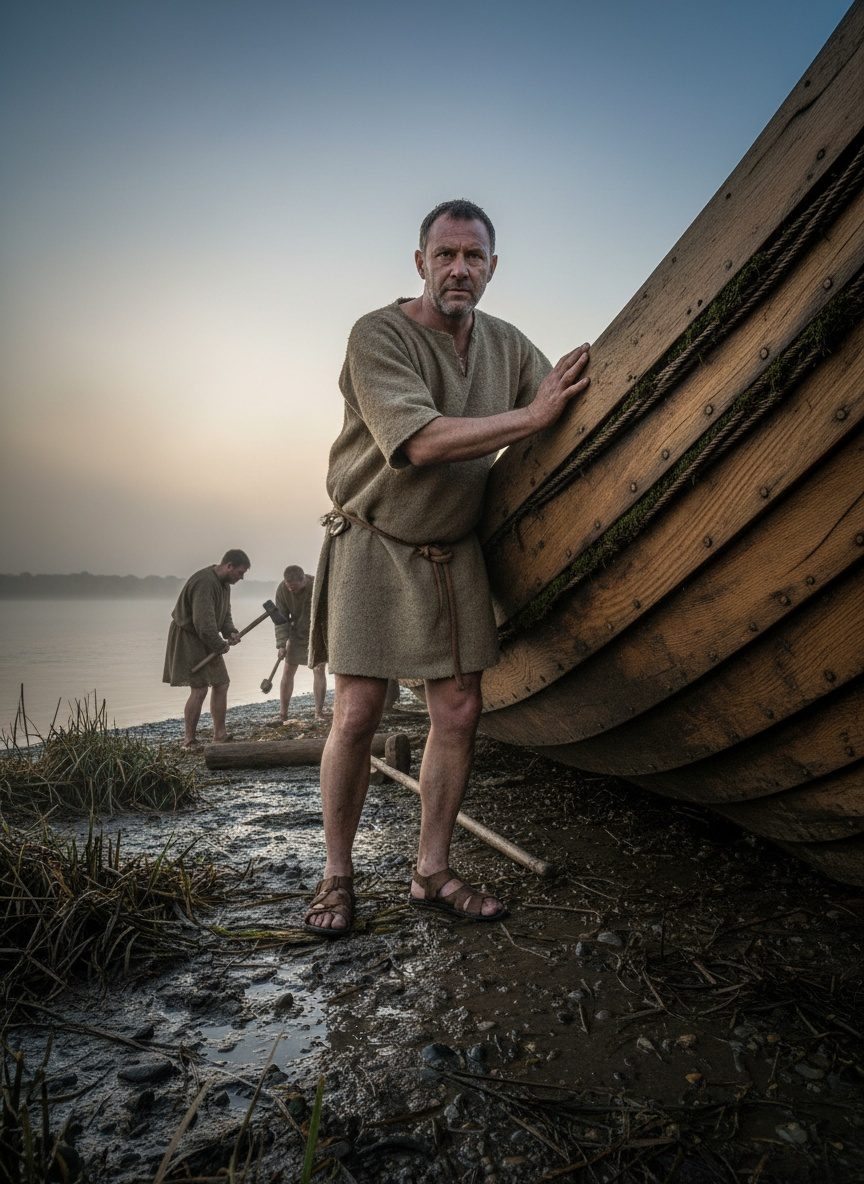
878 AD. The air was thick with the smell of wet earth and smoke.
The marshes of Somerset, a wilderness of treacherous water and sedge, had swallowed up Alfred the Great and his remaining forces — the last flicker of resistance against the Viking onslaught. Guthrum, the formidable Danish king, had driven the Saxons to this desperate refuge. In that fateful year, Guthrum stood on the brink of accomplishing what no other had: the complete subjugation of the English kingdoms. Yet, the story took an unexpected turn, transforming the dark canvas of war into a narrative of reconciliation and coexistence.
The Battle That Was Never Fought
As the year 878 stretched its icy fingers across the lands, Guthrum's army held the upper hand. He had conquered and devastated with a relentless ferocity that left much of Anglo-Saxon Britain reeling. Alfred’s retreat into the Somerset Levels seemed the inevitable end of Wessex. The Viking tide had swept across Northumbria, East Anglia, and Mercia — and now sought to wash away the last bastion of resistance.
But instead of finishing the conquest with brutality and bloodshed, a remarkable event unfolded at a small settlement known as Aller. It was here, amidst the wind-swept plains and muddy banks, that the Viking leader encountered not just a formidable enemy, but a visionary diplomat in Alfred. The beleaguered king, known for his scholarly disposition and devout faith, proposed an astonishing offer of peace — a pact sealed not in blood, but in faith and loyalty.
Guthrum, known for his ruthless campaigns, had long held a fractured English alliance under his siege. Yet, the Pagan warlord did the unthinkable. He agreed to Alfred’s terms, perhaps recognizing the futility of further ethnic cleansing and the benefits of a more stable rule in territories where he could never fully dissolve Saxon identity. The decision marked a profound transformation for both leaders, characterizing the meeting not as a surrender, but as a mutual recognition of shared governance and responsibility.
Baptism and Brotherhood
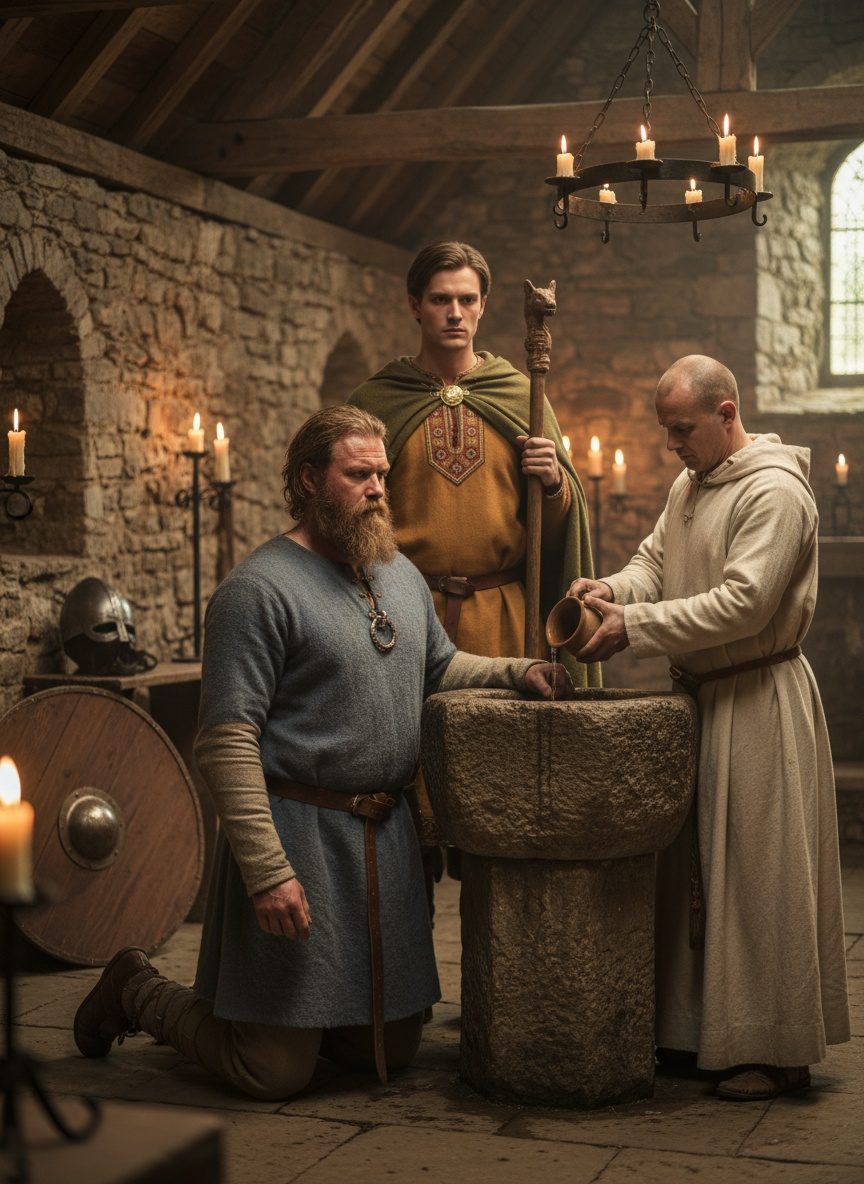
Alfred’s vision of coexistence hinged on more than diplomatic accords. At the heart of this extraordinary pact was a rite of profound significance: Guthrum’s baptism. The ceremony, conducted with solemn grace, transcended mere ritual. Underneath a deep Saxon sky, Guthrum laid down his warrior's mantle to embrace a new identity, not just as a Christian convert but as Alfred's godson.
The transformative nature of this gesture cannot be overstated. In the brutal realpolitik of the age, shifting allegiances through religious conversion was not altogether uncommon, but Guthrum’s choice bore fruits of a lasting peace, unprecedented at the time. This decision carried weight beyond the personal; it reshaped his legacy and realigned the course of Viking influence in Britain. His sincere adoption of the Christian faith, rare for an invader-turned-sympathizer, anchored a peace that achieved what countless treaties could not — tangible coexistence between the Saxons and the Danes, lasting for sixteen vital years.
The baptism also set the stage for life after the conflict. Guthrum, now by the Christian name Athelstan, ruled over the Danelaw with a new perspective. His reign under this newly adopted faith proved his intentions; Guthrum embraced his role not merely as a sovereign but as a custodian of harmony between diverse peoples. His settlement in the eastern reaches of the country brought a degree of administration and governance previously unseen, introducing systems and laws that resonated with spiritual as well as political commitments.
The Legacy of a Promise Kept
What emerged from the Somerset marshes lingered not just in the annals of history, but in the very soul of a nation poised on the brink of transformation. Guthrum’s decision and the peace that followed reshaped the boundaries and hearts of medieval Britain. For Alfred, Guthrum's decision was more than a strategic success; it was a testament to an ideology built on savviness and foresight rather than sheer force.
This unprecedented alliance, bolstered by vows of faith and kinship, offered a blueprint for future interactions between Viking settlers and the Anglo-Saxons, laying early foundations for a more unified England. It underscored the potential power of shared belief and mutual respect over that of continuous conflict. Guthrum’s reign under his baptismal name, Athelstan, displayed a pragmatic yet profound leadership approach, one that sought to integrate cultures instead of eradicating them.
As we reflect on this chapter of 878 AD, we glimpse a world unyieldingly divided yet daringly brought together behind a newly baptized leader under the crucible of war. It reminds us that the most formidable battles waged may not be on fields of combat, but within the hearts of those who dare to envision peace. In this ancient accord between adversaries, we find an echo of a universal truth: the strongest alliances are often forged through transformative trust and embracing change. Guthrum's story, though rarely highlighted, is one such tale of redemption and a majestic gamble on humanity's better heart.