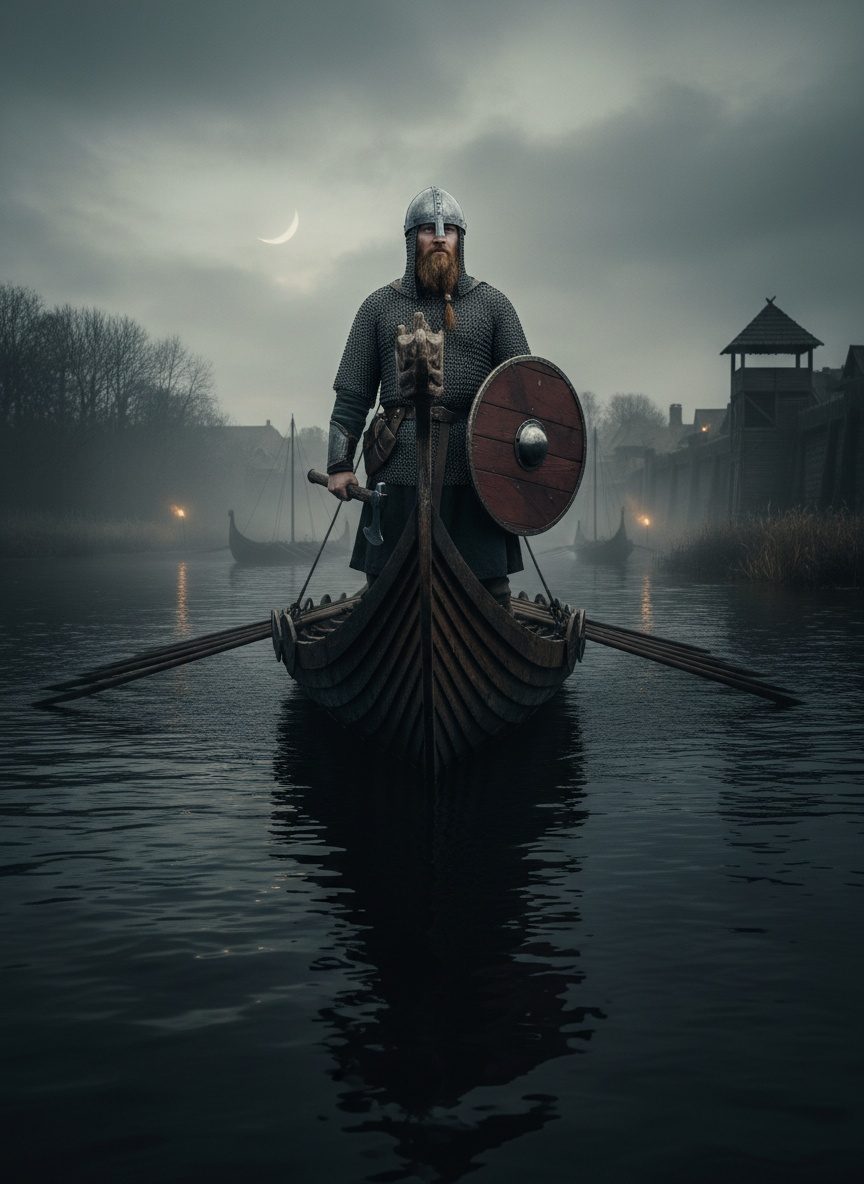
The river fog parted like curtains, revealing a narrow silhouette slicing through the calm waters of the Humber Estuary. The boat glided silently, its oaken planks creaking softly, an ancient vessel whispering secrets of a time when the world was vast, untamed, and new. Built in an age long before Caesar's legions carved out their empire, the Dover Bronze Age Boat was a marvel of craftsmanship, embodying the ingenuity of ancient Britons who conquered the waterways with genius and determination that bordered on the divine.
The Genius of Ancient Craftsmanship
When one stands before the remnants of the Dover Bronze Age Boat, the first impression is of pure astonishment. Forty feet of meticulously hand-split oak planks lay before you, painstakingly stitched together with yew withies. The craftsmanship is breathtaking, a testament to a world where knowledge was passed down through generations, not written in books but carved into memory with the care of a master woodworker shaping his finest piece.
Bronze Age Britons, despite their temporal distance from modern technology, created a vessel that was nothing short of engineering brilliance. Its secret lay in the use of native materials—oak for strength and resilience, yew withies for flexibility and binding, and a sealant of moss coupled with beeswax that ensured it was watertight. This combination of resources, each chosen for its unique properties, created a symphony of elements working in harmony, allowing the boat to navigate the challenging waters of Britain's estuaries and beyond.
An Age Defined by Waterways
Transportation in prehistoric Britain relied heavily on its dense networks of rivers and coastlines. The Dover Bronze Age Boat was not just a vessel; it was a gateway to the world. As the boat sliced through the waters of the Humber Estuary, it carried traders, tools, and treasures, linking distant communities that dotted the ancient landscapes of Britain.
Trade routes extended far, connecting with continental Europe, bringing with them influences and goods that would enrich Bronze Age Britain. Metallurgy, agriculture, and art all evolved, stirred by the currents of the rivers, echoing the routes charted by these ancient seafarers. These waterways created ties stronger than any currency, fostering cultural exchanges that transformed societies not only on these islands but on distant shores.
The Archaeological Discovery of a Lifetime
Fast forward to 1992, a discovery that would capture imaginations and open windows into a prehistoric past. Construction workers unearthed the vessel in Dover, and what they found was nothing short of a time capsule, untouched by millennia. Archaeologists, with hearts pounding from the sheer magnitude of this discovery, meticulously excavated the site, revealing a boat that spoke directly to the expert minds seeking to decode its secrets.
The Dover Bronze Age Boat was emblematic of a world that thrived four thousand years before the birth of Rome. The excitement around its discovery was not merely due to its age or preservation but because it offered evidence of sophisticated technological understanding previously only speculated about in the ancient British world. Like a message in a bottle, it broadcasted the skills and knowledge of a civilization unparalleled in its time.
A Legacy of Ingenuity and Connectivity
Standing at the edge of the timeline, peering into the depths of the Bronze Age, the significance of the Dover Boat comes into clarity. It is a synopsis of human endeavor, a testament to the power of collective human creativity when necessity demands innovation. It reflects a civilization that, while lacking in the conveniences of modern technologies, understood the vital link between nature’s raw offerings and human survival and progress.
In today’s interconnected world, where digital pathways replace waterways, reflecting on ancient solutions fuels a profound respect for those who first charted vast distances with a simple vessel of oak and yew. The Dover Bronze Age Boat challenges our presumptions of technological superiority, a reminder from the Deepfog Antiquity that genius knows no era and that human curiosity and ingenuity are timeless companions.