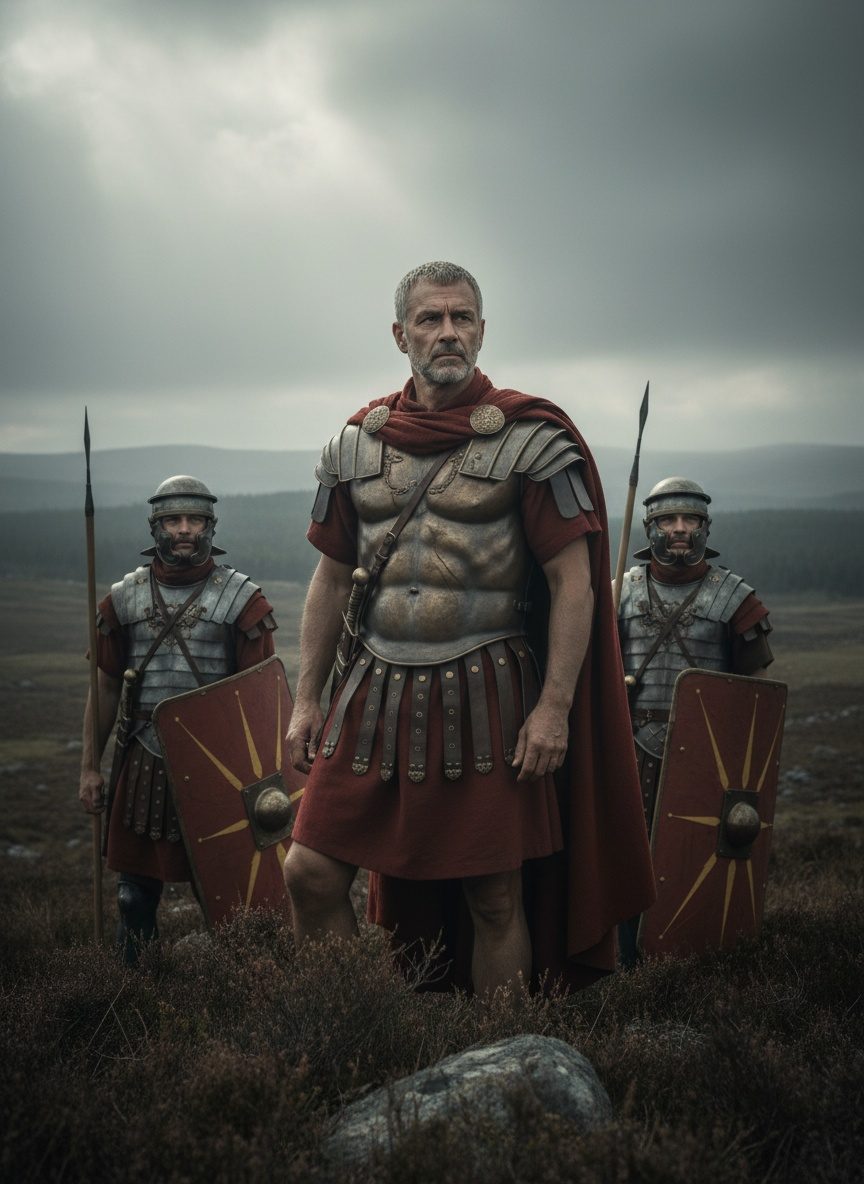
October 11, 800 A.D. An early frost blanketed the Scottish highlands, crystallizing the grass at the base of an imposing stone. For the Picts, this monolithic sentinel was both sacred and mysterious, inscribed with symbols that encoded an unparalleled mystery — a language, a warning, or perhaps both.
The Silent Storytellers of the North
Among the rugged hills and sweeping glens of what is now Scotland, an enigmatic civilization once thrived, their presence marked not by sweeping literature or grand architectural feats, but by deeply etched stones. They were the Picts, a people whose name derives from the Latin *Picti*, meaning "painted ones," so called by the Romans for their tattooed bodies and fierce spirit. Though they vanished as quietly as they appeared, the Picts left behind their legacy in the form of intricately carved stones, mysterious to this day.
The Pictish stones, scattered across Scotland, feature a mystifying array of symbols: intricate spirals, mythical beasts, and geometric patterns, each carved with precision into the unyielding stone. These symbols are virtually the only remnants of a culture that once stood in defiance of Roman legions. The stones themselves are the great archivists of the Pictish people, yet their language remains incomprehensible, woven into the fabric of a stone tapestry that guards its secrets fiercely.
Cracking an Ancient Code
For a millennium, scholars have gazed upon these stones, teased by their silent riddles. Theories have abounded, some suggesting the symbols represent clans, while others propose they depict genealogies or battles. Yet, despite advances in linguistics and archeology, a definitive understanding eludes us.
Efforts to decode the Pictish symbols resemble attempts to unravel the Enigma code; both are exercises in persistence and creativity. These symbols, however, are older and perhaps even more cryptic. Unlike the languages inscribed on the Rosetta Stone, there is no multilingual counterpart to aid modern translation — no parallel text with which to synchronize an understanding. This has made the Pictish script one of the most tantalizing puzzles in British history, attracting the curious and the scholarly alike.
Guardians of Time and Memory
As the pages of history turned, the Pictish identity was subsumed, first by the Gaels and later by the tides of Saxons and Normans. By then, the stones, resolute against time and conquest, remained watches over ancient memories. In Aberlemno, near Forfar, the stones stand in rigid silence along a rural road, where passersby, over centuries, have paused to ponder their cryptic markings.
These stones not only tell a story of a people but also stand as silent sentinels against the elements, bearing witness to a millennium of transformation. They capture the imagination with depictions of animals both real and mythical, warriors astride their steeds, and symbols that defy categorization. The stones are as much a part of the Scottish landscape as its lochs and mountains, absorbing the whispers of wind that sweeps through the rocky terrain.
Symbols Without Translation
Why, then, did a civilization as enduring as the Picts fail to leave behind a decipherable script or any written history? Their penchant for oral tradition, perhaps stronger than the lure of the pen or stylus, may have rendered the need for written records obsolete in their society. The loss of this ability to translate history into language speaks to the fragility of civilization’s remnants; it’s a stark reminder of how easily time can erode humanity's feats.
The Pictish stones remind us of the depths of human creativity and the limits of our understanding. They capture the spirit of a people who thrived in the stark beauty of northern Britain, yet whose whispers have long been smothered by the passage of time. These stones form a haunting legacy, not merely because of their mysterious symbols but because they carry the weight of forgotten voices. In seeking to understand the stones, we are reminded of the world's vast expanse of forgotten histories, urging us to listen closely to the silent tales of the past. Perhaps, within their enigmatic symbols lies a universal message — a call to acknowledge the civilizations that came before, not just in reverence but in a quest for shared humanity.