490 BC. Dust swirled under the sweltering Greek sun.
On the Brink of War
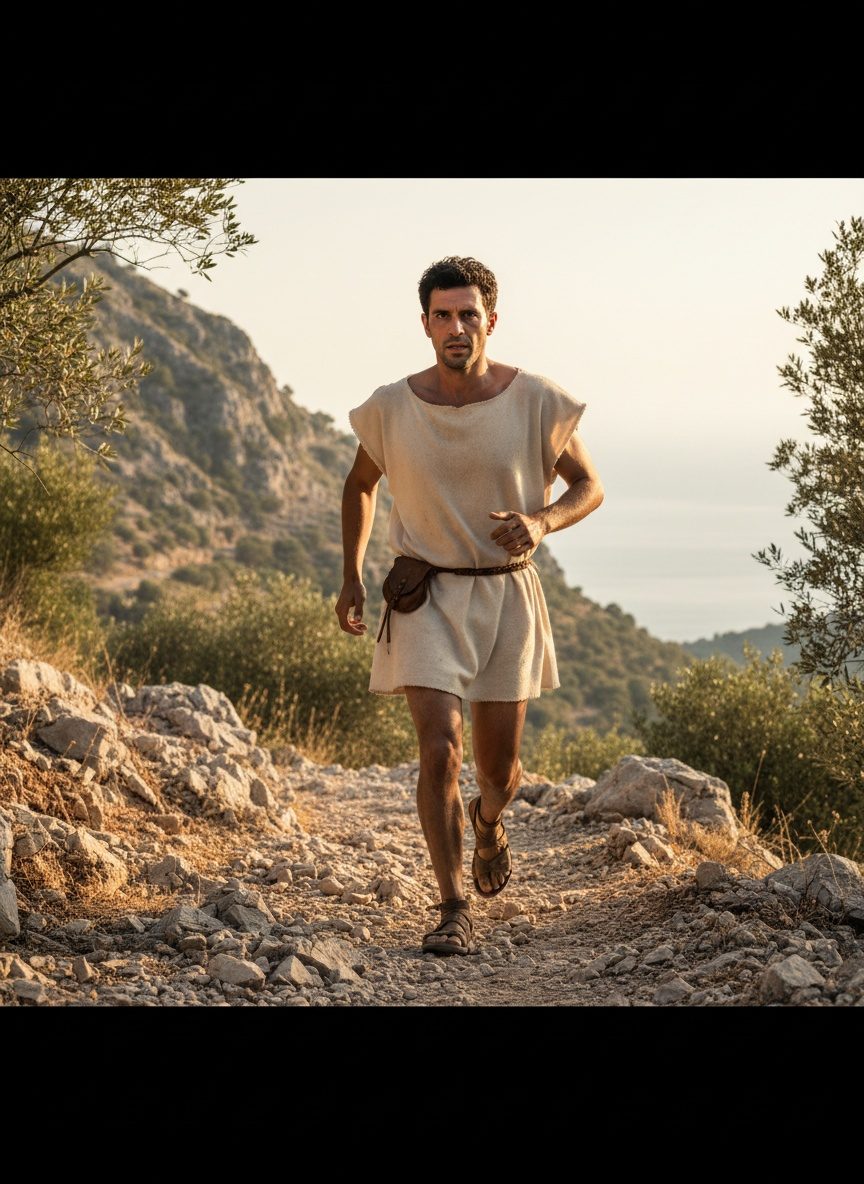
The city-state of Athens stood at a pivotal moment in its history. With the mighty Persian Empire poised to strike, the very existence of Athenian democracy hung in the balance. The crossroads of this impending conflict lay not in the city itself but across rugged terrains and treacherous paths leading to the powerful Spartans. The task of forging this lifeline fell to one man: Pheidippides, a seasoned hemerodromos, or day-runner, known for his remarkable endurance.
The Athenian assembly, in desperation, sought an alliance with Sparta, reputedly the fiercest of all Greek warriors. Yet, the journey wasn't just challenging; it was borderline impossible. The decision was made: Pheidippides would run the arduous 150 miles to the Peloponnesian capital in a mere two days. Barefoot and alone, he set off, guided only by the stars and his knowledge of the rugged landscapes.
Pheidippides ran through the foothills and valleys, with the sun breaking over the Parnitha mountains, casting long shadows in the early dawn. The dusty paths twisted through olive groves and rocky outcrops, each step propelling him closer to his destination but no less grueling. The rolling terrain turned into steep climbs and perilous descents through mountain passes. For the seasoned courier, time was of the essence, and rest was a luxury he could ill afford.
Amidst the stark landscape, Pheidippides was alone with his thoughts. The importance of his message—pleading for Spartan aid as looming Persian forces gathered at Marathon—kept his tired legs moving. Yet, as the horizon stretched infinitely, the specter of failure gnawed at his resolve. Still, he persevered, driven by duty and the hope of Athenian survival.
The Spartan Response
Entering the formidable city of Sparta, Pheidippides was met with a chorus of raised shields and scrutinizing eyes. He beseeched the ruling council, breathlessly relaying the dire situation and Athens' call for Spartan support. Tension enveloped him as Spartan ephors conferred. Pheidippides' arrival was hoped to mark the beginning of a united Greek front against Persia. However, Spartan custom dictated they could not go to war until the moon was full, following their religious calendar.
This unforeseen hurdle left Pheidippides at an impasse. The answer he so desperately sought—a solid commitment from Sparta—slipped through his fingers. Instead, qualified assurances and repeated apologies echoed around him. His mission had reached a sobering outcome: Sparta wasn’t coming, not immediately, not in time.
Sparta’s reluctance underscored not only the diverse political dynamics of Ancient Greece but also the profound reliance placed on sacred traditions, even before the tidal forces of war. For Pheidippides, the cumbersome return journey lay ahead. Accepting the inevitability, he set once more on the road to Athens, each grueling step retracing those recently carved into the mud.
Despite the overwhelming exhaustion, Pheidippides’ mind churned with thoughts of his beloved city. He knew they might face the juggernaut of Persia alone. With measured breaths and aching muscles, his heart echoed the collective anticipation and fear of his fellow Athenians. Each mile clocked was a silent testimony to his indomitable spirit and the urgent need that drove him back through those ancient trails.
The Battle of Marathon
Pheidippides returned to Athens. Despite the absence of the Spartan allies, the Athenian resolve had hardened. The fierce independence and democratic ideals that characterized Athens had no place for capitulation. Armed with the grim news from Sparta, Pheidippides’ journey became more than just a call for help—it was a testament to human endurance and the power of determination in the face of adversity.
The Athenians prepared to meet the Persian forces. They drew strength from their land, history, and the unyielding spirit of messengers like Pheidippides, who stood as a beacon of hope and perseverance. Fully aware of their slim chances, the Athenians mustered to engage the preeminent power of Persia at Marathon.
The ensuing battle was a decisive victory for Athens. Utilizing their intimate knowledge of the terrain and brilliant military strategies, they secured an improbable yet pivotal win against the encroaching forces. This victory didn't just shield Athens from Persian domination; it preserved the burgeoning idea of democracy itself, indirectly shaping the western world’s philosophical and political landscapes for millennia to come.
Pheidippides’ legendary run to Sparta and back, although a perennial note in the grand symphony of history, reminds us how in the crest of great endeavors, it is often the quiet resolve of individuals that ignites the spirit of nations. His story—of courage against odds, loyalty to ideals, and the indomitable human will—shows that sometimes, the fight isn't in the battlefield, but in the will to carry on, to relay a message, and to strive, even when the tangible reward remains elusive and the challenges insurmountable.