The air was thick with the sweet scent of ripening peaches in rural Missouri, the heady perfume mingling with the hum of cicadas as the afternoon sun stretched lazily across the fields. It was 1936 and the languid days seemed like ghosts from a forgotten time, casting shadows that danced like whispers of history itself. In this bucolic tableau, a story unfolded that few would ever learn — the story of a teenage girl and the spectral traces of the Civil War reaching out across time.
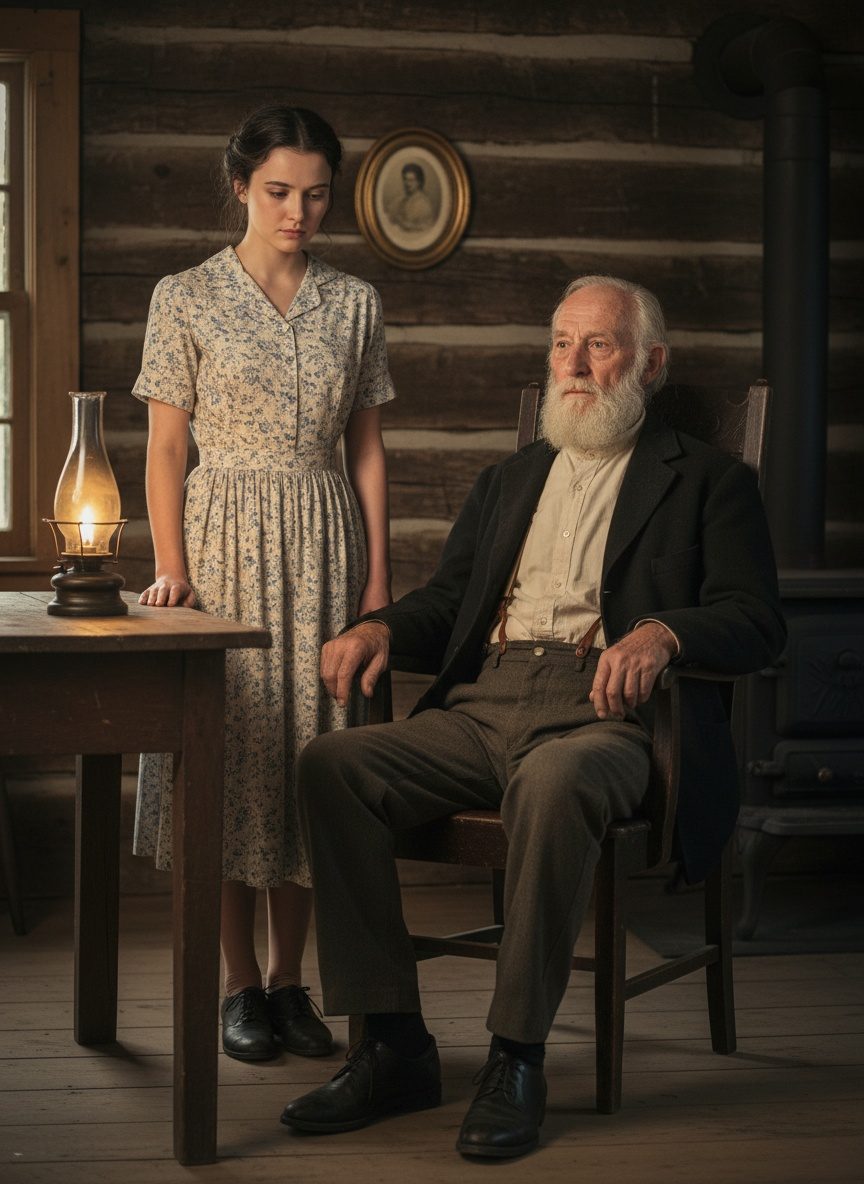
To the untrained eye, she appeared like any other girl of her age, woven into the tapestry of rural life. But when the world around her slumbered, one chapter of her young life remained as vivid and surreal as ever: her marriage to a man five times her age, a relic from the harrowed fields of Gettysburg. He was a veteran of that infamous battlefield, having once stood where thousands fell amidst the acrid stench of gunpowder and cries of the wounded. At 93 years old, he had outlived much of his generation, yet his stories were sealed behind the silent, rugged façade of an old soldier.
On paper, they were an odd pair. She was just stepping into the spring of her life, tasting freedom like ripe fruit in a country suddenly halting in its Great Depression struggles. He was winter personified, eyes clouded with the snowfall of bygone years, hair white as the beard that became his signature. Somewhere between the seasons, their paths crossed and intertwined in a bond cloaked in secrecy.
Their union was not made for the prying eyes of a curious society. For the teenage girl, such a marriage was likely driven by necessity rather than romance — perhaps hope for stability in a time when uncertainty was the norm. To the wizened veteran, it might have been companionship, a fleeting antidote to the solitude that accompanied old age. Yet behind this unusual partnership was a deeper narrative binding two souls divided by history.
As the years drifted by, the memory of their brief time together retreated into the recesses of her mind, obscured by the relentless passage of time and change. The world around her metamorphosed rapidly; the sounds of the jazz era were soon obscured by the march of war, the Civil Rights Movement, and the landing on the Moon. Through it all, the secret she harbored remained hidden, lodged like a fossil in the sediment of her heart.
Her long life saw the march of millions through history's parade, yet she herself became a silent footnote, an enduring link to a century-old conflict whose ghosts continued to haunt the American landscape. It wasn't until decades later, when diligent researchers pieced together fragments of genealogy and oral history, that the magnitude of her secret became known. Her silence was broken not by her own telling, but through the echoes heard in archives and whispered in family tales.
The researchers who eventually found her first encountered a woman of astonishing fortitude and mystery. Living quietly, she was the last living human touchstone to a conflict that had once nearly torn a nation apart. Conversing with her was not simply meeting a person; it was an encounter with history itself, a flesh-and-blood portal to a century most could only learn about in musty books.
In her presence, the passage of time seemed to blur. Her life spanned a period of such vast technological and cultural change that it felt as if she had indeed lived two lives — one foot in an era of horse-drawn plows and another in the age of jet aeroplanes. Those who spoke with her about her marriage heard not just stories of a man she once quietly called husband. Instead, they were drawn into the broader tapestry of a society learning to walk again after having stumbled through its bloodiest conflict.
What resonated most was the realization that our ties to history are often as fragile yet enduring as spider silk — ephemeral connections that can vanish without a trace, leaving behind only unearthed revelations. Her story was a reminder that living history doesn't exist solely in grand documents or celebrated figures, but in the quiet lives that intersected with tumultuous events, often going unnoticed yet forever changed by them.
Embracing her legacy forces us into a moment of reflection on the value of human memory in preserving history. It underscores the importance of those forgotten stories that lend depth and nuance to the past, offering a fuller, more textured picture of our shared journey. In her silence and the eventual uncovering of her tale, we are reminded that every life — no matter how quietly or loudly lived — leaves indelible marks on history's vast canvas.