September 10, 1855. The ice stretched endlessly across the Arctic horizon, a labyrinth of frozen expanses glinting under a pale sun.
Abandoning the Resolute
As 1854 dawned upon the British royal navy’s Arctic expedition, hope and hubris melded into daring ambition. This was the age of exploration, a time when nations stretched their arms into the unknown, claiming invisible lines on frosty maps. HMS Resolute, a sturdy survivor of ice-laden trials, embarked on its journey not merely as a quest for fame but driven by fervor to unravel one of Earth's greatest mysteries—the elusive Northwest Passage.
Bracing against the Arctic winds, HMS Resolute served as one of five ships in search of the lost Franklin expedition, overwintering within an icy grip in 1853. As the New Year unfolded, the ice grew less forgiving. Despite the fervent chiseling and prayers, the symphony of creaking ice sealed her fate in the harsh grip that threatened to sink her into obscurity.
Faced with inevitability, the captain gave the command that sent shivers beyond mere temperatures into the bones of his crew: the Resolute would be abandoned. Tents sprang up like determined wildflowers amidst the barren frost as men and officers took to sledges, embarking on a treacherous expedition toward safety, leaving the ship behind to be swallowed by its wintry tomb.
A Ghostly Return
In a twist befitting the annals of maritime folklore, the Resolute’s story did not end there. Miles away, the weathered crew of the American whaler, George Henry, under the command of Captain James Buddington, peered into the icy distance off the Davis Strait one startling September day in 1855. A mirage seemed to glide across the horizon, yet there it was—a vessel adrift, ghostlike and imposing.
Upon closer inspection, fact replaced doubt. It was the British HMS Resolute, uncannily navigated by icy currents through a year-long realm of solitude. Though ragged from its solitary voyage, it remained buoyant, a phantom of resolve against the forces of nature. Captain Buddington and his men knew they had stumbled upon an oddity close to myth. No ship, least of all one abandoned for dead, was supposed to sail unaided through these perilous seas.
The Resolute was towed back to New London, Connecticut, where it became less of a proclaimed salvage and more a crafted bridge between two great maritime nations. In an era rife with tension and territorial disputes, here stood a chance for diplomacy far removed from guns and treaties.
A Gift of Goodwill
The sight of the Resolute in New London became a matter of quiet wonder across the seas. Mechanics hummed in Bristol as she received tender care, breathing life back into her bone-chilled timbers. And from the wharves of Connecticut to the palaces of Britain journeyed words broader than treaties—the United States decided to restore and return the Resolute to her mother land, seeking nothing in return.
Here was a gesture that defied logic—a tangible artifact of respect and goodwill arriving in the port of return. When the resolute once more reached British shores, it came not as a shadow of prowess but as an emblem of international clarity. In Christmas of 1856, Queen Victoria received the ship within home waters—a symbol not wrapped in conquest but cloaked in mutual respect.
In gratitude, the sovereign ordered a section of the Resolute’s oak to be carved into a resolute symbol of cooperation. Out of her wood, a magnificent desk was born—a desk that held future tales of courage and leadership destined for a new world.
A Desk’s Legacy
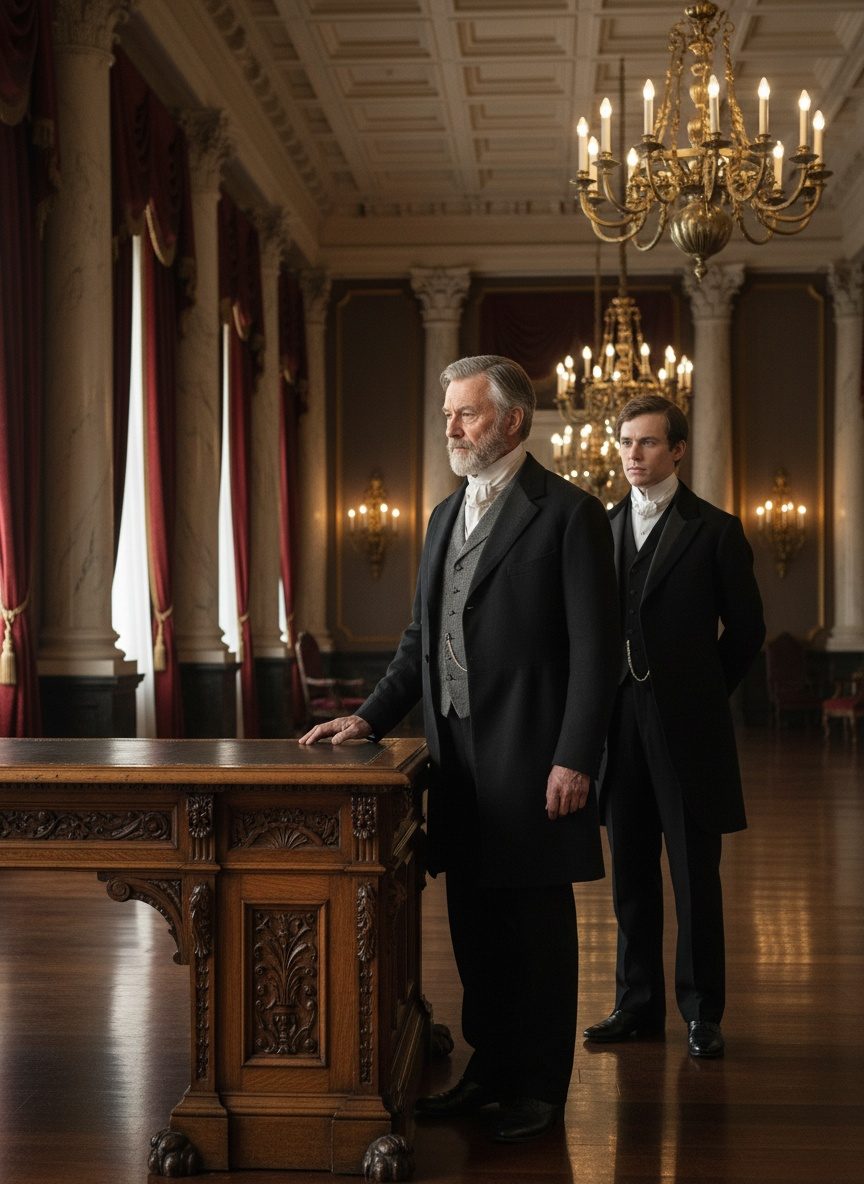
For over a century, the Resolute desk has echoed history within the hallowed walls of the Oval Office. Presidents, from American Civil War veterans to modern-day commanders-in-chief, have signed legislation and brokered peace while seated behind this stately emblem—a desk bridging time across oceans.
Each dent and varnished plane harbors stories of statesmen who faced dilemmas with steady hands. Some moments turned historical—like the signing of the Treaty of Versailles, signing Congress's declarations, or even the iconic photograph of little John F. Kennedy Jr. peering through the panels during his father’s presidency.
Left alone on a glacier, drifted across the restless Arctic by forces unseen—HMS Resolute's journey home defied textbook logic. The desk, a wooden effigy of goodwill, serves not just as a tool of governance but a silent heroic witness to humanity's better side—where empathy outpaces ambition, where maritime ghosts serve as guides, and where traditions of gifting continue to remind us all of what we discover about ourselves in the face of the unknown. A desk from a wooden heart of a ship reminds us that history’s most unexpected journeys often sail us to the most profound havens.