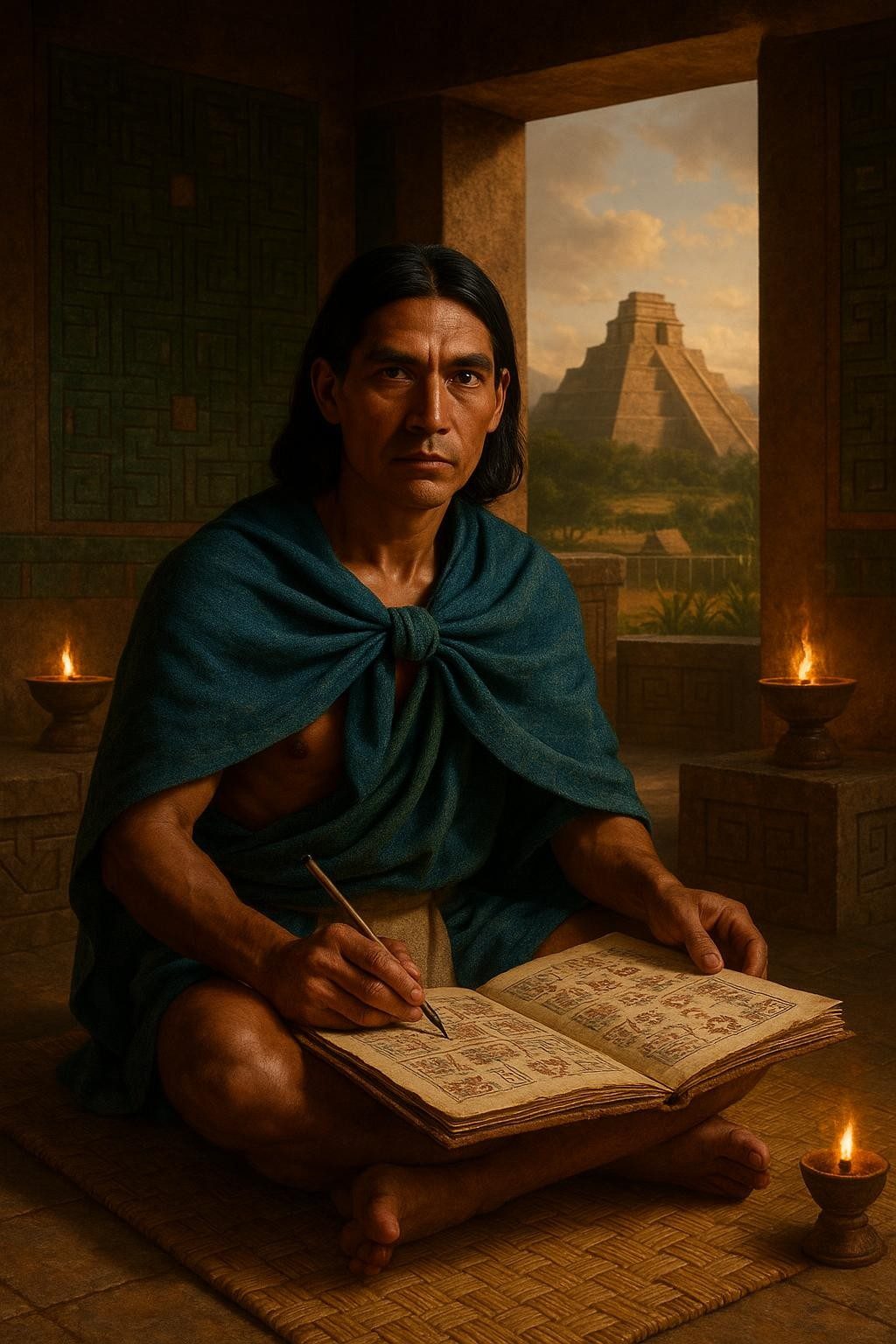
The forest felt alive, its whispers wrapping around Nezahualcoyotl as he lay hidden beneath the dense canopy. He stilled his breath, every muscle taut, ears straining for the sound of his pursuers crashing through the underbrush in pursuit. The Valley of Mexico, once his playground, was now his torment. Yet beneath the verdant cover, a seed of something unprecedented germinated in his mind—an idea forged not in the conquest of arms, but in the structure of civilization itself.
The Scourge of Tezozomoc
For years, Tezozomoc of Azcapotzalco, the powerful Tepanec ruler, had unleashed a wave of devastation across the region. His conquest of Texcoco shattered Nezahualcoyotl’s young life, the once-thriving city reduced to mere ashes. With his father, the revered king Ixtlilxochitl, cut down amidst the chaos, Nezahualcoyotl became a fugitive, surviving on scarce alliances and the sheer force of his indomitable will.
The forests and mountains that concealed him told a tale of defiance—a sanctuary in a time of unrelenting war. As Tezozomoc’s forces scoured the valleys for a sign of the youthful heir, Nezahualcoyotl’s mind was not idle. Observing the fragmented lords quarreling for scraps of power under Tepanec rule, an epiphany took root. He dreamt of a society bound not by the brute force of the sword, but by principles that held even monarchs accountable.
A Return with Purpose
In 1430, as Tezozomoc’s influence waned and the power dynamics began to shift, Nezahualcoyotl emerged from exile. Yet he did not ride a horse-drawn chariot nor take up arms to reclaim his inheritance; instead, he returned to Texcoco with profound resolve. The city now scars of battle and betrayal, but from the ruins, he envisioned a flourishing cultural and political renaissance—built upon a foundation of laws.
Nezahualcoyotl's ascension to power marked not just the revival of his ancestral city, but a revolutionary shift in governance. He meticulously crafted eighty laws, each crafted to serve justice and mitigate the abuses of power. The real stroke of genius lay in Nezahualcoyotl's insistence that these laws applied with equal measure to every subject, even himself. This was unheard of—a ruler constraining his own power voluntarily.
The Code of Texcoco
Perhaps it was the years surrounded by nature's impartial verdicts or the witnessing of tyranny’s corrosive ruin that inspired Nezahualcoyotl’s legal innovations. Each law was woven with the wisdom of maintaining balance and harmony among the populace, a philosophy mirrored in the earth’s cycles he had come to revere. His code delineated clear expectations: justice would be blind to status, and fairness, an expectation for all strata, breathed life back into the fractured city.
Under his watchful eye, Texcoco blossomed into a preeminent hub of the arts and intellectual accomplishments. It became a beacon for scholars, artisans, and diplomats, each enticed by the fair governance and cultural prosperity the new laws ushered. These were laws that fostered creation, built upon respect, and elevated Texcoco to a zenith of influence and admiration among the city-states.
A Legacy Bound by Law
Nezahualcoyotl’s experiment was bewilderingly novel. Across Todd Inman’s countryside, rulers governed through divine mandate or the might of arms. Here, a king asked to be judged by laws that he, himself, must follow. His implicit acknowledgment of human fallibility within the throne room laid the groundwork for a unique legacy. In a world so often dictated by unyielding hierarchies and despotic reigns, his code suggested another path—a testament to the potential for benevolent and accountable rulership.
In considering the Aztec Empire’s eventual cnsolidation, one might ponder Nezahualcoyotl’s contributions not just in governance, but in ethical jurisdiction. His narrative emerges as a cautionary whisper echoing down the corridors of history on the delicate balance of power and justice. Through his laws, Nezahualcoyotl redefined sovereignty not merely as a privilege of the few but as a responsibility shared. That insight, carved from tribulation and quiet revelations under the forest's canopy, resonates still—reminding us that, even in the throes of adversity, the pen's potential to shape destinies endures, powerful and undiminished by time.