Leonardo da Vinci began painting the Mona Lisa in 1503. Yet, it would take almost three centuries, a cascade of revolutions, and the reshuffling of empires before she truly gained her iconic status. Leonardo’s world was brimming with the quiet yet fierce hum of change. The luminaries of this era moved in candlelit rooms and whispered in hushed tones; their thoughts colored with both ancient philosophies and daring new ideas. The Mona Lisa was born at a time when Italy was less a nation than a tapestry of quarreling city-states and the creativity of the Renaissance was lighting the way for a Europe poised for transformation. She would rest in wait, a silent spectator to history, as rulers came and went, as wars scarred the landscape, and as the Enlightenment dawned like a fresh breath over the weary continent.
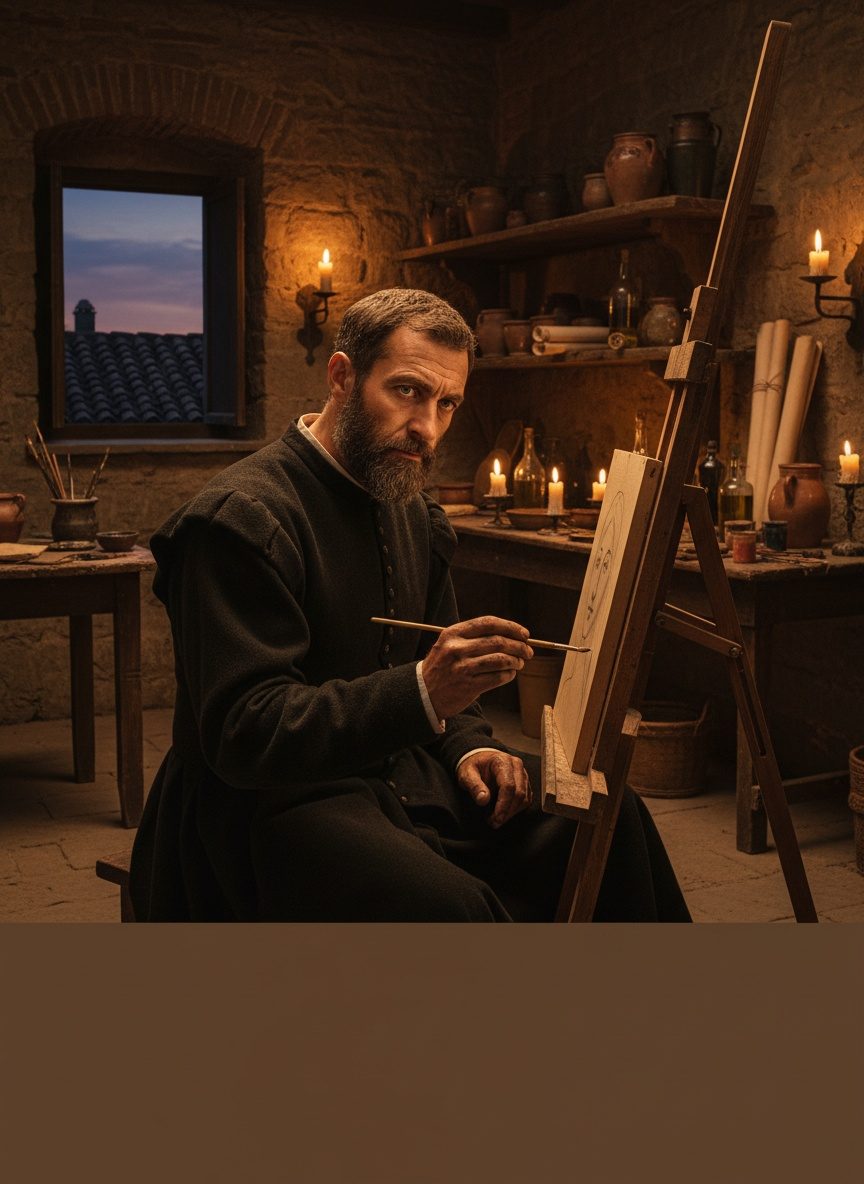
In the cobbled streets of Florence in 1503, Leonardo pondered over a wooden panel, his mind swimming with both method and mystery. His hand guided the brush with gentle precision, crafting the peculiar smile that would later spark endless debate. Her eyes, fixed in a gaze at once knowing and enigmatic, seemed to be capturing the soul not merely of a sitter but of an entire epoch. Florence itself was a cauldron of artistry and invention, and the air buzzed with the creation of masterpieces, yet many of those have faded to dust, while Mona Lisa's legacy endured. She was then conceived merely as a portrait, one among a myriad of works by a man whose genius often soared too far ahead of his own time. Yet this painting, with its subtle perfection, began to weave the threads of its own legend.
As the years rolled on, the Mona Lisa changed hands and homes, dwelling in the background of courts and castles. She wasn’t merely a painting but had become a silent witness to the grand shifts—both violent and gradual—that sculpted the course of continents. She lay within private rooms and royal spaces, her presence a quiet symbol of distinction and taste. Beyond simple ownership, possessing the Mona Lisa was akin to possessing a piece of the transcendent, a tangible link to da Vinci's brilliance and a memory of Renaissance splendor renewed with each new observer.
By the time of the French Revolution, this masterpiece was already centuries old—a relic of the times when kings ruled by divine right and the idea of a republic was but an ancient Roman memory. Yet, as the revolution unraveled around her, the Mona Lisa silently transformed once more, her visage becoming entwined with the tumultuous spirit of France’s rebirth. The Revolution insisted on the reclamation of cultural treasures for the people's patrimony, yet amidst this turbulence, the painting endured, unflinching, and perhaps even more relevant as an emblem of human creativity and resilience in the face of the eventual collapse of long-standing regimes.
Napoleon Bonaparte himself, in the halcyon days of his ascendancy, famously placed the painting in his bedroom. Perhaps he was drawn to her air of mystery, or her quiet defiance resonated with his vision. Hanging there, she was an ancient observer of the one who set out to redraw the boundaries of Europe itself. For Napoleon, the Mona Lisa was no mere piece of art. She was a relic and an heirloom of human imagination and potential, nested among the exploits and expanse of his empire.
From ancient Italy to revolutionary France, and through its many hands, the exquisite figure in the painting watched a parade of human progressions and regressions, seeped in the whisper of canvassed revolutions all her own. The patient muse saw the burgeoning of science and exploration, marveled as maps expanded and new worlds unfurled their secrets to intrepid travelers. She witnessed monarchies flicker out, republics rise, and industry’s soot-smeared fingers endlessly mold the modern age. Bound by mere pigment and wooden panel, the Mona Lisa seems eternally alive, perpetually revealing something new yet remaining unfathomably enigmatic, a nexus of history and art that goes beyond her maker’s original brushstrokes.
In today’s light, the Mona Lisa is more than a painting. She is a testament to the endurance of the human spirit and its capacity for both destruction and creation. The world she was born into has long since vanished, replaced and reformed time and again, echoing life’s transience despite humanity’s greatest attempts to leave something enduring in its wake. As visitors from around the globe pause in front of her now, the conversations may have shifted, the technology advanced, but the quest remains the same: to see not just the brushstrokes, but to feel the weight of history resting gently on a woman’s knowing smile, forever ancient, and forever timely.