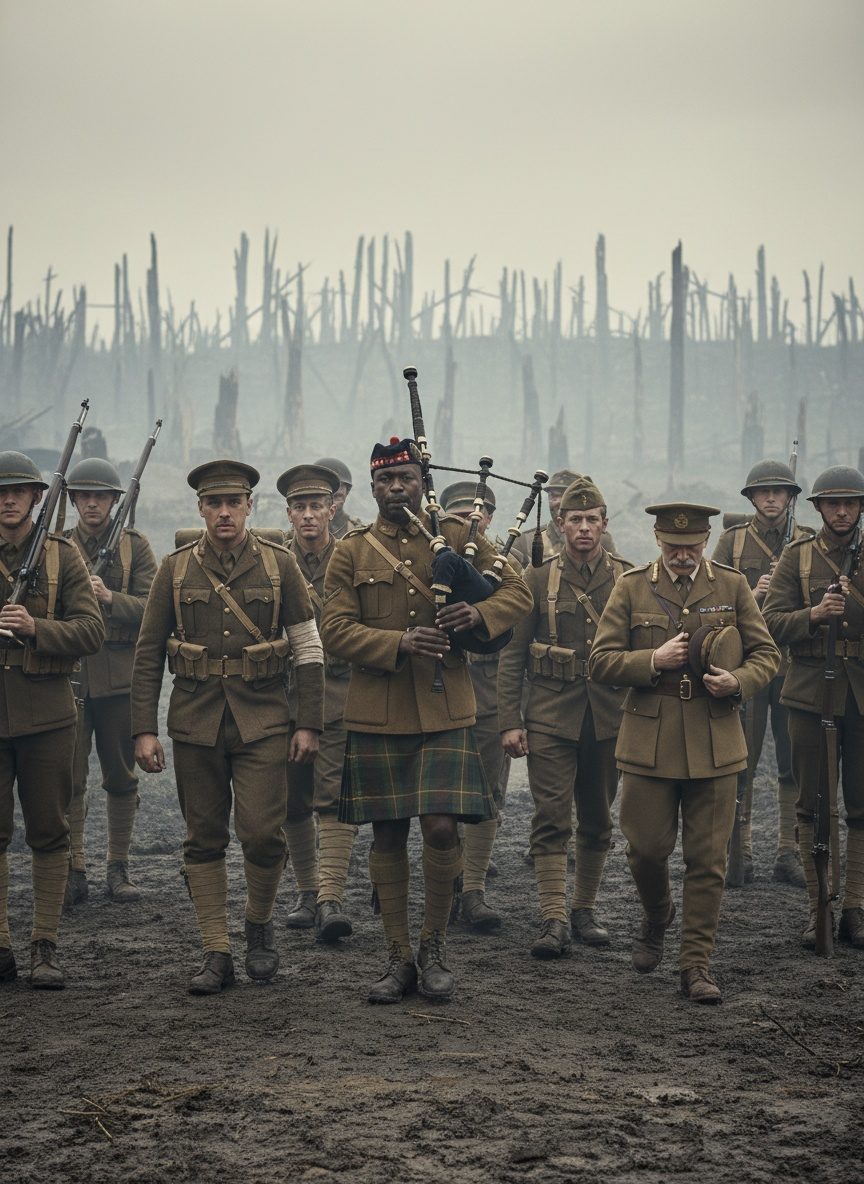
The piper was no stranger to warfare. Seventeen years earlier, he had been an adversary to those he now led. The haunting melody he played on his bagpipes at Delville Wood would become a legendary echo of courage and survival.
The Echoes of Delville Wood
July 1916 was a month carved into the annals of World War I with blood and valor. Delville Wood, nestled in the arid plains of the Somme, became the stage for one of the most desperate and heroic stands of the war. This wasn’t just a battle for territory—it was a grueling testament of endurance against overwhelming odds. The South African Brigade, under General Henry Lukin's command, bore the brunt of the German onslaught for five harrowing days.
Picture the scene: splintered trees standing like war-weary sentinels amidst a shattered landscape, cannon fire painting the skies with an ominous glow, and the roar of rifles echoing through the labyrinth of trenches and crater-filled terrain. At the heart of this chaos, the brave South Africans clasped their rifles with white knuckles, eyes scanning the horizon for any sign of relief. When it finally came, the remnants of the brigade—140 of the original 3,153 who entered—stood defiant, having earned the grim pride of holding the wood to the last breath.
The Unlikely Piper
Among the crackling tension and fading echoes of battle, a distinct sound began to rise above the dull throb of conflict—bagpipes. Before the war, these bagpipes might have belonged to an adversary, as the piper had seen battle against British forces years prior. Now, he led them in solidarity, his instrument singing a melancholy but resolute dirge that seemed to lift the exhausted stares of the survivors.
The irony wasn't lost on the men who marched behind him. The bagpipes, once regarded with suspicion by their enemies, now galvanized both British and South African troops in solidarity. This man, brandishing no weapon but his music, had stood on both sides of a battlefield, his melodies transcending past animosities. The piper’s tune was a tapestry of resilience, binding together the lives, sacrifices, and hopes of those who trudged behind him.
Salute of Silence
As the survivors of Delville Wood emerged from the infernal depths of the forest, they were not ushered out by mere allies, but by an honor guard—a traditional mark of respect usually reserved for victories rather than retreats. The British forces, with heads held high and rifles inverted, flanked the path with solemnity and respect. At the forefront, the Black Watch pipers played, their music a somber tribute to the unfathomable endurance displayed by these men.
General Henry Lukin stood ready to receive his men, his heart heavy with both pride and sorrow. As the first of the battered South Africans crossed the line, Lukin wept. He wept not only for the losses endured but for the indomitable spirit of those who had dared to hold the line against the fury of the German Imperial Army. In that moment, rank and decorum dissolved into unity and shared grief, epitomized by Lukin’s simple, poignant gesture of removing his cap.
Why This Story Matters
Delville Wood stands as more than a military engagement; it is a testament to the intricate tapestry of war, courage, and humanity. The piper, whose origins may have made him a foe, embodied the ability of music to transcend divisions and heal fractures rent by war. He and the men he led remind us of the power of shared history and the resilience of the human spirit even in the darkest hours.
In a world constantly shaped by conflict, the story of Delville Wood serves as a haunting reminder of what it means to endure and emerge, tender yet unbroken. The courage remembered every time those notes are played is a legacy not of enemies defeated but of the shared resolve to stand for peace. As long as the sound of bagpipes echoes, so too does the enduring spirit of those who passed through Delville’s gates, never to be forgotten.