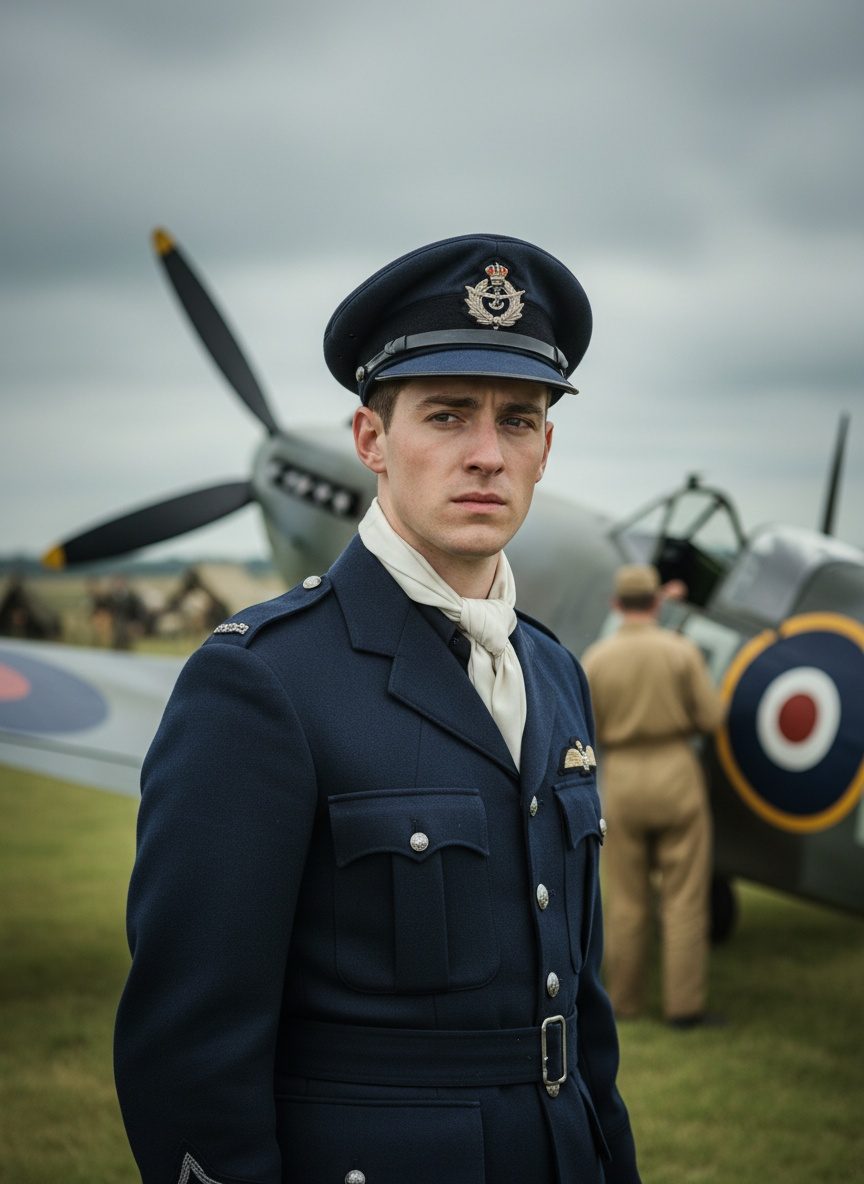
The summer sun cast long shadows across the Spitfires lined up on the grass runway. A brisk wind fluttered the Union Jack perched on a metal pole and rustled the clipped edges of a nearby hedgerow. The fields around the base were alive with the hum of crickets, their chorus carried on a breeze that whispered of distant thunder. But here, in the heart of Kent at RAF Hornchurch, the tension was electrifying. The stakes were feathered edges in the minds of young aviators, lingering like the acrid scent of fuel mixing with the sweet summer air. It was June 1942, and Brendan 'Paddy' Finucane — the RAF's new youngest Wing Commander — was preparing to lead a sortie over occupied Europe. Each mission over the Channel was fraught with peril, and every flight could easily turn into a deadly dance in the sky.
The Irish Eagle Rises
From the bustling streets of early 1920s Dublin, where cobblestones echoed the sound of horse-drawn carriages, emerged a young boy whose destiny was written among the clouds. Brendan Finucane, affectionately known as 'Paddy', was born on October 16, 1920, to a family deeply touched by Ireland's turbulent history. Despite the political unrest surrounding him, or perhaps because of it, young Paddy was spirited and fearless, developing a keen interest in aircraft — a fascination fueled by tales of pioneering aviators and daring escapades in the sky. It wasn't long before his family migrated to England, placing him in the perfect position to channel his dreams into reality.
By the time World War II had darkened Europe’s skies, Finucane was already making a name for himself within the Royal Air Force. There was something remarkable about his precision, his acumen, and above all, his daring. As a fighter pilot, his hands seemed molded for the controls of a Spitfire, a magnificent marriage of man and machine. He swiftly ascended the ranks, each promotion a testament to his prowess, his strategic brilliance, and his unparalleled courage. In the blink of an eye, he had shot down multiple enemy aircraft, each victory bolstering the spirits of his squadron and striking fear into the hearts of the Luftwaffe pilots.
A Wing Commander's Burden
On a June morning in 1942, the clamor of the base was punctuated by a significant announcement. At the tender age of twenty-one, Finucane had become the youngest Wing Commander in RAF history, a title loaded with both honor and an immense responsibility. His ascension was more than just a rank; it was a beacon of hope, a symbol of youthful determination in one of history's darkest hours. The Irishman’s charm and tactical genius were legendary. He was a leader not just by hierarchy but by respect—his men would follow him through any storm, trusting his instincts to navigate them safely back to base.
Yet, as is the burden of leadership, each mission carried the weight of potential loss and the haunting specter of death. Paddy was acutely aware of the lives entrusted to his command. His nerves were like iron—as was his resolve—but every sortie carried them closer to an invisible line, where fate's cruel hand could snatch even the bravest souls from the sky. At briefings, he would inspire with words that lit fires; in flight, he was the unwavering calm leading his squadron into the fray.
The Fateful Day
July 15th, 1942, dawned with the kind of deceptive tranquility only war could cultivate—an uneasy calm that gave way to relentless action. The sun's rays had not yet fully crested the horizon when the scramble alarm blared. The Luftwaffe, ever relentless, was pushing hard across the Channel, and once again, Wing Commander Finucane and his squadron were called to defend. With practiced urgency, the men rushed to their planes, Finucane among the first in the air.
The sky, an unending sea of pale blue, was soon splattered with black flak and the silver streaks of enemy fighters. Amidst the chaos, Paddy once again demonstrated why he was revered, orchestrating aerial maneuvers that seemed choreographed by destiny itself. Yet, even as life and death waged their own turbulent war, no one could have foreseen the cruel twist that awaited. Tragedy struck when Finucane's Spitfire was hit over the Channel. Despite his best efforts to guide his stricken craft home, fate had dealt its final card, and the Irish eagle fell into the waters, his life extinguished in the blink of an eye.
Why His Story Matters
Brendan 'Paddy' Finucane's story is one of unsung valor, a narrative embroidered with youthful daring and indomitable spirit. In traveling the skies, he transcended the earthly divisions of nationality, becoming a symbol of unity in a fractured world. His legacy is preserved not through the records of his aerial victories nor the ranks he attained, but through the lives he touched—and saved—and the legend he forged in his short years. The impact he had on those who served alongside him, and those who followed, extends beyond the confines of history books and uniformed parades.
In a world often overshadowed by conflict, Paddy Finucane's story reminds us of the limitless courage in youthful hearts. His life may have ended too soon, but it serves as a poignant testament to the bravery that has the power to illuminate even the darkest skies. Beneath the tales of destruction and loss, there's an enduring lesson in how humanity, tenacity, and hope can elevate us to soaring heights, no matter how briefly we touch them.