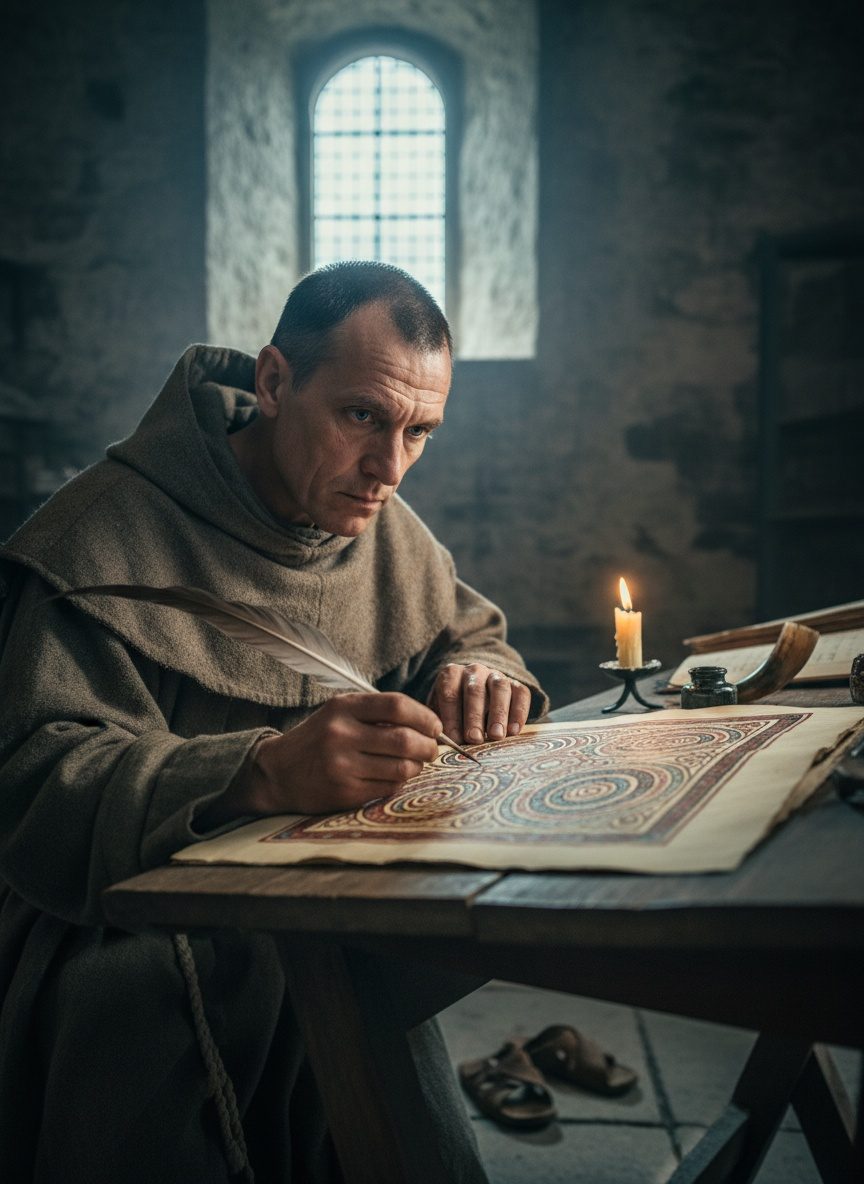
He worked in silence, surrounded by stone walls and flickering shadows. Eadfrith of Lindisfarne was not just a scribe; he was an artist, both meticulous and visionary, undertaking a task that would test human endurance and devotion.
Against Wind and Wave: The Isolation of Lindisfarne
On the northeast coast of England, an island emerges at low tide, accessible only briefly before the North Sea reclaims its seclusion. This is Lindisfarne, or Holy Island, a place that in 715 AD echoed with the whispers of monastic chants and the crash of waves. Here, Eadfrith, a devoted monk, embarked on a monumental project of faith and dedication, undertaking the creation of the Lindisfarne Gospels.
Lindisfarne was a beacon of Christian scholarship in early medieval England. The island's monastery, founded by Irish monk St. Aidan in the 7th century, served as a hub for religious learning and artistic expression. Yet, despite its role as a center of enlightenment, life on Lindisfarne was stark and often grim. Battered by relentless winds and cut off from mainland comforts, the monks endured harsh conditions, living a life dominated by prayer, study, and labor. It was in this austere and secluded environment that Eadfrith chose to dedicate years of his life to the creation of a manuscript that would astound generations.
Scribing the Sacred: The Artisan's Devotion
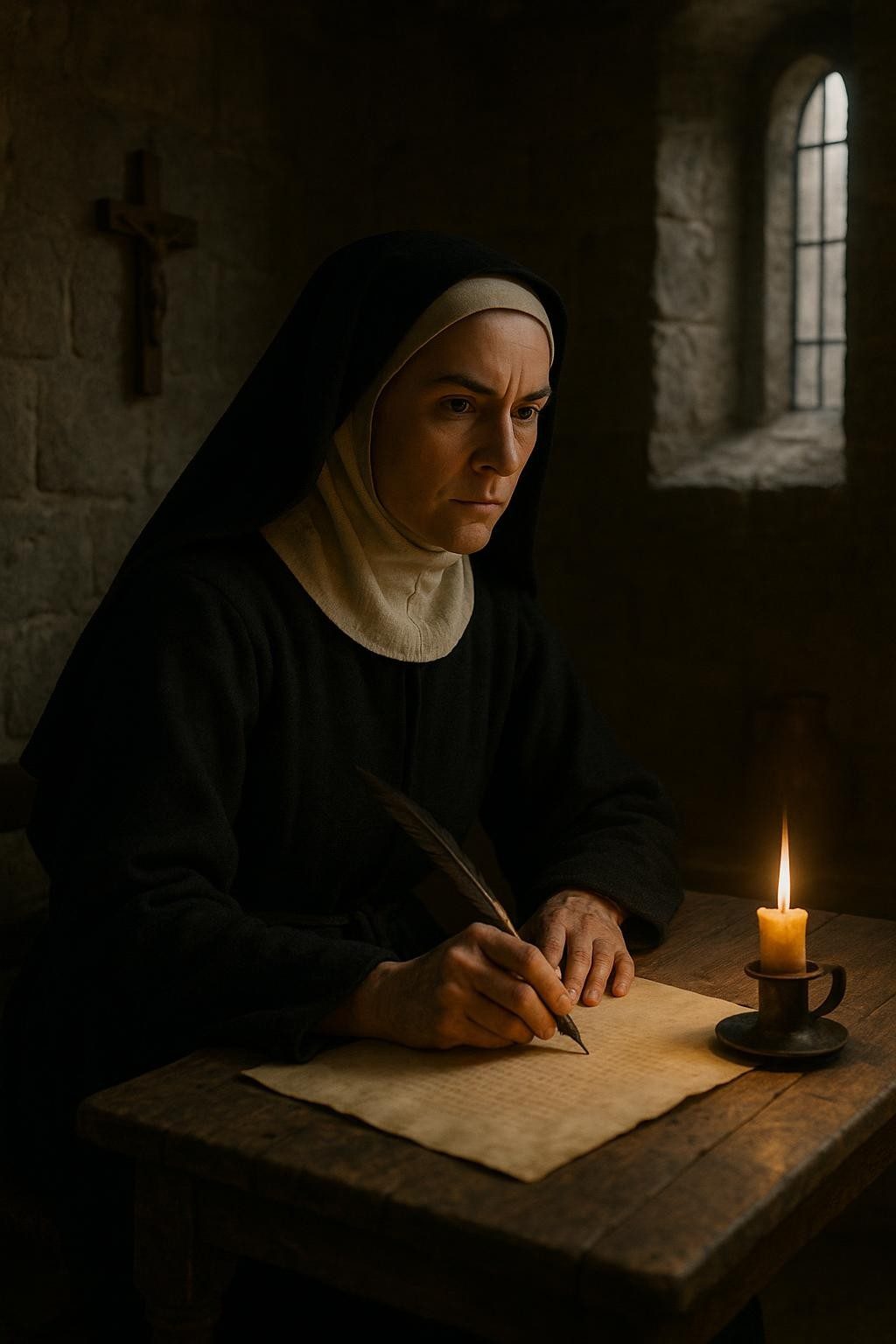
Imagine a solitary figure, hunched over a narrow desk. The only light filtering through small windows and the faint glow of a candle. This is how Eadfrith worked, cloistered away, with nothing but his tools—a quill, ink, and vellum—and his unwavering faith. For years, he toiled in solitude, transcribing the entire Gospels by hand, an enterprise that would have been daunting for a team, let alone one solitary monk.
The Lindisfarne Gospels are not just a manuscript; they are a masterpiece of unparalleled craftsmanship. Eadfrith's work is a marvel of precision, with each letter meticulously formed, each page an exquisite display of script. His hand-scripted text is accompanied by lavish illustrations—detailed illuminations that reflect a blend of native Celtic, Anglo-Saxon, and Christian artistry. These illuminations, vibrant with colors derived from natural sources, are laced with intricate knotwork and symbols that speak to both earthly and divine inspiration.
Binding Faith and Time: The Craftsmanship Behind the Gospels
The process of creating the Lindisfarne Gospels was as laborious as it was creative. Vellum, derived from calfskin, had to be painstakingly prepared to create the perfect writing surface. This alone could take months for a sufficient deadline. The ink, seemingly simple, was a complex concoction of soot, metal, and plant extracts, meticulously mixed to achieve bold blacks and vivid colors that could endure through the ages.
Eadfrith's illuminations tell their own story. They are more than just decorative—they are theological statements imbued with meaning and purpose. The intricate patterns and Celtic motifs reflect the island's cultural influences, creating a visual dialogue between tradition and faith. Despite the absence of formal artistic training, Eadfrith's intuitive grasp of harmony and proportion is evident in every vignette and flourish.
In Silence and Shadow: The Monk's Signature
At the culmination of this herculean task, Eadfrith did something unexpected. He signed his work. For a monk of his era, this was an uncommon act of authorship, as humility and anonymity were typically the monastic ideal. By inscribing his name upon these Gospels, Eadfrith declared his devotion and artistic mastery to the ages.
The Lindisfarne Gospels served as an act of devotion, a tribute to God, yet Eadfrith's signature also reflects an acknowledgment of human perseverance and creativity. His decision to leave this indelible mark speaks to a quiet defiance—the monk's understanding that his work was a beacon within the dim confines of his world, intended to inspire and illuminate, much like the scripture itself.
The Light in the Dark: Why Eadfrith Matters
Today, the Lindisfarne Gospels are cherished as one of the greatest achievements of medieval art and Christian heritage. They are held at the British Library in London, where they continue to inspire scholars and visitors alike. But beyond their beauty and historical significance, these gospels—an expression of Eadfrith's devotion and artistry—pose profound questions about the nature of faith and creativity in isolation.
In the lives of modern readers, Eadfrith's solitary endeavor resonates with the contemporary pursuit of meaning and mastery in a complex world. His story reminds us of the quiet power of innovation born from limitation, the brightness of creativity forged in darkness, and the indomitable spirit of those who, even in solitude and isolation, create connections that resonate far beyond their time.