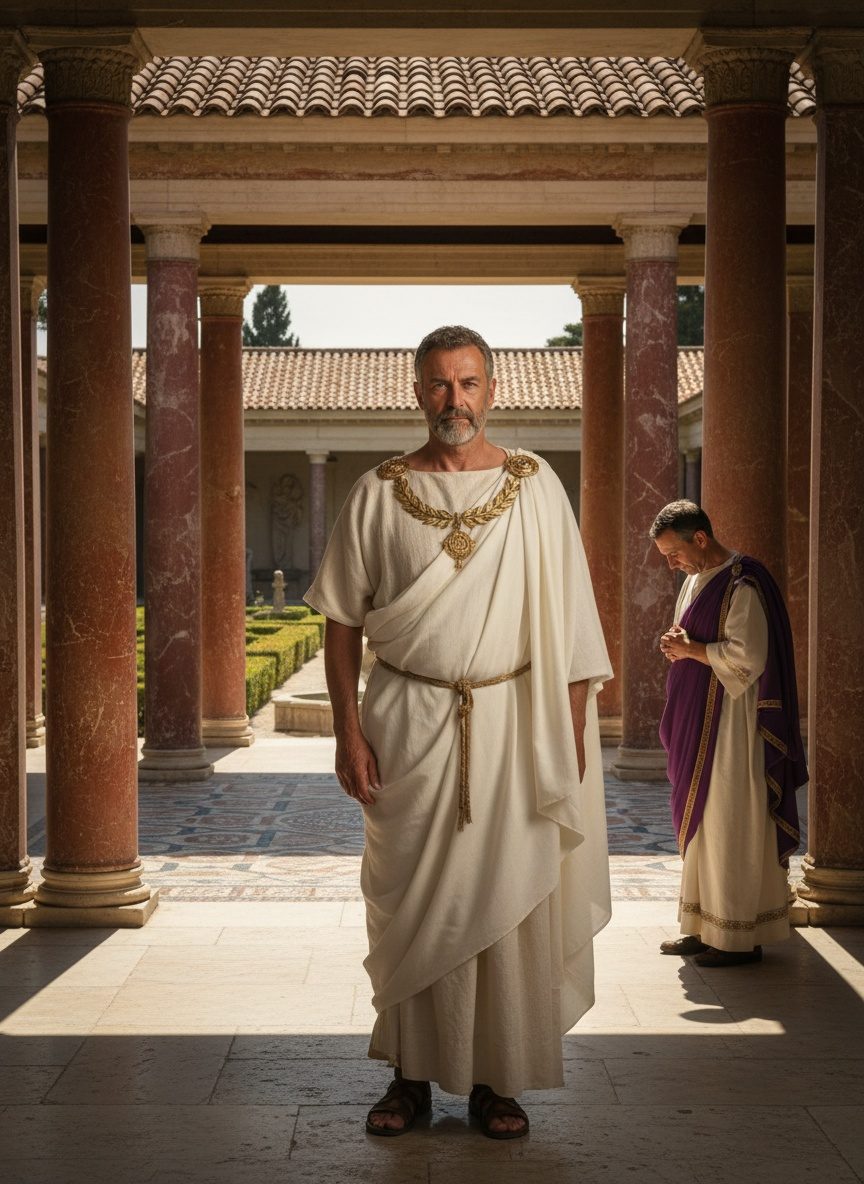
On a midsummer's morning in 14th century Norwich, the air hangs thick with a mist that clings to the cobblestones like a shroud. As the sun edges over the city walls, the sounds of merchants setting up their stalls filter through the fine veil of fog. The day holds a secret, though—the story of a solitary woman whose quiet life would not only ripple through the streets of Norwich but throughout English mysticism. Behind walls of stone, in a world reduced to a mere cell, Julian of Norwich would speak volumes that resonate to this very day.
The Illness and the Visions
In 1373, Julian of Norwich lay in her bed, waiting to die. Her illness had brought her so close to death's door that the last rites had been administered. Yet, as life seemed to slip away, something remarkable happened: she beheld sixteen visions in quick succession. The tangible world around her faded, and she found herself immersed in divine messages, visions that spoke of love, redemption, and understanding.
These visions were vivid, painting her perception with colors of a realm unseen. They promised an eternal truth hidden within the folds of everyday life. As if by a miracle, Julian recovered from her illness, but the course of her life had been permanently altered. Her survival was an anomaly to some, but to Julian, it was a testament to the divine truths she had seen.
Choosing a Life of Solitude
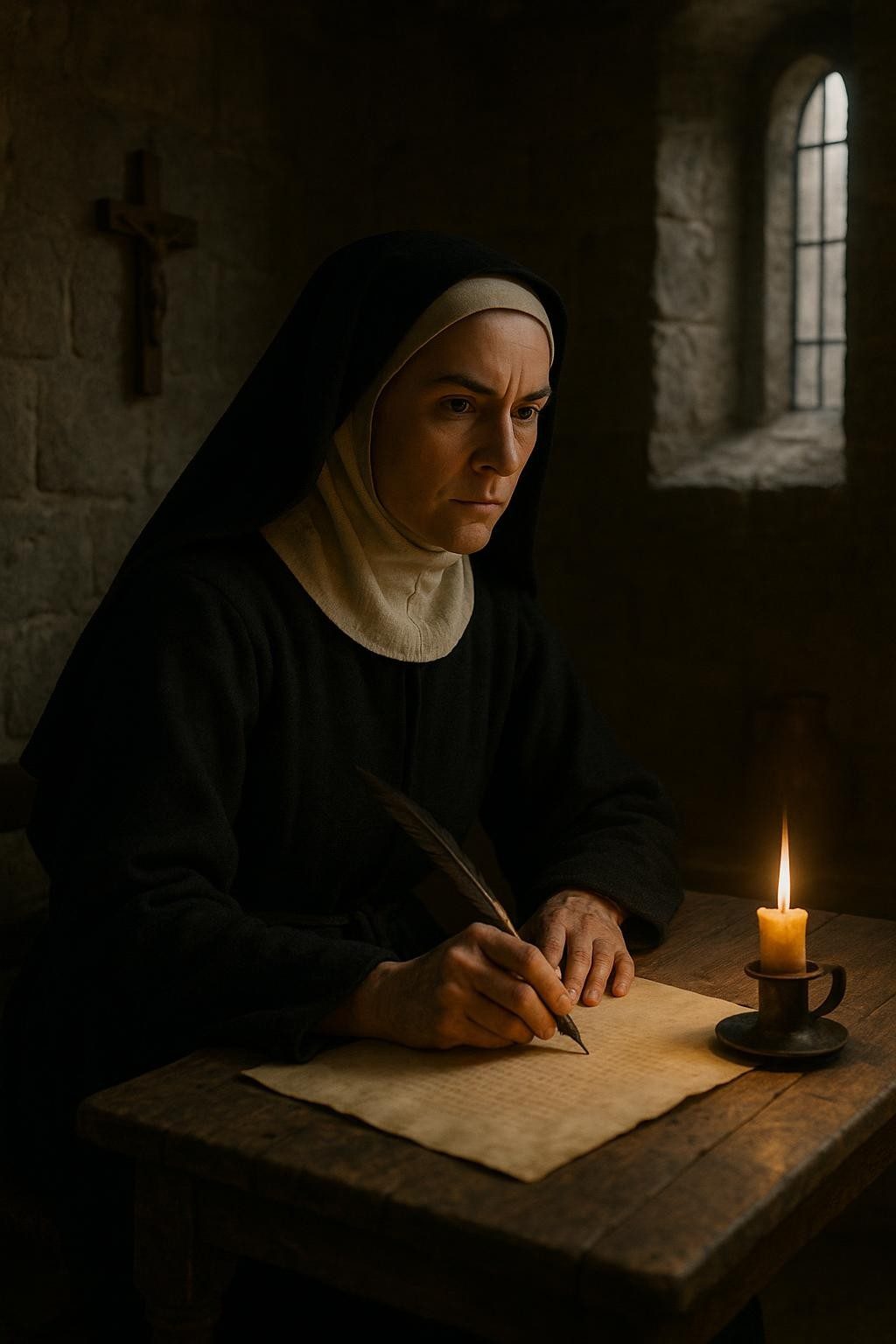
After her recovery, Julian made the extraordinary decision to become an anchorite—a religious recluse dedicated to being permanently confined to a small cell built into the walls of St. Julian's Church in Norwich. Her new world shrank to the size of this austere, stone room. Sometimes damp and cold, sometimes stifling, her confinement consisted of careful stoicism and unyielding faith. From this cell, she would make her mark not through motion or speech, but through the quill and ink.
Naturally, questions of her motive followed; was it madness or devotion that led her to wall herself into such loneliness? Julian saw this seclusion as a path paved by divine calling. She chose solitude not as a retreat but as a deeper entry into the heart of spiritual inquiry. It was a place of contemplation, devoid of distraction, where her revelations could be considered with utmost clarity.
The Writings That Followed
Julian's isolation did not silence her. Quite the opposite—she began to pen one of the most profound works of English mysticism. In an era where few women could read, let alone write, Julian's creation was groundbreaking. Her work, commonly known as "Revelations of Divine Love," became the first text credited to a female author in English.
The language was as vivid as her revelations, each word a paintbrush stroke on the canvas of religious experience. She structured her writings around her visions, methodically dissecting them and exploring their depth. With each chapter, Julian offered a reflection not only of her spiritual journey but also of her understanding of God's love, which she described as "all shall be well, and all shall be well, and all manner of things shall be well."
Impact Beyond Her Cell
Though Julian herself never left her cell, her ideas moved beyond its confines. Her writings would not be published until centuries later, but they sparked philosophical and theological discourse among those who encountered them. Julian's work has weathered the centuries like her stone cell itself—a structure of thought built to last.
Her interpretations of sin, suffering, and salvation challenged existing notions and offered more compassionate theological perspectives. In a time when harsh dogma and fear dominated religious instruction, her emphasis on love and divine assurance presented a striking counterpoint that would nurture English mysticism for centuries to come.
The Everlasting Influence of a Hidden Life
Julian of Norwich lived in an age where a woman's voice was often stifled by the societal structures of the day. Yet, quietly and resolutely from her cell, she brought forth a perspective that redefined a part of English spiritual thought. Her words have offered solace and contemplation not only to the devout but to thinkers and seekers of varied beliefs.
Today, Julian's visions and her meditations on them resonate in a world far removed from her own. Her life and work remind us that profound insights can emerge from the most obscure and silent of places. Unseen but undeterred, Julian’s voice offers a timeless testament to the strength found in solitude and contemplation, ultimately suggesting that sometimes the quietest lives leave the loudest echoes.