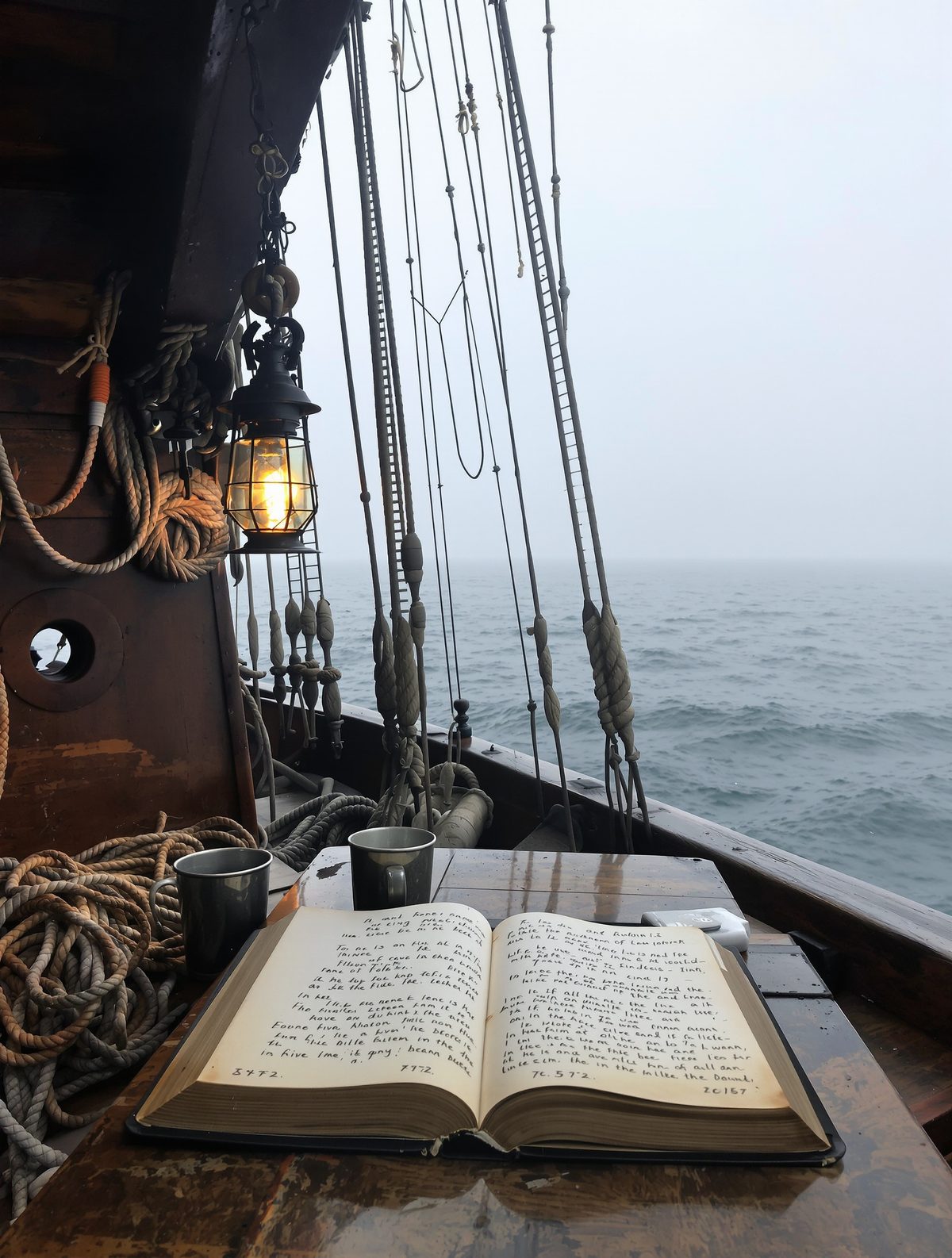
In the gray dawn of December 5, 1872, a ghost ship silently traced its own haunted path across the Atlantic. The British brigantine Dei Gratia had stumbled upon a ship adrift, the notorious Mary Celeste, floating aimlessly about 400 miles east of the Azores. Her sails were set, and her cargo of denatured alcohol remained secure. But of the captain, his family, and the seven hardy sailors who should have been aboard, there was no trace. The eerie enigma of the Mary Celeste remains one of maritime history's most haunting mysteries.
The Strange Discovery
The American brigantine Mary Celeste left New York City on November 7, 1872, bound for Genoa, Italy. Onboard were Captain Benjamin Briggs, his wife Sarah, their two-year-old daughter Sophia, and a crew of seven seasoned sailors. By all accounts, the Mary Celeste was a sturdy vessel, her crew chosen carefully by Briggs himself, a man known for his unwavering discipline and deep commitment to his family.
Less than a month later, the Dei Gratia, under Captain David Morehouse, spotted the Mary Celeste adrift. The scene aboard the ghostly ship was chilling. The galley still had ample provisions, a lifeboat was missing, and personal possessions were undisturbed. The crew of the Dei Gratia, though seasoned themselves, felt a wave of unease as they noted that fresh food lay abandoned on the table — bread, butter, potatoes, all half-consumed, as if the diners had just vanished mid-meal.
An Illogical Abandonment
The enigma deepened when the Dei Gratia crew established that the Mary Celeste had been at sea only for about four weeks. Goodman and Seabury, two of the Dei Gratia’s crewmen, bravely volunteered to sail the derelict ship to Gibraltar. Why would an experienced captain like Briggs abandon a perfectly seaworthy ship? The barometer had been steady, the skies clear; no storm, no sign of a dire emergency to prompt such a drastic measure.
More curious still was the fact that the ship's valuable cargo remained untouched. The log entries, up to November 25, revealed nothing unusual. However, the last entry — recorded at 5 a.m. on November 25 — placed the ship near Santa Maria Island in the Azores, a puzzling clue that only deepened the mystery. Additionally, the ship's only lifeboat was missing, suggestive of a deliberate evacuation. Yet, the decision made no sense in the absence of immediate danger.
Theories and Speculations
The discovery of the Mary Celeste stirred the imagination of the public and sparked numerous theories. Some whispered of pirate attacks, but no signs of struggle or theft were apparent. Others speculated about mutiny, a rogue wave, or a sudden seaquake. A theory involving a waterspout gaining traction, positing that a sudden, fierce waterspout may have drenched the decks and incited panic.
Perhaps most tantalizing was the idea of chemical fumes. The manifest listed 1,701 barrels of industrial alcohol. Could a leakage have caused noxious fumes, terrifying the passengers into a frantic evacuation? This notion, though plausible, still fails to explain why Captain Briggs would abandon without taking crucial navigational equipment or valuables.
The Aftermath of Gibraltar
The Mary Celeste was taken to Gibraltar, where an Admiralty Court conducted a thorough investigation led by Attorney General Frederick Solly-Flood. Despite the endless theories, no concrete evidence of foul play or disaster surfaced. The court, exasperated, could only conclude with uncertainty, bestowing an insurance salvage payout much reduced from typical cases.
Morehouse and his crew never quite shook off the suspicions cast by their discovery. It was suggested, though never proven, that they might have orchestrated the dereliction to claim the salvage reward. However, their reputations as honest mariners suffered despite the lack of any substantial evidence against them.
The Enduring Mystery and Its Legacy
Today, the story of the Mary Celeste continues to inspire storytellers, researchers, and conspiracy theorists alike. How could an entire ship's complement vanish without a trace in the pre-radio era, leaving only a ship that seemed eerily paused in time? Perhaps the true allure of the Mary Celeste mystery lies in its enduring capacity to remind us of our vulnerability and the unpredictable nature of the sea.
In our age of instant communication and satellite tracking, the story of the Mary Celeste serves as a potent reminder of the vast, unknowable forces that humanity strives to comprehend and conquer. While we may never unravel the full truth of what happened to the crew, the story invites us to ponder the limits of human understanding and the silent, relentless power of the oceans that bind us all together. In exploring these legends, we discover not only the mysteries of the past but what these enigmas reveal about the human condition itself.