The sun dipped below the horizon, painting the South African sky in shades of crimson and gold. As a tender hospital stood silhouetted against this vivid backdrop, the air was thick with tension. It was here, at the mission station of Rorke's Drift, that a ragtag group of 150 British and colonial troops, led by a young lieutenant with limited battle experience, faced the horror of an oncoming Zulu army numbering in the thousands. This is the story they often skip in history lessons—the moment when courage took a stand against overwhelming odds and history was written in blood and valor.
The Gathering Storm: Prelude to Battle
On January 22, 1879, as dusk settled across the rugged hills of KwaZulu-Natal, a messenger raced towards Rorke's Drift with haunting news. Earlier that day at nearby Isandlwana, 1,300 British soldiers had perished under the spears of the Zulu impi. The Zulu, now emboldened and thirsty for more land, were advancing southward towards the mission station—a makeshift field hospital—and their expressed intent was clear: no mercy would be shown, no prisoners taken.
The mission station at Rorke’s Drift, comprised of a church and storehouse, had become home to the British soldiers unfit for frontline combat due to illness. The garrison's commanders, Lieutenant John Chard of the Royal Engineers and Lieutenant Gonville Bromhead of the 24th Regiment of Foot, were suddenly thrust into a desperate situation. With scant military experience between them, their decision would become either a testament of resolve that would inspire or a doomed last stand. It was their young, vibrant, yet terrified faces that hurled them into the footsteps of legends.
Brothers-in-Arms: Ordinary Men, Extraordinary Choices
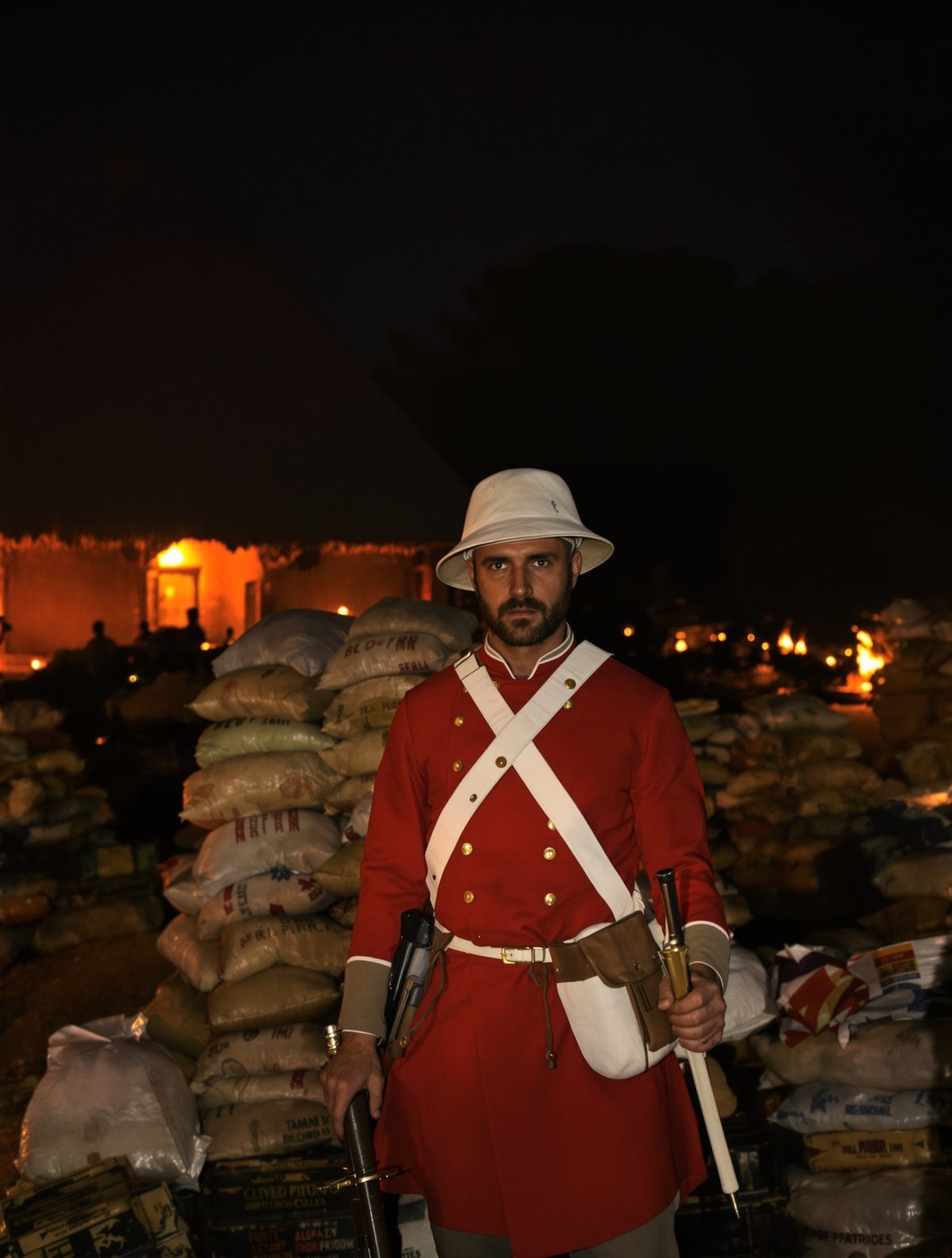
As the men prepared for the oncoming siege, the decision was made. They would stand and fight. Under the guidance of Chard and Bromhead, the defenders assembled a barricade from mealie bags, biscuit tins, and wooden crates—anything that could bolster their flimsy defenses. The breath of every man could be felt in the electrified air; the gravity of the cause binding them closer as a unit.
Sergeant Robert Jones and Private William Jones, both of whom would be recognized for their bravery, worked feverishly alongside their comrades to prepare. The garrison counted among their number native levies, who feared for their lives and abandoned the post before the fighting began. Those who remained braced for impact, the weight of the coming siege upon their shoulders.
These men were fighting not just for survival but for every brother standing beside them. Familiar faces, a shared cacophony of anxiety and determination—this was the steel in their spines, the fire in their resolve.
Clash of Warriors: The Night of Terror
As navy dusk gave way to blackness, the first ululating cries of the Zulu army could be heard. An army carried by stealth and swiftness, 4,000 warriors descended upon the mission station, the dark sea of humanity crested in war chants and weaponry.
The Zulu had developed the "horns of the bull" strategy, a tactical envelopment that sought to encircle their foes and crush them like cattle seized by bramble. Yet, the men at Rorke's Drift were armed with Martini-Henry rifles—standard issue, but potent for their time. Lethal noises cracked the night as volleys of shots rang out. The attackers surged; relentless waves beating against granite-like resilience.
Hours stretched like days as the battle raged through the night. Military camaraderie took the form of survival instincts, and the compound became a fiery crucible of ceaseless determination. It held against all odds until the pale fingers of dawn revealed victory for the British.
The Aftermath: Valor Beyond Measure
By the time the first light arrived, the reality of what had occurred began to seep into the weary bones of the defenders. The ground was littered with the fallen, a grievous tapestry of what made warriors and martyrs. Only 17 British soldiers lay dead, but their legacy would extend beyond statistics.
In recognition of their valor, 11 Victoria Crosses were awarded—the most ever awarded for a single action in British military history. Lieutenant Chard, Lieutenant Bromhead, and seven of their comrades in arms received the medals personally, in a testimony to the rigor, courage, and defiance showcased during the relentless siege.
The Victoria Cross, with its inscription "For Valour," embodies not just deeds of bravery but becomes a symbol of steadfastness against the face of dread. It honors a human spirit that refused to succumb, even when hope dwindled to a mere glimmer.
Legacy of Rorke's Drift: Lessons in Courage
The battle of Rorke's Drift has continued to resonate through time, standing as a beacon of collective resistance that fortifies the heart against terror. It speaks to a dimension of bravery that transcends fear, involving one's principles, comrades, and the shared humanity tied in the act of defiance.
Today, the lessons gleaned from Rorke's Drift hold relevance beyond military history. It provides a narrative of unity and resilience, a countermeasure to despair when confronted by life’s battlegrounds. The men who fought there bore witness to an enduring truth: even when the odds are profoundly unwinnable, courage can emerge victorious.
In an age where new challenges present themselves with every dawn, the echoes of Rorke's Drift remind us that the heart of valor is a force that still courses through the veins of society. They tell us that when darkness encroaches, conviction paired with camaraderie has the power to turn the tide. This, indeed, is the legacy and the lesson left by those 150 brave defenders.