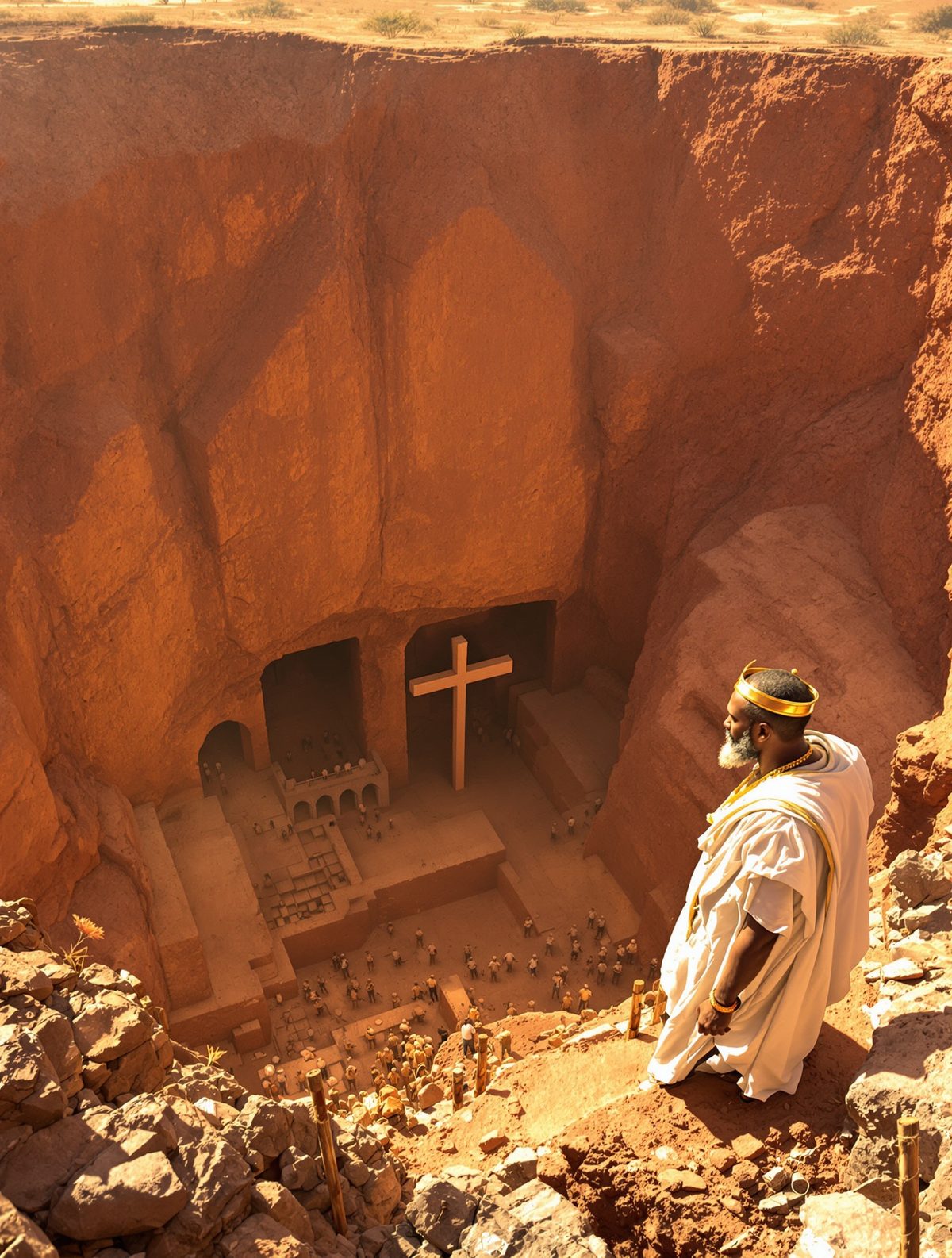
In the highlands of Ethiopia, where the air is crisp and the landscape is studded with rugged peaks, a series of sacred structures emerges from the earth in a bewildering display of architectural ingenuity. These are not your typical buildings; they seem as if they have grown directly from the ground itself. Carved directly into and downwards from the rock, the monolithic churches of Lalibela are an otherworldly sight that defies age and logic. Constructed in the late 12th century, this cluster of eleven churches reveals the vision and tenacity of King Lalibela, who, armed with divine inspiration—or so the legend goes—sought to create the "New Jerusalem" in the heart of Africa.
The Vision of Lalibela
According to Ethiopian tradition, King Lalibela was not merely a monarch; he was chosen by God. Born in the late 12th century, Lalibela was said to have experienced a profound spiritual vision where angels instructed him to create an earthly imitator of Jerusalem. The real Jerusalem had become perilous for Ethiopian pilgrims, and Lalibela aimed to reclaim the spiritual zeal and fulfill a religious prophecy as decreed by the divine.
The vision was not just about erecting structures from earthly materials but about carving them from spiritual conviction. Lalibela's undertaking was unique in its architectural philosophy. Rather than raising walls upward from the ground, his command was to sculpt downward into the volcanic tufa—a soft but durable rock—to create seamless masterpieces unaffected by traditional methods and limitations.
A Masterclass in Stone Carving
The task of chipping away at the solid bedrock to create the eleven churches was nothing short of Herculean. Skilled artisans, masons, and legions of laborers wielded simple tools—chisels, hammers, and axes—to slowly etch out each detail. Detailed work like cutting windows, doors, and intricate carvings from one giant mass of rock required impeccable precision and artistry.
This endeavor spanned decades, with some estimates suggesting that thousands of workers were involved throughout the project. Yet, remarkably, each church is a monolithic entity—a single continuous piece of rock. The largest of these churches, Biete Medhane Alem, spans 11.5 meters in height, 33.5 meters in length, and 23.5 meters in width, and is said to be the largest monolithic church in the world. The more famous Biete Ghiorgis, or Church of St. George, stands distinct with its cross-shaped design.
The Spiritual and Cultural Nexus
Lalibela's churches were more than architectural marvels; they represented a spiritual and cultural haven. Ethiopian Orthodox Christianity had a firm footing in the area, nurtured by a long tradition before King Lalibela took the throne. Each church served a unique purpose, dedicated to specific saints, with design elements reflecting the spiritual narratives of the faith they enshrined.
The churches were built with a network of connecting tunnels and passageways, crafting an enclave that encouraged communal worship and spiritual introspection. This design symbolized unity, reflecting both Ethiopian religious traditions and the rich tapestry of its diverse cultural heritage. Ancient frescos adorn some churches' walls, remnants of a once vibrantly decorated interior that spoke volumes of the era's artistry.
A Kingdom of Mystery and Wonder
Legend envelops these structures just as firmly as the rock itself encases them. Local folklore suggests that the construction of these churches was assisted by angels at night. Though this ethereal account raises eyebrows, it is not surprising given the sheer mystery and wonder surrounding these creations.
What's often less discussed is the global knowledge exchange that may have influenced these designs. Ethiopia maintained relations with Christian states, and scholars suggest that Mediterranean and Middle Eastern influences could have blended with local styles to produce a distinctive architectural form that defies easy categorization.
Legacy in the Rock
As time marched forward, the churches of Lalibela retained their sacred aura and significance. Now a UNESCO World Heritage site, they continue to draw pilgrimages from Ethiopian Orthodox Christians and intrigue historians, architects, and curious travelers worldwide. Surprisingly, these ancient structures have largely withstood the tests of time and nature, their integrity preserved without collapse or significant damage.
Yet, amid the mystery and allure of Lalibela lies a profound narrative—a story of vision, endurance, and the unyielding bond between faith and culture. It teaches us about the infinite possibilities of human creativity when channeled with purpose and devotion. It also serves as a touchstone of African innovation long before European colonial narratives shaped much of what is traditionally acknowledged as world history.
Modern visitors to Lalibela walk in an ancient world brimming with history, spirituality, and the indomitable spirit of a people whose religious fervor achieved unimaginable feats. They serve as a timeless reminder of a humanity seeking divine connection through its creations, underscoring the universal desire to express faith in tangible, awe-inspiring forms.
In an age where digital marvels captivate our attention, the rock-hewn churches of Lalibela stand as a testament to human imagination's enduring power and the enigmatic faith journeys that continue to unfold beyond the limits of our understanding. They remind us of our own stories— the epic legacies we are all capable of carving out within and upon the landscapes of our lives and cultures.