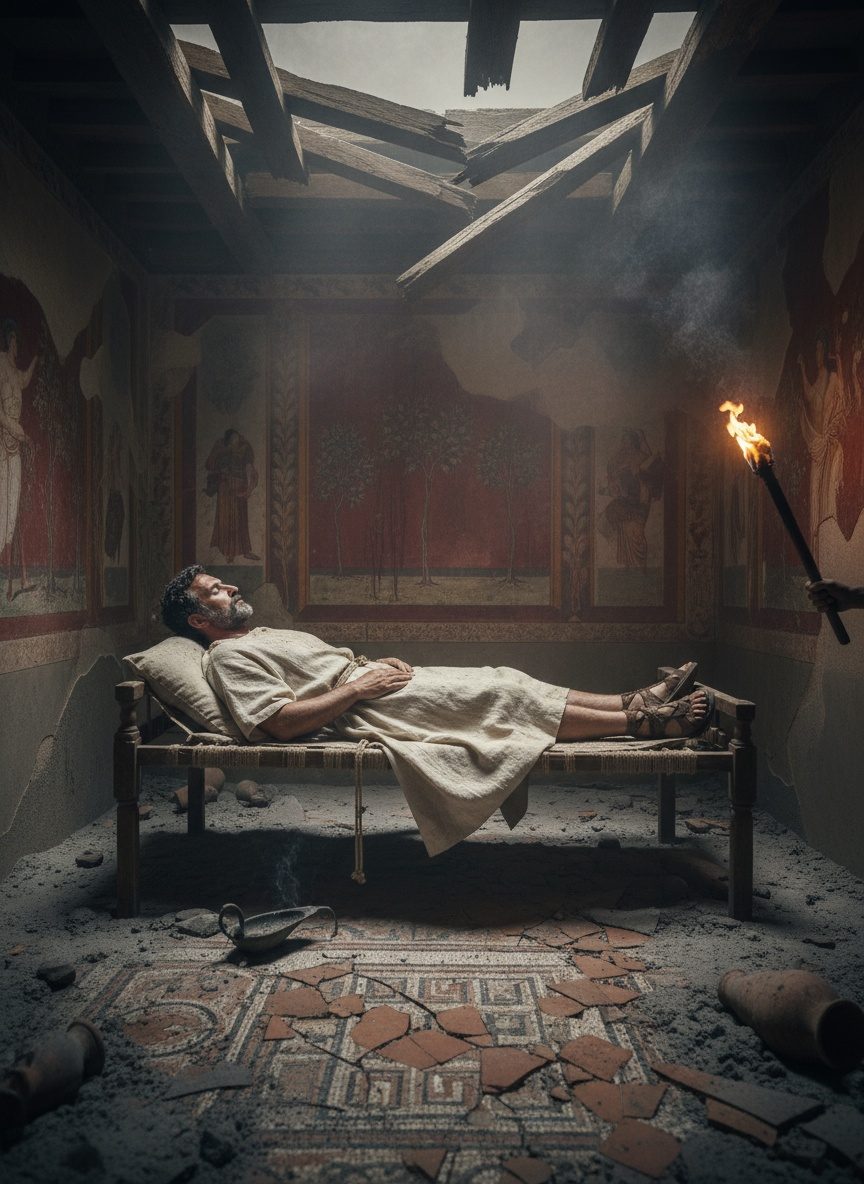
The ground trembled beneath his bed, a low rumble growing in force as a strange, hot wind swept through the streets of Herculaneum. Without warning, the serene night transformed into chaos. Pyroclastic waves raced from Mount Vesuvius, an unstoppable force of nature that rendered sound into a distant echo as the city succumbed to a fate more fearsome than mere ash. The caretaker, asleep on his wooden bed, never awoke to witness the fierce onslaught. In an instant, life flickered out, overtaken by the rapid advance of heat and fury that would freeze his final moments for nearly two millennia.
As the eruption unfolded with unfathomable speed and intensity, Herculaneum, situated perilously close to the volcanic epicenter, became a consuming theater of catastrophe. Unlike Pompeii, which was buried under layers of volcanic ash and pumice, Herculaneum suffered a more vicious fate. The pyroclastic flows—superheated surges of gas, ash, and rock traveling at breathtaking speeds—poured over the city with deadly precision. Everything organic was seared instantly; buildings were stormed and lives snuffed out in a merciless sweep.
In the aftermath, what lay beneath the hardened volcanic covering of Herculaneum challenged the boundaries of science with a grim yet fascinating discovery. Among the victims of Mount Vesuvius' wrath, a man known only by his skeletal remains was found in a civic building, lying as if he'd been simply suspended in sleep. But the conditions of his death had orchestrated something even more remarkable involving his body. Inside his skull, scientists discovered something unprecedented: his brain matter had been vitrified, transformed into a substance akin to glass.
This unsettling miracle of preservation was no trick of time or imagination. Vitrification occurs when a substance is exposed to such intense heat that it bypasses typical decay, causing it to solidify into a glassy state. For this caretaker, the unique convergence of circumstances—temperatures soaring upwards of 500 degrees Celsius—created an environment where his brain matter underwent this rare transformation. As researchers delved deeper into the find, the glassy relic revealed not only itself but also a unique insight into the catastrophic power of volcanic fury.
The city of Herculaneum had stood as a testament to Roman opulence, its residences adorned with vivid frescoes and intricate mosaics that whispered of a vibrant civilization basking in the doldrums of prosperity. Sheltered from prying eyes by Vesuvius' towering presence, it was the chosen refuge of the affluent, a burgeoning town bathing in the promise of its era. That promise turned into an uncanny preservation, forever capturing the lives, rituals, and moments of an ancient existence frozen beneath volcanic stone and ash.
Unlike Pompeii, Herculaneum's tragedy had lain hidden from sight until the 18th century when excavation efforts revealed its uncanny secrets. The city's position, shielded under a thicker protective crust of volcanic material, provided an extraordinary view of Roman life in a snapshot. Yet none was as breathtaking as the story told by the caretaker's glass brain, a microcosm of ancient Herculaneum's finale. Science could now peer through the window of time with unparalleled insight into the events that unfolded on that fateful day.
For historians and scientists alike, the vitrified brain stood as an artifact of death's immediate power—a cruel yet intrinsic element of eruption-induced mortality. Herein lay a narrative not heralded by grand battles or gilded triumphs, but by nature's unabated might. As the brain's unique transformation came to light, it signaled a compelling chapter in the union of natural history and human tragedy, illuminating corners of our understanding previously obscured by the veil of interpretation.
This new lens into history not only mapped the aftermath of one of antiquity's deadliest eruptions but highlighted the delicate balance at the heart of human existence. As technology and techniques progressed, so too did the depth of story reclaimed from remnants overlooked or misconstrued in the shadows of catastrophic pasts. While the vitrified brain echoed the silence of its bearer, it loudly uttered reminders of vulnerability and resilience interwoven across the fabric of human experience.
Today, the city of Herculaneum continues to unearth secrets that redefine the narratives of bygone eras, each finding adding breadth to the intricate tapestry of history. Standing among the relics of destructive beauty, the man in the bed is no longer anonymous. Instead, he shares a story not of conquest or grandeur, but of mortality, science, and profound improbabilities. Through him, we grasp a deeper understanding of nature's caprices and the immutable dance between life and destruction—a timeless cycle recorded once more by the glass inside his skull.