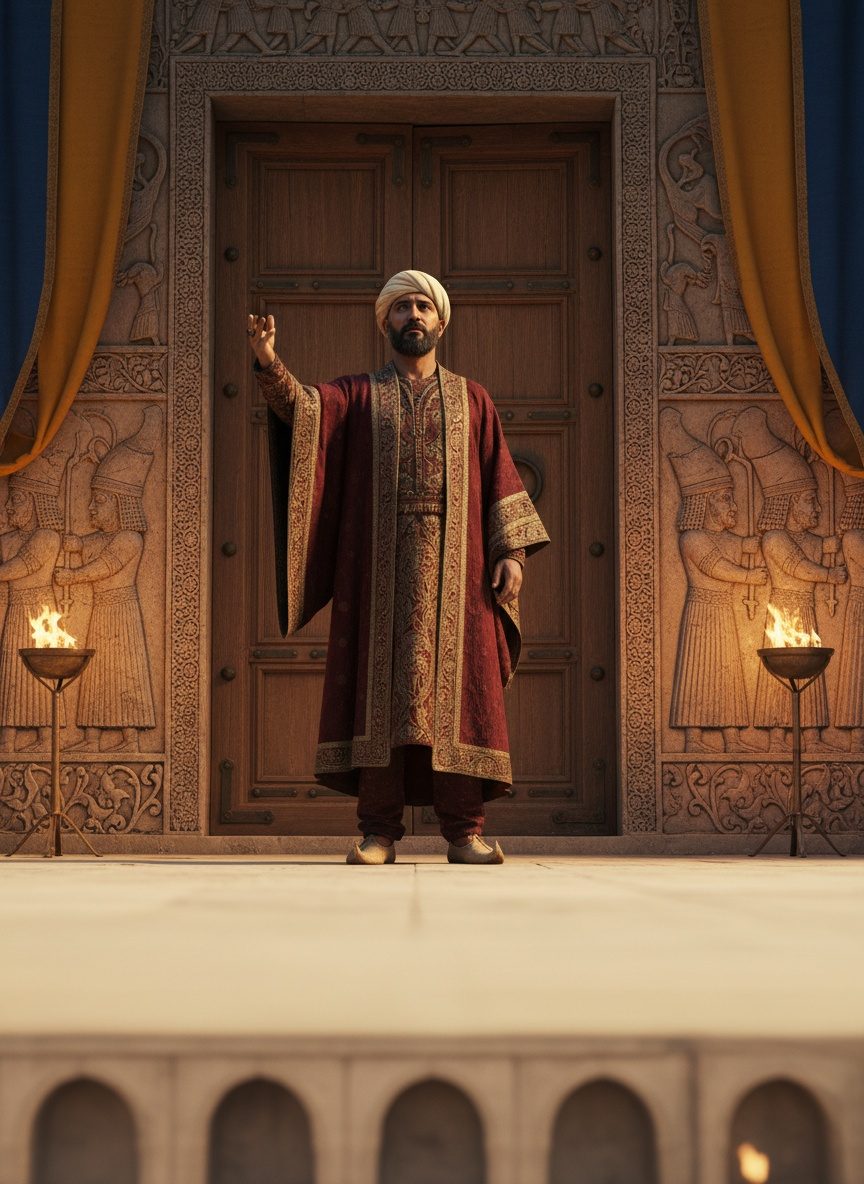
Prexaspes was a name few have heard. Yet, his actions reverberated through the annals of history.
The ancient empire of Persia was a land of opulence and immense power, ruled by Cambyses II, son of the illustrious Cyrus the Great. The king’s word was law, and he wielded it with absolute authority. Yet, above all the treasures and territories, trust was the rarest commodity—a trust Prexaspes earned as Cambyses' most trusted confidant and messenger. His loyalty was unparalleled, or so it seemed, until he was entrusted with a command that would unravel the very fabric of his reality.
Cambyses, the shadowed king, was a man of deep paranoia and suspicion, traits that often clouded his judgment. His paranoia turned insidious when it landed on his own brother, Bardiya, whom he perceived as a very real threat to his throne. Whether out of fear, jealousy, or the toxic haze of power, Cambyses made a chilling move. He ordered Prexaspes to silence Bardiya forever—a task cloaked in darkness and secrecy, the echoes of which were intended to remain hidden through eternity. Prexaspes, bound by a loyalty perhaps even he didn't fully comprehend, did as he was told. He executed the king’s command with a heavy heart, extinguishing a royal life in the shadows of Persia’s grandeur.
Time passed, but the deed weighed heavily on Prexaspes's conscience, its enormity compounded by Cambyses' spiraling descent into tyranny. The court teetered under the king’s volatile temperament, an atmosphere fraught with dread and whispered conspiracies. It was during one of these shrouded days of unrest in 522 BC that Cambyses, in a moment of perfidious calculation or self-destructive pride, sought to further test Prexaspes’s allegiance. The king demanded that Prexaspes stand before the army and declare to all that Bardiya was alive and well, a grotesque spectacle to pacify brewing dissent.
The gathering was grandiose, an assemblage fit for the king's deceptive theater. Warriors clad in armored splendor, their faces hardened by battle but softened by a shared loyalty to a king they did—or did not—believe in, awaited Prexaspes's pronouncement. As he ascended the dais, the atmosphere rippled with the anticipation of the lie he was expected to utter. Here stood a man caught between the crossfires of fear and morality, duty and conscience.
As his voice rose over the desert winds, Prexaspes felt the burn of truth coursing through him, refusing the fetters of falsehood. The spoken words needed to be stamped permanently into the annals of time. And so, defying the cruel coil of fate, he bared his soul to the crowd, confessing to the assassination of Bardiya by his own hand, under the orders of the king. Rather than quelling the army's disquiet, Prexaspes set ablaze the tinderbox of rebellion.
The revelation plowed through the assembly like a storm, breaking the walls of deception Cambyses had so desperately tried to erect. Shock turned to murmurs, then to shouts. The air buzzed with incredulity, and the court quaked with the reverberations of Prexaspes's uncompromising truth, uttered where lies were meant to stand. In those moments, Prexaspes was transformed from king’s vassal to solitary bearer of truth. Triumph and tragedy were now one; his life lay forfeit for granting the audience the power of knowledge, the weight of truth transforming the foundations of their empire.
What followed was a whirlwind of events that altered the course of Persian history. The confession contributed to the uprising against Cambyses’ increasingly despotic rule, leading to the ascension of Darius the Great. What was once a secret kept in the darkest recesses of the Persian court catalyzed the empire's trajectory. Prexaspes’s choice was a defining moment, reminding us of the power individuals hold even in the face of overwhelming power.
Today, the story of Prexaspes resonates with a timeless truth: the courageous acts of conscience have the power to shake empires. The echoes of his confession are felt whenever truth confronts tyranny, silent witnesses to events that redefine nations. Prexaspes paid the ultimate price for his faithfulness to truth, yet his legacy lives on as a brief flicker of integrity in an era shadowed by deceit. It is an ancient whisper urging us to question the stories we're told and to recognize the quiet battles fought by those whose honesty can change the tides of history.