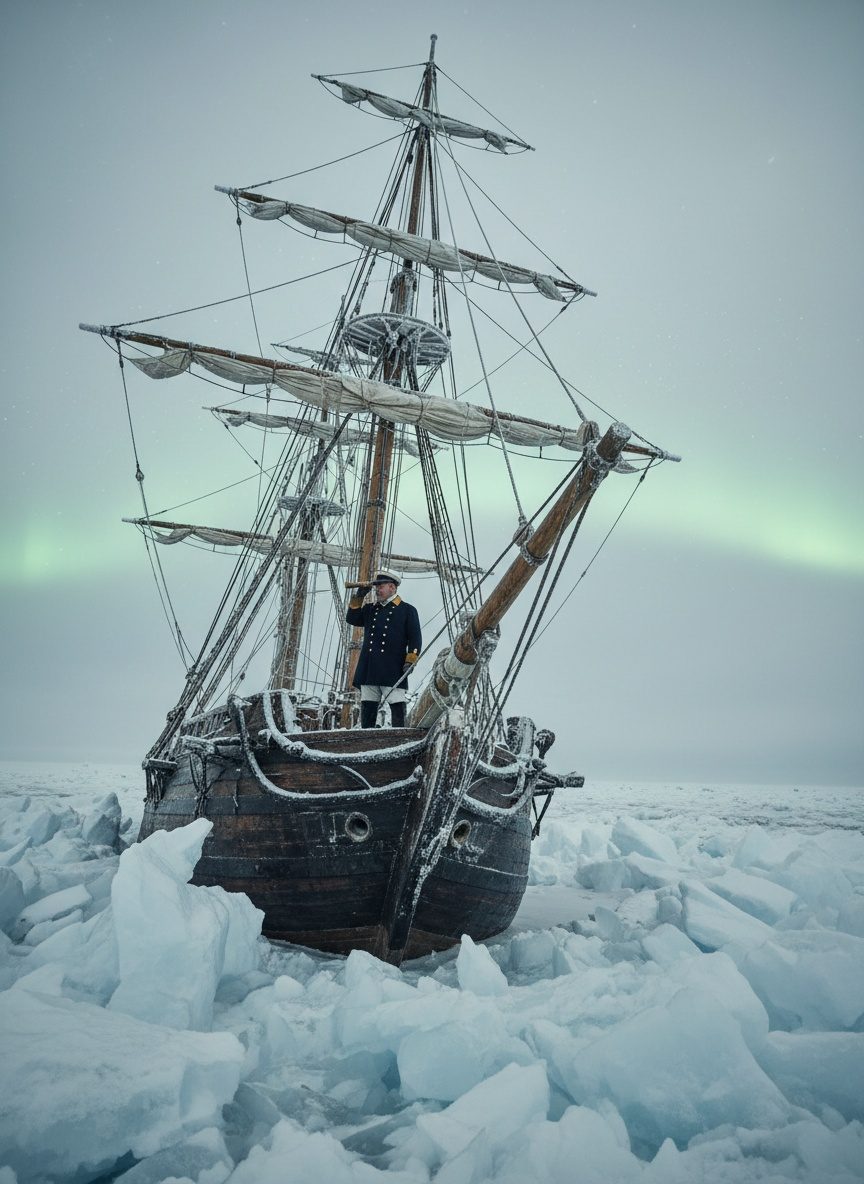
In the frigid silence of the Arctic, the sun dips and dances in twilight, illuminating an enigmatic tableau frozen in time. The doors creak open, revealing a behemoth of bygone maritime mastery buried beneath sheets of ice, untouched by the hand of man for over a century. This is the story of HMS Erebus and HMS Terror, vessels embarked on an ambitious voyage but claimed by the elements. Their fate remained a mystery locked in the unyielding grip of the polar landscape — until the day the ice finally relinquished its secrets.
The Hopeful Departure of 1845
On May 19, 1845, two stately ships embarked from Greenhithe, England, their brasses gleaming under the sun. The expedition, led by Sir John Franklin, was a manifestation of Victorian ambition and the pursuit of knowledge. Franklin, a seasoned explorer despite being in his late 50s, was tasked with navigating a Northwest Passage — a coveted trade route that promised to halve the time of voyages to the Pacific and Asia.
The HMS Erebus and HMS Terror, robust with iron reinforcements, were the pride of the Royal Navy. With them sailed 129 men, including Franklin's second-in-command, Captain Francis Crozier, and Lieutenant Graham Gore. These men carried sundries for three years, including over ten thousand cans of preserved food — a revolutionary invention set to sustain them in the wilderness of snow and sea.
Yet as the months rolled into years, silence loomed larger than any news from the Arctic. Initial optimism soured into anxious whispers: "What happened to Franklin's men?"
Into the Heart of the Frozen North
As Erebus and Terror made their way through Lancaster Sound in July 1845, spirits were high. Sightings by whalers suggested that the ships plied on with purpose and direction. However, as they moved deeper into the Arctic archipelago, the very terrain turned treacherous. Ice floes, heavier than anticipated, ensnared the ships, holding them hostage to the whims of nature.
For nearly two years, records suggest the ships remained icebound near King William Island. What compelled these men in the icy darkness can only be surmised from the harrowing remnants found much later: a letter, dated April 1848, offers a snapshot of desperate measures as food supplies dwindled and men succumbed — not just to the cold, but potentially lead poisoning from the canned food, a shocking revelation that surfaced much later.
Clues Left in the Frozen Waste
The British government, driven by hope for the successful return, offered a hefty reward for information on the expedition's fate. Dozens of search parties trotted after the elusive trail of the Franklin Expedition, each returning with as many questions as discoveries. One hundred fifty packages and a collection of bleached bones found along the shoreline painted a picture of despair and survival.
Among the most poignant discoveries was found by Dr. John Rae in 1854, whose interactions with the Inuit unearthed oral testimonies of white men treading the ice in grotesque states of starvation, resorting to cannibalism in their final, frantic days. Ultimately, society dismissed Rae’s findings, but these tales whispered truth amid the frozen desolation.
The Icy Graves Revealed
For the longest time, the Arctic refused to yield the whereabouts of Erebus and Terror. It wasn't until 2014 that the intrepid spectre of HMS Erebus was finally located, and soon after, in 2016, the discovery of HMS Terror gripped the imaginations of historians and armchair explorers alike. Both ships lay peacefully preserved — a triumphant relic of Victorian ingenuity and ambition.
What intrigued historians were the small details: the captain’s desk in Erebus, dishes stacked neatly in huddle aboard Terror. These findings transported modern minds back to that ill-fated expedition, allowing a sensory glimpse into those days when hope and desperation walked hand in hand under the unforgiving Arctic sky.
Lessons from the Ice
The fascination with the Franklin Expedition endures not simply because a mystery was solved, but because it remains an enduring cautionary tale about the unstoppable march of progress and the environment's indomitable force. The expedition's tale is a human story — courage tested beyond limits, technology overshadowed by human limitations, and a stark reminder that nature can be as indifferent as it is majestic.
While Sir John Franklin’s grand quest ultimately spiralled into tragedy, it significantly contributed to the mapping of the Arctic. In that sense, the expedition did not entirely fail. Strikingly, the story of this doomed voyage has a contemporary echo: as today's explorers and scientists face an uncertain Arctic wilderness shaped by climate change, the lessons from 1845 urge caution and respect for the great unknown.
Ultimately, the tale of the Erebus and Terror is far more than a maritime drama; it is a timeless human saga that continues to inspire and warn those who dare seek what lies beyond the horizon.