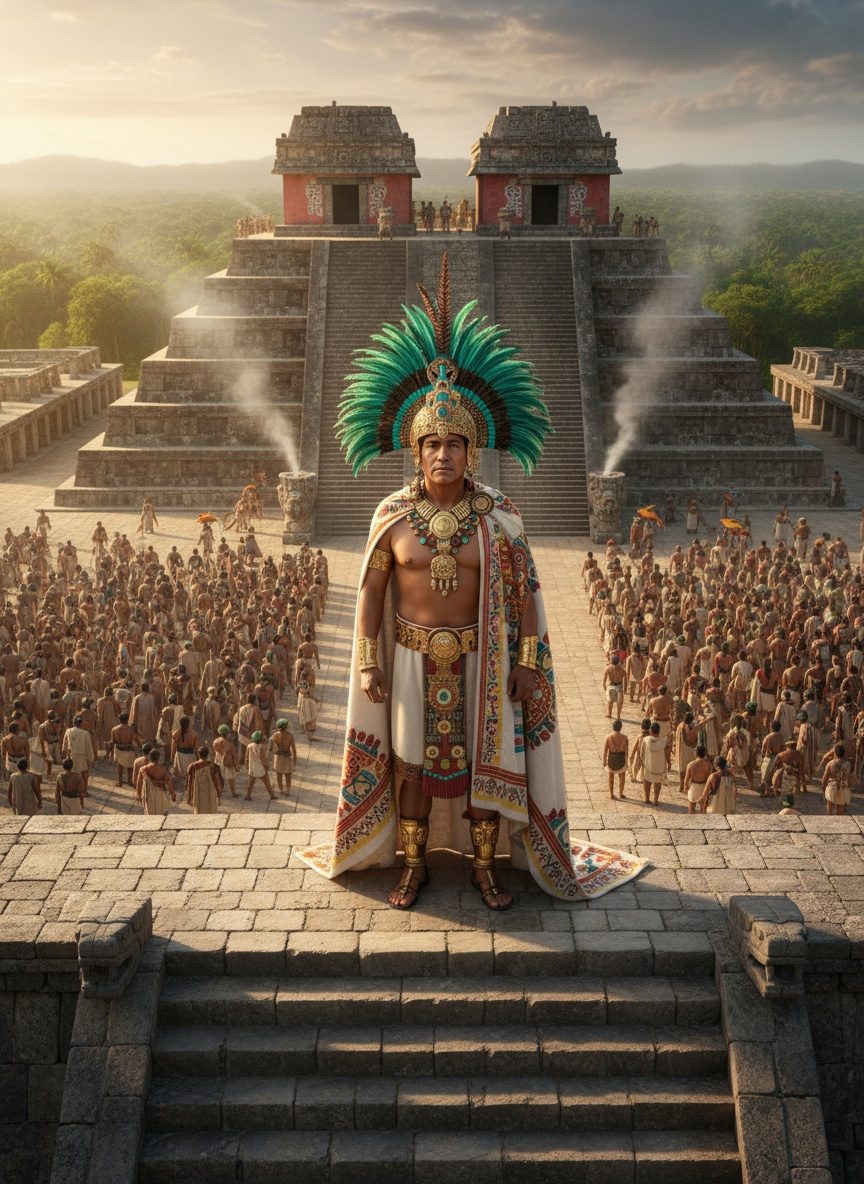
In the heart of the Valley of Mexico, where the shimmering waters of Lake Texcoco once mirrored a thriving metropolis, there lay Tenochtitlán, the jewel of the Aztec Empire. Its emperor, Moctezuma II, ruled with a sense of grandeur matched only by the city itself. The year is 1519, a pivotal moment that history would remember not just for its cataclysmic events but for the extraordinary hospitality of a ruler who met the strangest fortunes on his own palatial doorstep.
The Arrival of Strangers: A Prophecy Fulfilled?
Picture the bustling streets of Tenochtitlán on November 8, 1519, a city designed with such precision and sophistication that it astounded even the most jaded of visitors. Against this backdrop arrived Hernán Cortés, the charismatic yet cunning conquistador, accompanied by his cohort of Spanish soldiers. These strangers cut an alien silhouette against the city’s elaborate temples and bustling markets.
Moctezuma II, aware that these visitors weren't ordinary, believed them to be the living fulfillment of an ancient prophecy—perhaps even incarnations of gods. Certain omens, from bizarre celestial phenomena to unsettling earthquakes, had unsettled the Aztec psyche. It had been prophesied that the deity Quetzalcoatl would return, and to Moctezuma, Cortés bore an uncanny resemblance. Distrustful yet circumspect, Moctezuma chose to welcome them with open arms, initiating a dramatic sequence of events that would ripple through history.
Gifts of Gold: A Fatal Generosity
The initial reception of Cortés and his men seemed more like the visit of exalted guests than foreign invaders. Moctezuma lavished upon them the finest treasures of the empire. Gold, feathers, and precious gems passed hands in what he hoped would be the cement of friendship, or at least benign misunderstanding. The emperor’s largesse was epic in scale; some estimates suggest Moctezuma presented quantities of over 20 tonnes of gold in various forms.
Yet gold was not the only gift. Food, textiles, and even entire palatial accommodations were offered in abundance. Imagine the Spaniards’ awe as they entered the Axayácatl Palace, their "residence," resplendent with the opulence of Aztec craftsmanship. In this generous act, Moctezuma tied his fate with the yarn of such history-altering complexity that even the gods couldn't have predicted the looming chaos.
Threads of Betrayal: The Intrigue Unravels
The relationship between Moctezuma and Cortés began as a delicate dance of diplomacy but quickly soured. The Spaniards, initially amazed by the city and its treasures, soon became aware of their own precarious position. Cortés, ever the strategist, exploited the emperor’s vulnerabilities. His men seized the emperor, effectively making Moctezuma a puppet ruler, hoping to control the vast empire from behind the scenes.
Amplified by both greed and fear, tensions escalated. The Spanish soon found themselves the de facto rulers, yet trapped within the city’s labyrinthine waterways and avenues. It was a classic tactical straitjacket. What had begun as an exchange of curiosity transformed into an occupation stoked by treachery—a scenario unforeseen by Moctezuma but devastatingly familiar to every empire’s playbook.
The Emperor’s Fall: A Downfall Shrouded in Mystery
As tensions reached their zenith, the year 1520 marked a grim chapter in the saga. On June 29, under mysterious circumstances, Moctezuma II's reign and life abruptly ended. Whether he fell by the hands of his own despised subjects, who saw him as a traitorous collaborator, or by the Spaniards is a matter of historical debate. A once-great emperor was reduced to a lamentable figure—a cautionary symbol of shattered trust and impossible choices.
After Moctezuma’s demise, Spanish accounts noted that the Aztec people threw stones and arrows, their grievances erupting in riotous torment upon learning of his perceived betrayal. The loss was more than personal; it was the symbolic collapse of an age, the dissolution of traditions held sacred for centuries.
The Aftermath: An Empire’s Echo
In the wake of Moctezuma's death, the vast Aztec Empire unraveled, succumbing to both internal division and the relentless tide of European conquest. By 1521, Tenochtitlán was razed, its magnificent temples dismantled stone by stone, repurposed to build the new colonial foundation of Mexico City. The civilization that reverberated with rich traditions and vigorous spirit found itself reduced to historic echoes.
What remains most striking about Moctezuma's story is how a moment of remarkable hospitality—an openness rooted in the richly spiritual and cultural fabric of the time—led to the most consequential pivot of an entire civilization. His trust, however misplaced, and his attempts at diplomacy spun the wheel of fate, underscoring the unpredictable nature of human history.
Reflections: Lessons from the Aztec Empire
Today, Moctezuma’s story serves as an eternal reminder of the complexities and paradoxes that define societal interactions. In an era when global exchanges are ubiquitous and cultural doors open wide, his legacy urges us to ponder the consequences of welcoming the unknown. Can hospitality and trust serve as bridges to mutual enlightenment, or do they risk becoming the channels of destructive change?
Moctezuma's tale—a narrative of welcoming strangers only to be undone by them—endures as a poignant lesson. It invites reflection on the impermanence of empires and the cyclical nature of history, urging each of us to remain wary yet hopeful in the grand saga of human connection.