Jane Wenham was destined for the gallows. But destiny had a surprise intervention.
The Witchcraft Craze in 18th-Century England
In 1712, England was a nation that still harbored a fear of witches lurking in the shadows. Though the fervor that led to mass witch trials in the previous century had waned, pockets of hysteria persisted. It was an age where superstition often trumped reason, and rural villages were fertile ground for fear. Such was the backdrop against which Jane Wenham found herself labeled a witch in the village of Walkern, Hertfordshire.
Desperate whispers spread among the villagers like wildfire. Rumors of Jane's supposed witchcraft circulated on the winds of paranoia, quickened by misunderstandings and scapegoating. People spoke of bewitched livestock, unexplained illnesses, and misfortunes that coincidentally colored life with dread. When a local servant accused Jane of cursing her, the stage was set for a trial infused more with superstition than justice.
The Trial That Was Supposedly Open-and-Shut
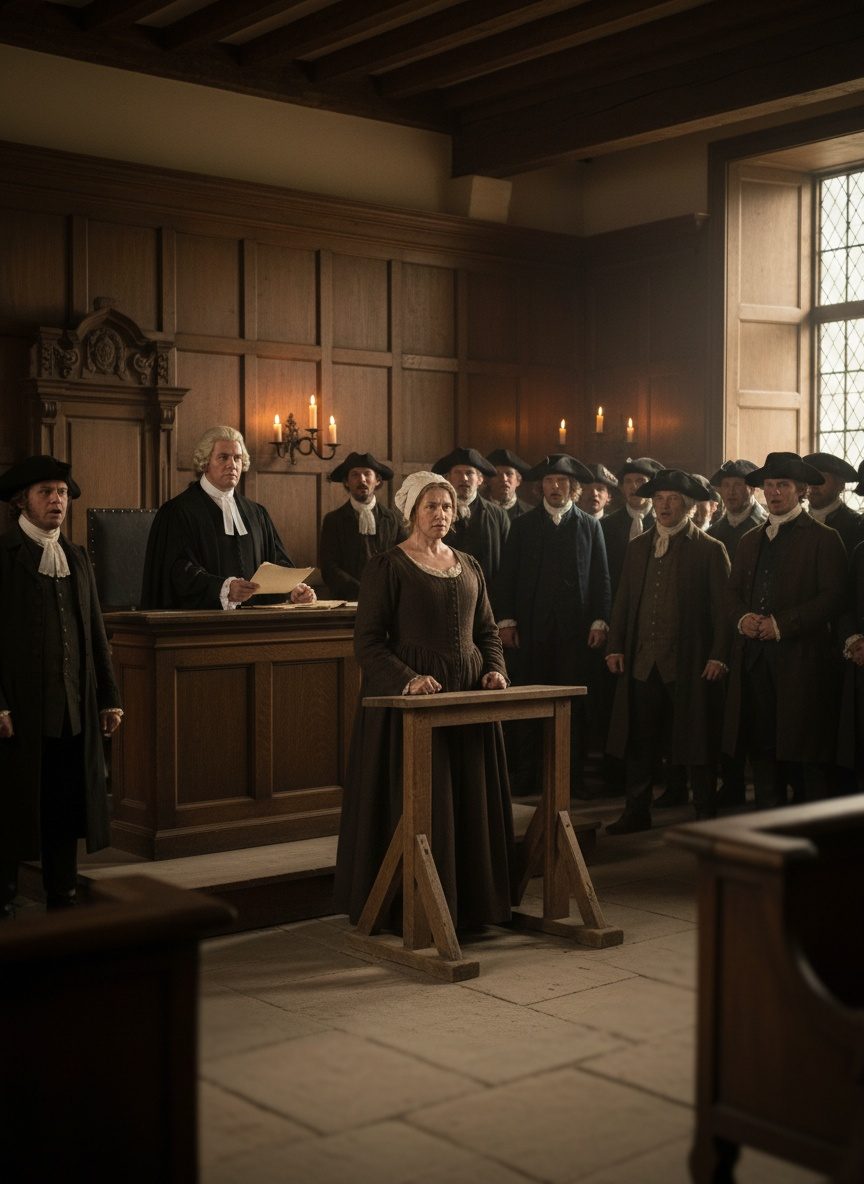
As Wenham faced the gathering crowd in the makeshift courtroom, the air hung heavy with anticipation. The case brought against her was both bizarre and terrifyingly potent in its simplicity. Testimonies claimed Jane had been seen flying over hedges on a broomstick and conjuring spirits. Such accusations had led many before her to the gallows, and onlookers bristled with the promise of a familiar, if ominous, conclusion.
The trial's momentum seemed unstoppable. With a courtroom hungry for conviction rather than justice, outcomes like hers rarely ended in acquittal. The undercurrent of a foregone conclusion whispered through the rafters as Jane sat accused of offenses rooted more in myth than reality. She was a solitary figure fighting against an overwhelming tide of expectation.
The Judge Who Saw Through the Darkness
Enter Sir John Powell, an embodiment of the enlightenment creeping into English law. Presiding over Jane Wenham's trial, Powell was a man not easily swayed by common hysteria. His reputation for fairness and adherence to evidence was well-known. As the proceedings unfolded, he scrutinized each allegation with a critical eye, demanding rational explanations instead of succumbing to fear-driven assumptions.
One account that particularly caught Powell's attention was the claim that Jane could transform into a cat. Rather than dismiss this as irrefutable proof of witchcraft, Powell simply asked, "There is no law against being a cat, is there?" With that, he dismantled the prosecution's arguments, exposing them as lacking in logic. His refusal to treat fantasy as fact dismantled the prevailing notion that insinuations alone were proof enough for conviction.
The Verdict that Reshaped English Legal History
Powell's judicious approach culminated in a remarkable verdict. Jane Wenham was indeed found guilty, but when it came time to pass judgment, Powell issued a declaration that stunned the court: he granted her a royal reprieve. This act not only saved Wenham from execution but also marked a pivotal point in the judicial perspective on witchcraft. His decision underscored the need for evidence, setting a precedent for separating irrational fear from legal proceedings.
This watershed moment echoed beyond Wenham's acquittal, reverberating throughout the nation. England's witchcraft acts remained repealed but inactive, signaling a shift toward enlightenment principles and away from the dark shadow of superstition. Powell's influence made it clear that justice should never yield to collective hysteria, a principle that began its slow seep into the wider fabric of society.
The Ripple Effect of One Judge's Resolve
Jane Wenham's trial could have ended as another forgotten chapter in the annals of England's infamous witch hunts. Instead, it became a turning point, thanks to one judge's integrity and willingness to challenge deeply entrenched beliefs. Powell's stance offered a new lens through which English law would be viewed—a lens where logic prevailed over fear, and justice was not dictated by public clamor.
As we reflect on this historical moment, we are reminded of the power individuals hold to effect change. The trial of Jane Wenham emphasizes the impact of reasoned thought and moral courage. In an era where paranoia could easily overpower logic, Powell's choices resonate with a timeless message: fairness and reason are enduring pillars of justice. His legacy, woven into the larger tapestry of legal history, serves as a reminder of our ongoing duty to question assumptions, to seek truth, and to ensure that fear never masquerades as justice again.