August 1, 1759. Dew glistened on the grass of the German plains as if waiting for the footprints of history.
The Calm Before the Storm
As the sun rose over the battleground near the small town of Minden, a new day of the Seven Years' War unfolded. Among the clamor of military preparations, there stood six British infantry regiments—stoic, resolute, and poised for the honor and danger that awaited them. With the expanding theatre of war, Minden had become a focal point in one of the 18th century's great conflicts, drawing in some of the most formidable forces of the age.
The French army, known for its dashing and disciplined cavalry, had been a juggernaut throughout Europe, carving paths of conquest with iron-clad hooves and gleaming sabers. The cavalry of France was deemed unrivaled—rapacious, confident, and highly esteemed—a force feared by any opposing soldier. However, standing across from them that day was a collection of British redcoats who would challenge the French boast of equestrian dominance in a way that history had seldom seen.
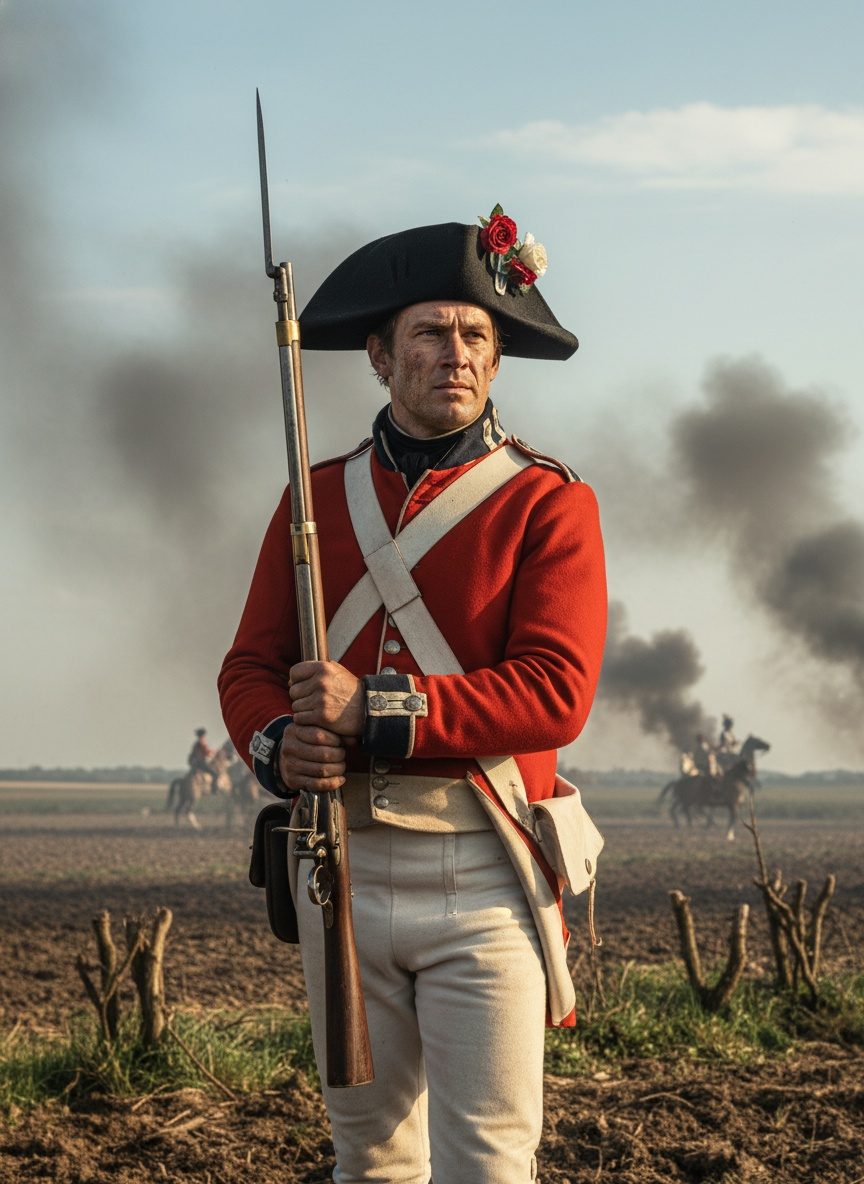
Beneath the command of Field Marshal Prince Ferdinand of Brunswick, the British infantrymen were unexpectedly marshaled into a central role. Their initial position in the allied forces' second line had been changed, perhaps by design or by miscommunication, thrusting them into the vanguard of what would quickly become a fateful engagement. The British troops, wielding their flintlock muskets, stood shoulder to shoulder, their red coats vibrant against the morning's gray mist. What separated these men from their adversaries was not armor nor might, but matchless discipline, an attribute honed across countless drills and shared hardships.
The Storm Unleashed
A little before 9 a.m., in a moment that would soon find its way into the annals of legend, these six brave regiments commenced their advance against the might of the French. The symmetry of their progression confounded onlookers, appearing to some as an illusion—tiny human figures defying a torrent of destriers rushing towards them with fury. With each step, they moved into the path of enemy cannonballs and sabers, their hearts steady, awaiting the inevitable clash.
As the French cavalry bore down, the noise was nearly deafening—hooves thundered the earth, the cries of charging horseback were swallowed only by the rhythmic pounding. Yet amidst this chaos, the British stood anchored in place, as if the world around them moved in an alternate stream. The reason behind their calm lay in a mantra known to every soldier in their ranks: "Hold your fire."
Such was the daunting wait that tested every sinew of their resolve. A volley fired too early might have spelled tragedy, but patience galore they waited, watching the whites of their adversaries’ eyes draw near. Then, in a sequence that would define the Battle of Minden, ordered fire erupted from the British muskets with lethal precision. Rank by rank, each shot cut through the rain of attacking Frenchmen like a scythe through the field—an indomitable wall of lead stopping them cruelly in their tracks.
The moment was singular. The impossible had unfolded before the world. The French cavalry, the pride of its nation, staggered, faltered, and eventually crumbled under the disciplined onslaught. What was meant to be a triumph of defensive ferocity mutated into a scene of panic and retreat, theretofore unseen in Europe—a surreal reversal that turned bravery into boons on the plain of Minden.
The Unforgettable Footfall
As the dust settled, a new dawn of British military prowess had emerged from the ashes of what was once French assurance. Minden would be remembered as a poignant whisper in time where valor met tactics and flourished in conjunction. Adjacent to the fields of slaughter, generations beyond 1759 would recall how pandemic courage had flowed through the veins of ordinary men amid tumultuous circumstances.
The impact of the Battle of Minden was catastrophic for French aspirations and gloriously revealing for British martial fiber. It shattered the myth of the invincibility of horseborne warfare, setting a precedent that cavalries were no longer the ultimate masters of determining victory on the European continent. Henceforth, infantry power would etch its dominion both in tactical writings and in the fierce strategies that followed.
The tales of these six regiments were canonized not just in the hymnal praises of Britain but also in broader historical horizons. This single August morning would forever symbolize a culmination of resolve and fortitude transcending expectations. The feats arose not from destiny but from laborious resolve, an indestructible conviction carved into individual hearts, embodying the tenacity to redefine the impossible.
And therein lies the import of Minden: a tableau of unity among soldiers, a restrained confluence of spirit in a tempest—an indelible inspiration for future generations. The pause before the storm mirrored the interlude every mind faces before meeting fear with perseverance. This lesson from Minden, however long ago, survives as a testament to those willing to embrace courage against all odds—a miracle indeed, etched eternally in the corridors of history.