Most people have never heard of Giovanni Belzoni. They should have.
In 1821, a boisterous ex-circus strongman turned intrepid explorer forever altered Britain's relationship with the ancient world. Giovanni Belzoni was his name, and he had a flair for the spectacular. In the bustling heart of London, surrounded by a sea of eager faces, he peeled back the dust-laden layers of time to reveal a glimpse into a bygone era. This wasn't just a stunt; it was the beginning of a fascination that would ripple through Victorian society and beyond, as the mysteries of Ancient Egypt surged into public consciousness.
An Unlikely Adventurer in Egypt
No one could have predicted Belzoni's future adventures based on his early life. Born to a barber in 1778 in Padua, Italy, Belzoni was destined for eccentricity. His towering six-foot, seven-inch frame and command of eleven languages marked him as an intriguing figure from the start. Initially pursuing a vocation in hydraulics, fate had other plans when he moved to England. With few engineering opportunities, he joined a circus, delighting crowds with feats that highlighted his immense physical strength.
Yet, Belzoni's real passion lay beyond the bright circus lights and applause. His restless spirit eventually led him to Egypt. In 1815, he arrived in the land of the pharaohs, captivated by its golden sands and ancient whispers. His first significant task was a Herculean one: transporting a colossal bust of Ramesses II from Thebes to the British Museum. This laborious feat, which involved assembling a complex system of ropes, rollers, and capstans, showcased not only his daring but also his ingenuity. Belzoni wasn't just a treasure hunter; he was methodical and had a keen understanding of engineering principles.
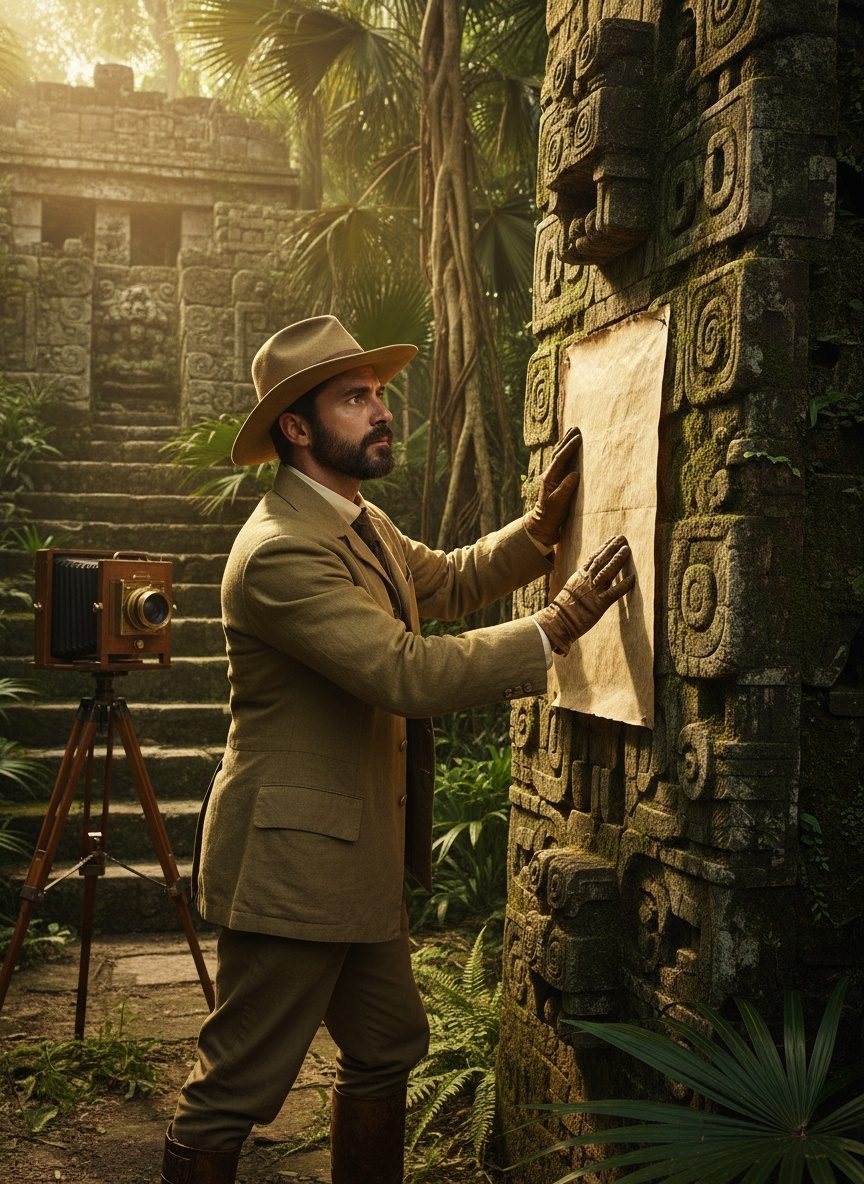
During his time in Egypt, Belzoni's discoveries were prodigious. His successful excavation of the magnificent temple of Abu Simbel was just one highlight. He was among the first to shift away the sands guarding the temple's grand façade, revealing an imposing tribute to Ramses II. However, it was the Valley of the Kings that would become his most significant canvas. In 1817, he opened the tomb of Pharaoh Seti I; the pristine relief carvings and artistry within astounded him. Here lay a world that had been dormant for millennia. Within these discoveries laid the allure and the tragedy of Egyptology — the exhilaration of unearthing history intertwined with the tangible risks of cultural exploitation.
The London Spectacle: Unwrapping History
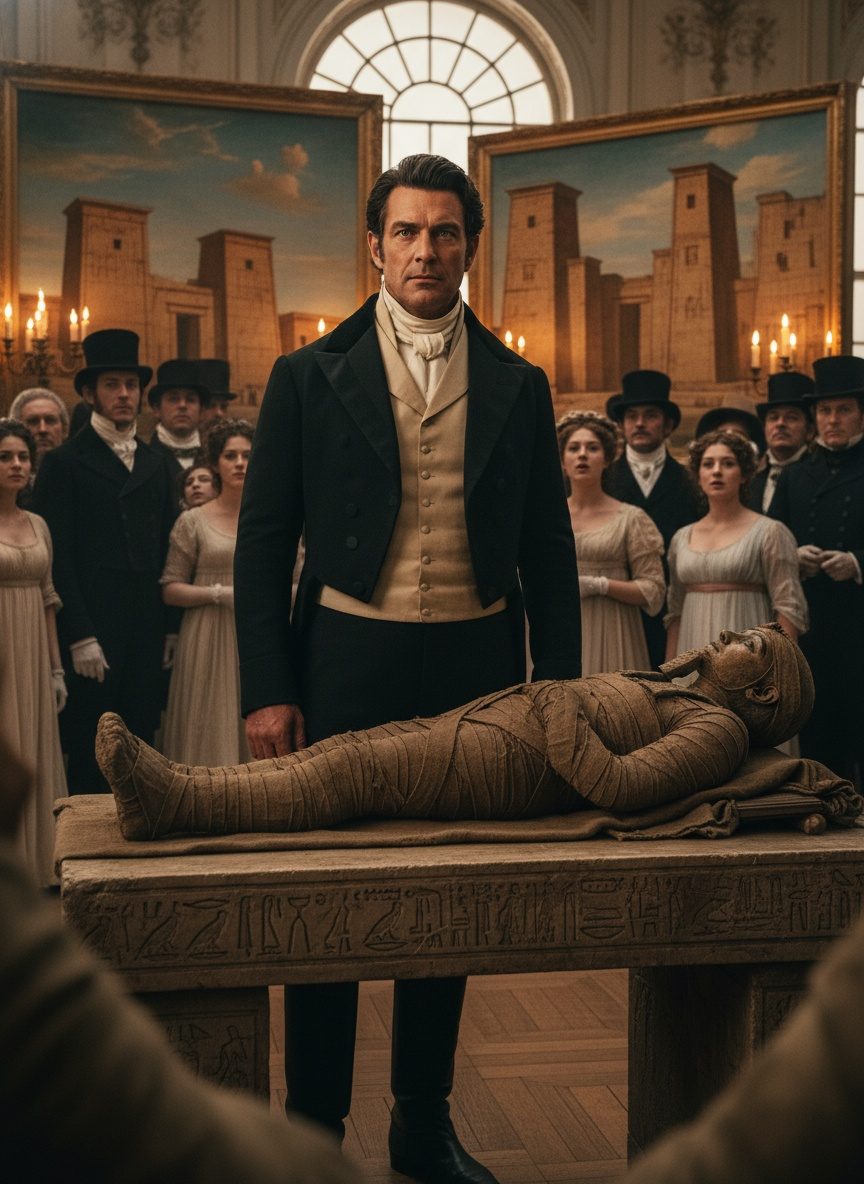
Fast forward to 1821, and Belzoni had more than just artifacts to bring to London. He offered a spectacle. That year, audiences gathered with rapt anticipation as he presented not just relics but the very essence of Ancient Egypt. For the first time, the British public faced an Egyptian mummy—all this in the opulent Egyptian Hall, which had been designed as a veritable temple of curiosities in Piccadilly.
The event itself was an electrifying mix of education and theater. Belzoni unwrapped the mummy before his audience, meticulously removing the strips of linen that had held the secrets of centuries. As each layer fell away, the thrill in the room grew palpable. Here was physical continuity with the past, an encounter with the very essence of a civilization noted for its monumental achievements and enigmas. In giving shape to Egypt's mythic past, Belzoni had unwittingly awakened a Victorian obsession.
The British appetite for Egyptian history was now insatiable. Mummy unwrappings became fashionable events at private gatherings and public venues alike. Egyptomania swept through the nation, influencing art, architecture, and literature. For many attendees, including luminaries of the time, this physical unwrapping of history was both a scientific revelation and a thrilling excursion into exoticism.
The Aftermath and the Endless Allure
Belzoni's unearthing did more than fascinate; it fundamentally altered perceptions. His work catalyzed a movement that would see countless excavations and the eventual decipherment of hieroglyphs. Sir John Gardner Wilkinson drew inspiration from Belzoni and made groundbreaking advances in understanding Egyptian life. The seeds of modern Egyptology were sown in the rich soil of Belzoni's discoveries, proving that the connections between past and present are often forged in the fires of curiosity and ambition.
Yet, the exuberant exploration and extraction of artifacts also generated complex ethical questions, ones that echo through subsequent generations. Belzoni was part adventurer, part showman, and part opportunist. His methods, while groundbreaking, highlighted the fine line between discovery and plunder. The Egyptian treasures housed in British institutions remain a testament to this duality, cherished yet controversially positioned.
Victorian Britain's fascination with Egypt, sparked by Belzoni’s theatrics, triggered a wider conversation about cultural heritage and ownership. As the 19th century burgeoned into an age of empire, this discourse gathered momentum, challenging assumptions about what it means to own the past.
Giovanni Belzoni’s life and exploits left an indelible mark on our understanding of history as well as on the cultural consciousness of a nation. He exposed a civilization previously cloaked in biblical mystique and adventurer's tales, transforming it into something tangible, something real. His legacy raises pertinent questions: As we uncover the past, how do we preserve its dignity? And as we gaze upon relics from another age, do we see them simply as artifacts—or as fragments of the human story?