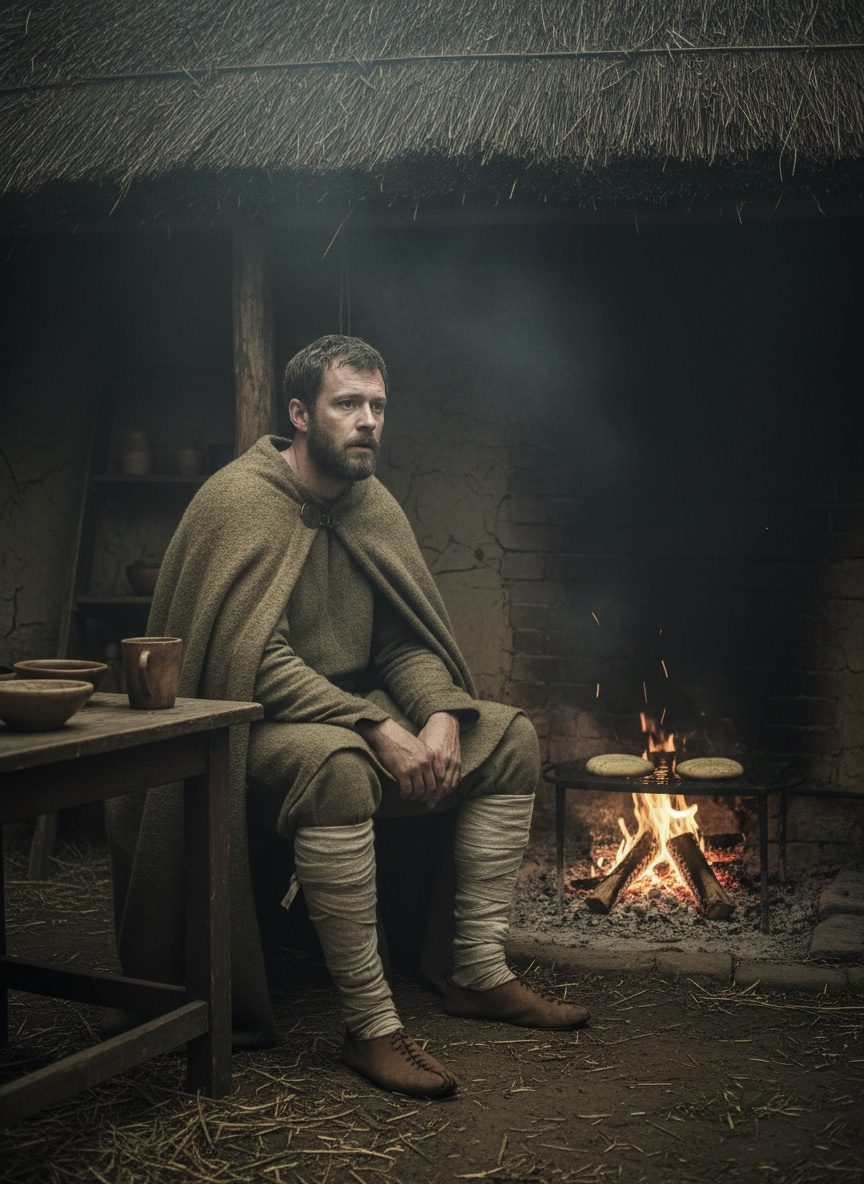
In the grand courts of the Persian Empire, where marble gleamed under the desert sun and power stretched across continents, a moment of fate was set to change the course of history. There, among the opulent draperies and fragrant incense, a Greek slave named Democedes was about to step out from the shadows and into legend. His story of courage and ingenuity is one of those tales that history whispers but seldom shouts — an extraordinary act that altered the lives of empires and individuals alike.
The Crippled King and a Desperate Court
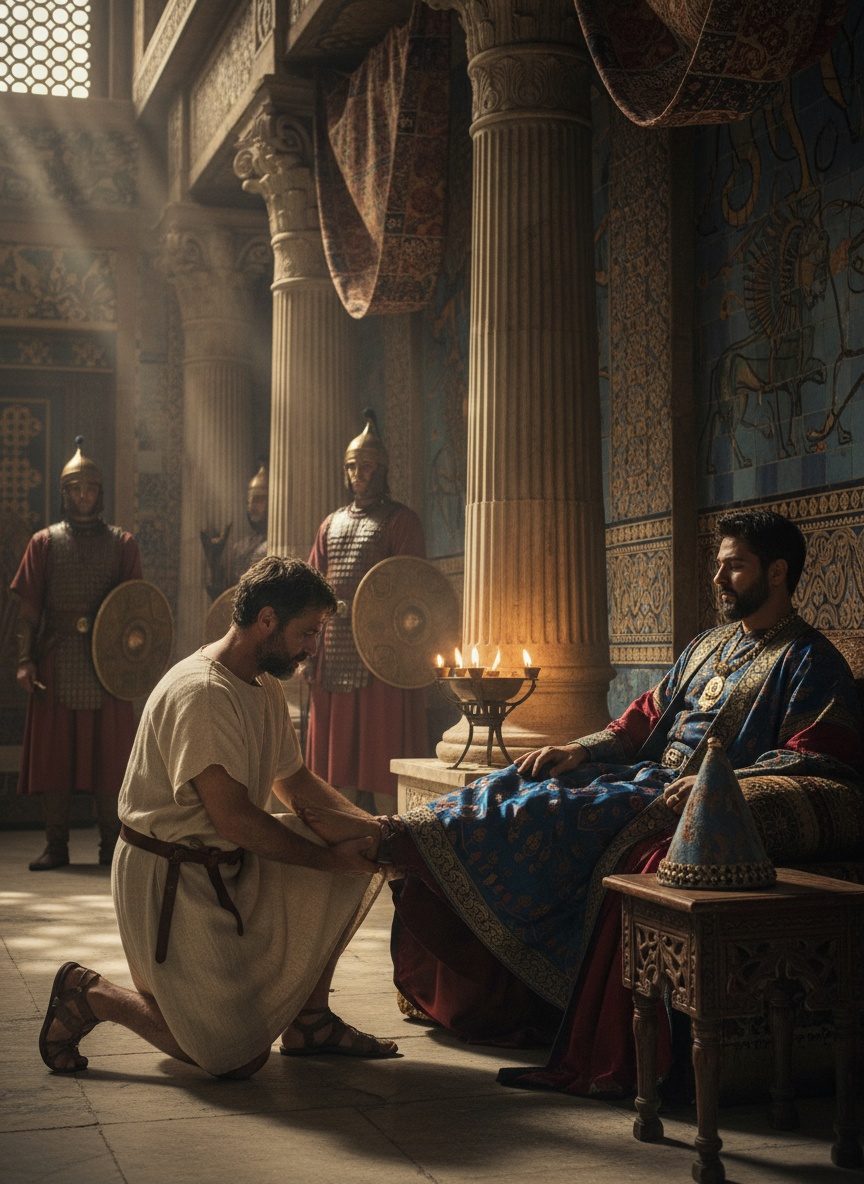
It was the year 522 BC, and Darius I, known as Darius the Great, lay in his chambers, his regal bearing momentarily stripped away by a cruel twist of fate — a dislocated ankle that refused to heal. The Persian royal physicians, trained in the finest traditions of the Empire, found themselves baffled and unable to relieve their sovereign's agony. As Darius writhed in pain, the splendor of the imperial court seemed a forlorn backdrop to a king humbled by his own humanity.
What the physicians could not achieve, however, would soon be accomplished by an unlikely hero — a man who had arrived at court in chains. Stories of Democedes of Croton, a once-celebrated physician in his homeland of Greece, had reached the ears of those within the palace. In a last-ditch effort to bring relief to their ruler, Darius' advisors summoned this gifted but enslaved healer.
A Greek Slave in the Persian Court
Democedes' journey to the Persian court was one of misfortune and resilience. Originally from Croton, a Greek colony known for its medical practitioners, Democedes had been captured by Persians during one of their Mediterranean raids. His talents, underestimated by his captors, eventually earned him a place among the king's slaves — a fate both fortunate and dire, for it positioned him among rulers but shackled him in servitude.
Despite his status, Democedes’ training and natural aptitude for healing were undeniable. The Greek tradition of medicine was rooted in a deep understanding of the natural world, philosophies that often contradicted Persian medicinal practices, which appeared to the Greeks as overly ritualistic and dependent on charms. While Persian doctrine saw ailments as punishments or omens, Greek medicine sought for tangible causes within the body. This divergence would soon prove fortuitous for Darius the Great.
A Healing Unlike Any Other
With the weighted atmosphere of expectation around him, Democedes stood before the stricken king. Undaunted by the grandeur of the Persian court, he called for ingredients unfamiliar to the court's typical practices — simple materials like olive oil, vines, and bandages, resources nearly alien in a world of exotic spices and sumptuous luxuries.
Employing what would today be recognized as a pragmatic approach, Democedes gently manipulated the king's ankle, reducing the dislocation with careful precision — an act that astonished the onlookers. Within days, Darius found his pain receding, his mobility returning like a final gust of relief after a long storm. The Greek slave had achieved what none could: he had healed the king.
A Bold Request
It was customary for victory, however modest, to demand reward. But what Democedes sought was not riches or renown, but something much more profound — his freedom. The king, now walking without pain and awed by the slave's skill, stood at a crossroads. The laws of hospitality and loyalty weighed heavily in Persian society, and Darius was magnanimous in his victory over suffering.
In recognition of his service, Darius granted Democedes' request, freeing him from his bonds. But the story did not end with a simple release. The king, impressed by the Greek's intellect, offered him a position within the court, this time as a free man, a testament to the talent and wisdom he displayed. Democedes was free, yet he chose to stay, his life forever changed by the faith placed in him by a king in need.
Ripples Through History
The ripple of Democedes' actions extended far beyond the relief of a royal ankle. His success paved avenues for cultural exchanges between Greece and Persia, challenges to perceptions, and fostered a grudging respect between Greek intellect and Persian might. This interaction contributed to a gradual shift that facilitated, over time, philosophical and scientific discussions crossing previously impermeable borders.
Moreover, Democedes' story is a resonant reminder of the timeless power of skill and knowledge to transcend societal barriers, to upend expectations, and to forge paths for dialogue even amidst vast differences. In a world that often views encounters across cultures with skepticism, his tale emphasizes the possibilities of cooperation and the impactful symbiosis that can arise from combining disparate traditions.
Why It Matters Today
In an era defined by divisions, the story of Democedes remains relevant in its illustration of bridging divides through understanding and expertise. His life underscores the importance of recognizing the value that diverse perspectives bring, echoing through history into the pressing needs of our modern world. By honoring the ingenuity and bravery exemplified by a single man shackled by fate but liberated by skill, we embrace the potential that lies in every unassuming individual with the courage to make a difference.
Through the trials of Democedes, we glimpse the timeless truth that merit knows no master and that the quest for freedom and recognition is bound not by chains but by the strength of the human spirit itself.