On a bright day in 325 BC, an audacious Greek explorer pushed his small ship into the vast Atlantic, leaving behind the sun-drenched shores of Massalia, today's Marseille. His name was Pytheas, a name many in his era would remember but few would believe. Imagine the world as he knew it: a world neatly encapsulated by the Mediterranean Sea, with its bustling cities and familiar coastlines. Yet Pytheas dared to venture beyond the known horizon, into the yawning uncertainty of the ocean's end.
The Merchant Turned Explorer
Pytheas was no mere seafarer. He was a learned man, born to a bustling Greek colony and schooled in the art of navigation by the best sailors in the ancient world. Massalia was a thriving center of commerce, a city teeming with merchants and intellectuals driven by the pursuit of knowledge and wealth. It was here that Pytheas found his calling—an insatiable curiosity that would lead him to challenge the accepted boundaries of the known world.
In an era when many believed that the world ended at the "Pillars of Hercules"—now known as the Strait of Gibraltar—Pytheas set his sights on lands that he could only dream of. With the backing of Massalian traders eager for new avenues of commerce, he cobbled together a crew and a sturdy vessel. His resources were modest, but his ambitions were boundless. As he passed through the Pillars into waters uncharted by any scholar of his time, Pytheas was embarking on a journey that would remain unparalleled for centuries.
Into the Realm of Mists and Myths
The Atlantic Ocean was a different beast from the predictable tides of the Mediterranean. Yet, armed with the limited knowledge and rudimentary tools of his age, Pytheas voyaged onward, documenting the stars and coastlines as he went. By clinging to the shorelines, crossing open waters, and trust in the celestial guides above, he reached a land the Greeks had only heard whispered tales of: Britain.
This island, teeming with grassy hills and misty horizons, was unlike anything found within the temperate Mediterranean. Pytheas described towering cliffs plunging into churning seas, and locals who painted their bodies in vibrant colors. He was the first Greek to set foot on this soil, and he forged alliances with the island’s inhabitants. They spoke of lands further north, of nights as bright as day, enigmatic visions that fueled his tireless exploration further.
The Enigma of Thule
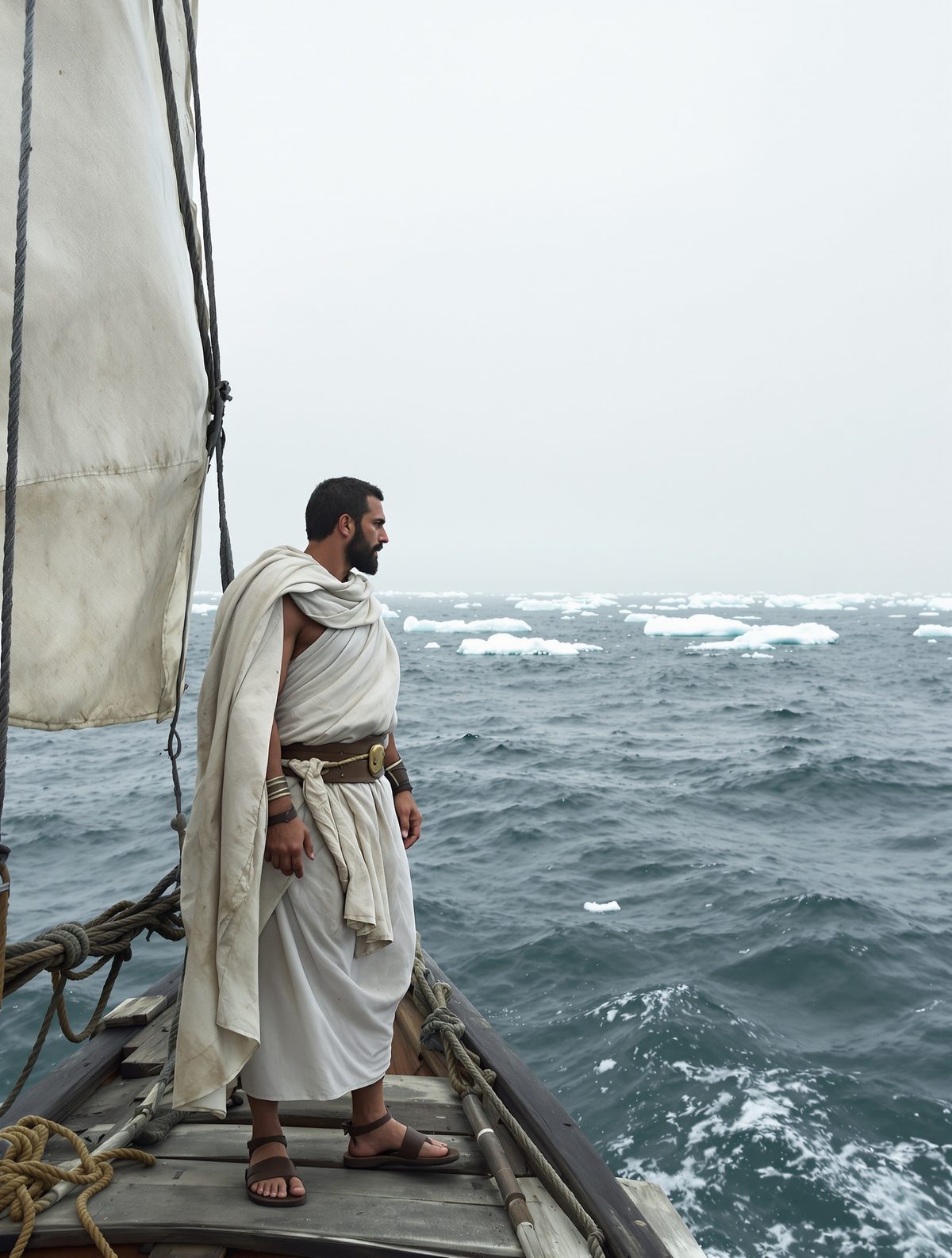
Pytheas’ journey led him to a place he called Thule, a land shrouded in fog and fringed with icy waters that barely thawed. This mysterious land, located six days' sail north of Britain by his calculations, confounded scholars for generations. Some equated Pytheas' Thule with modern-day Iceland or Norway, but the enigma of its true identity only deepened the intrigue around his accounts.
In this unforgiving region, Pytheas witnessed phenomena hitherto unknown to the Mediterranean world—vast stretches of daylight and unyielding cold. He documented the enigmatic "Polar Sea," observing chunks of ice floating in waters, a breathtaking encounter for someone hailing from a sun-drenched coast. Even more astounding, he noted what he described as a "sea lung," a body of water that appeared to breathe in and out, likely the result of observing tidal extremes in icy conditions.
A Liar, a Lunatic, or a Visionary?
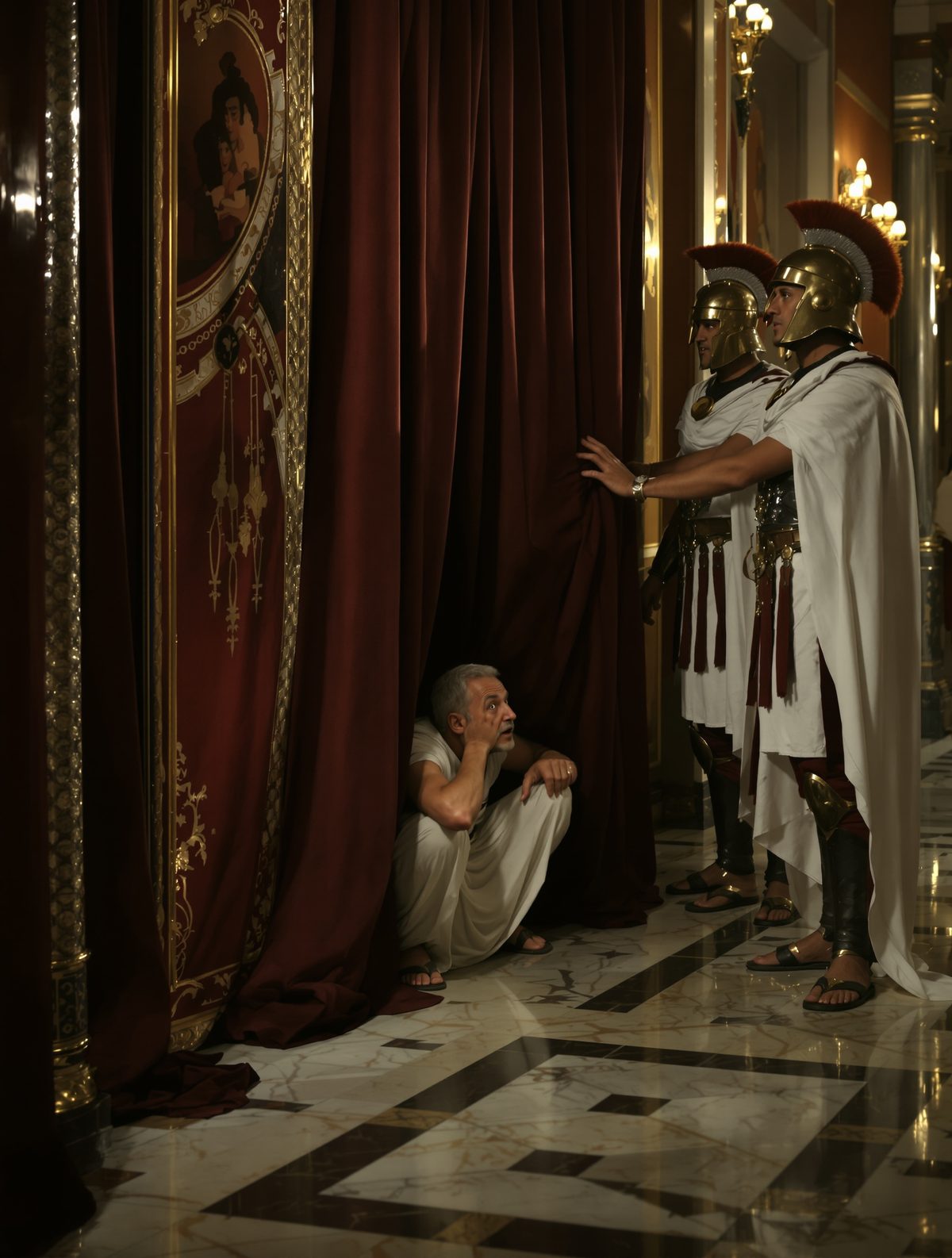
When Pytheas returned to Massalia, he brought with him tales filled with wonders that defied belief. Expecting admiration, he was met with immediate skepticism. Notable scholars such as Strabo dismissed him outright, suspecting exaggeration if not outright fabrication. To them, Pytheas was at best a fanciful fabulist, and at worst, a heretic challenging their firmly held geographic doctrines.
Despite his meticulous records, Pytheas had no way to produce the physical evidence required to silence his detractors. The absence of verifiable proof and the sheer audacity of his claims left him marginalized in the academic community. It would be centuries before many of his observations would be vindicated by subsequent explorers.
The Timeless Legacy of Pytheas
Fast forward through the ages, and the world began to catch up to what one Massalian explorer had once declared on parchment. Modern archaeology and climate science support much of what Pytheas recounted. The ice drift of the Arctic Ocean, the extended daylight of northern summers, and possibly the geography of northern isles all align with his reports. His work laid dormant like an undiscovered treasure, only gaining recognition long after his time.
Why is Pytheas’ journey significant today? His story is a testament to human curiosity, the audacity to venture beyond known borders and the fortitude to speak truth in the face of doubt. Pytheas taught us about the resilience needed to challenge the status quo, the courage required to expand our understanding of the world, and the humility to accept that today's impossibility may well be tomorrow's reality.
In the tale of Pytheas, we find a reminder of the importance of adventurous spirit and intellectual curiosity in propelling human history forward—even if it takes centuries for the world to truly hear it.