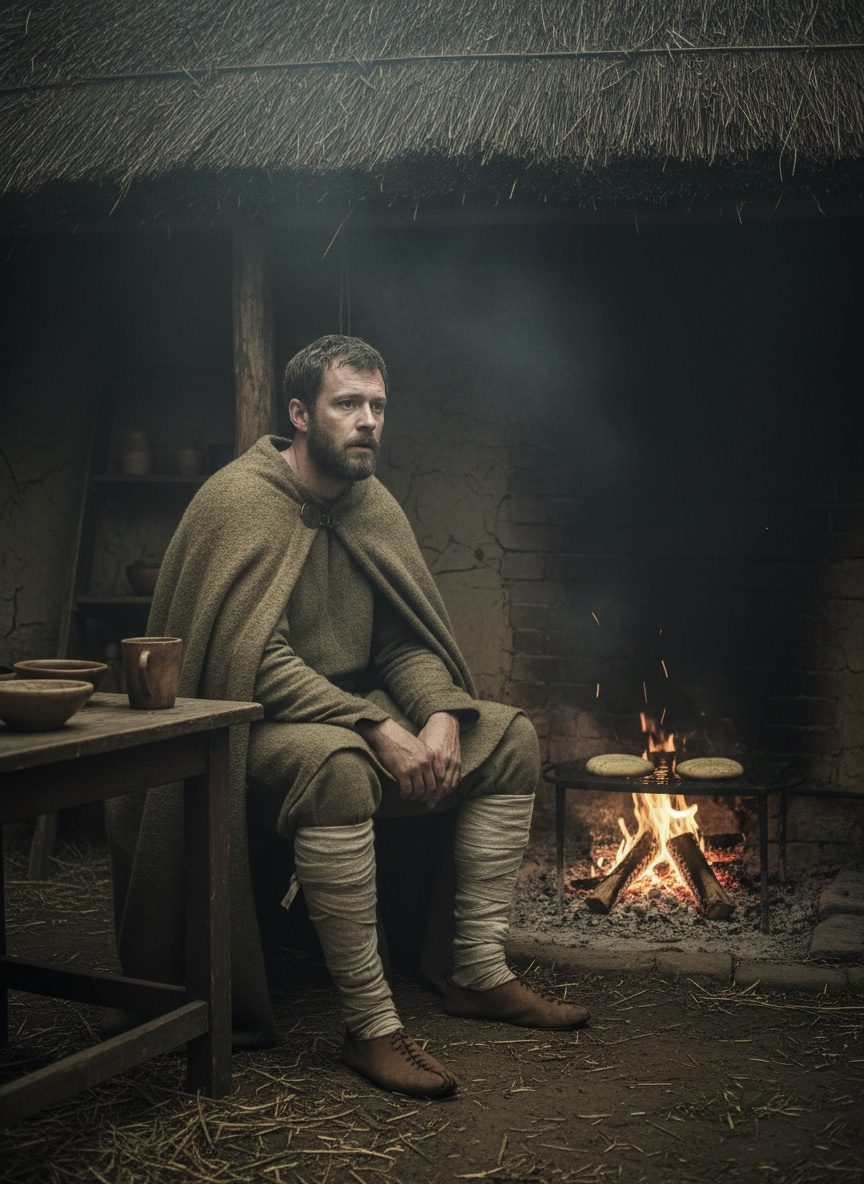
Picture this: the winter of 878 AD, a relentless season of biting winds and unyielding chill gripping the land of England. In the shadow of its stark beauty, the country lies battered and bruised, nearly brought to its knees by relentless Viking incursions. The Danes, fierce and relentless, have swarmed across England, their banners fluttering triumphantly over what once was the robust kingdom of Wessex. But in all his storied glory, there stands a solitary figure surrounded by bogs and marshes, a fugitive in his own land. He is Alfred, the last king of free England, who would soon be known to history as Alfred the Great.
The Humble Mistake that Echoed through Time
In the marshy expanse of Somerset, a humble tale unfolds. Imagined against a backdrop of smoke rising from a small peasant hut, smothered by the thick mists of Avalon, the stage is set for one of history’s curious anecdotes. As legend holds, within this unassuming refuge, Alfred was given the duty of watching over some oat cakes gently baking by the fire. What happened next was a moment of human error — one many of us can relate to — as the king, absorbed perhaps in thoughts of strategy and reclaiming his land, let the cakes burn.
The scene is vivid as you picture the peasant woman’s ire, chiding this unknown guest not with deference, but with the sharp irritation reserved for errors that waste precious food. It’s a tale told through centuries, depicting an interaction that served to ground a great man in humility and determination amid his flight.
The Dark Before the Dawn: Alfred’s Steely Resolve
To understand the significance of Alfred’s sojourn in Somerset, we must first turn back the clock to the pivotal moments leading to his retreat. Alfred of Wessex, born in 849 AD, ascended to the throne amidst a turbulent period where Viking raids had become not just seasonal assaults but full-scale invasions. By 878 AD, the Danes, under Guthrum’s command, had captured Chippenham, forcing Alfred to flee.
Yet, even in the depths of adversity, Alfred’s resolve did not falter. Secreted deep amid the wetlands and the tributaries, the king took stock. In these marshlands, Alfred laid foundations of what would become his legend. The Isle of Athelney, shrouded in mystery and natural fortifications, provided not just a physical refuge, but an opportunity to regroup without the looming shadow of immediate threats.
Marshland Mystique: A Nation’s Pulse Begins
Imagine Alfred, the lonely king, using Athelney as his base to reconnect with loyal followers. It was here that he cleverly and stealthily mounted resistance, employing guerrilla tactics that harassed Danish forces, weakening their grip incrementally. It’s here, amid the silence of the marshes, that allies from Somerset, Wiltshire, and Hampshire answered his call, rallying to a king determined to protect his sovereign land against the invaders.
By spring, Alfred’s forces swelled. Come May, his resolve would foment a rising tide against the Danish occupation. But who among us knows that the turning of this tide began in the soggy expanses of the Somerset levels?
The Battle of Edington: From Marshes to Triumph
Finally, amidst the backdrop of spring’s strengthening sun in May 878 AD, Alfred assembled his forces. The site was Edington, a name now forever etched in the annals of history. Marching from the barnacled lands of Athelney, Alfred’s assembled army caught Guthrum’s forces by surprise. Here, Harold’s soldiers witnessed a combination of tactical brilliance, fierce resolve, and the indomitable spirit of an English king reclaiming his heritage.
The ensuing battle was intense — ferocious clashes between sword and shield ringing out across the fields. But it was Alfred's strategically dispatched formations and deep knowledge of his army's capabilities that turned the tide. Within days, Guthrum, the formidable Viking leader, was compelled to retreat to Chippenham.
The follow-up was equally tactical, resulting in the Treaty of Wedmore, where Guthrum agreed to withdraw from Wessex, converting to Christianity in a symbolic gesture of peace brokered by none other than Alfred himself.
The Legacy of a Kitchen Lesson
What began as a story of a king scorned for burning cakes culminated in Alfred weaving a lasting legacy of resilience and leadership. His governance post-victory laid down the bedrock for a united England — a reformed military, fortified borders, and a cultural renaissance that saw the likes of the Anglo-Saxon Chronicle take shape.
Through this tale, we are reminded that great movements often have humble beginnings and that moments of adversity can inspire unparalleled determination. This storied episode, though lightly garnished with myth, underscores the profound human experience at the heart of leadership. We learn from Alfred that the path to greatness often involves both triumph and tribulation, cloaked sometimes in a humble cottage over some smoldering cakes.
Today, as one delves into the depths of history, Alfred’s tale resonates not just as a story of defiance but as an enduring reminder of resilience in the face of overwhelming odds — a lesson from a king whose heart never left the marshes.