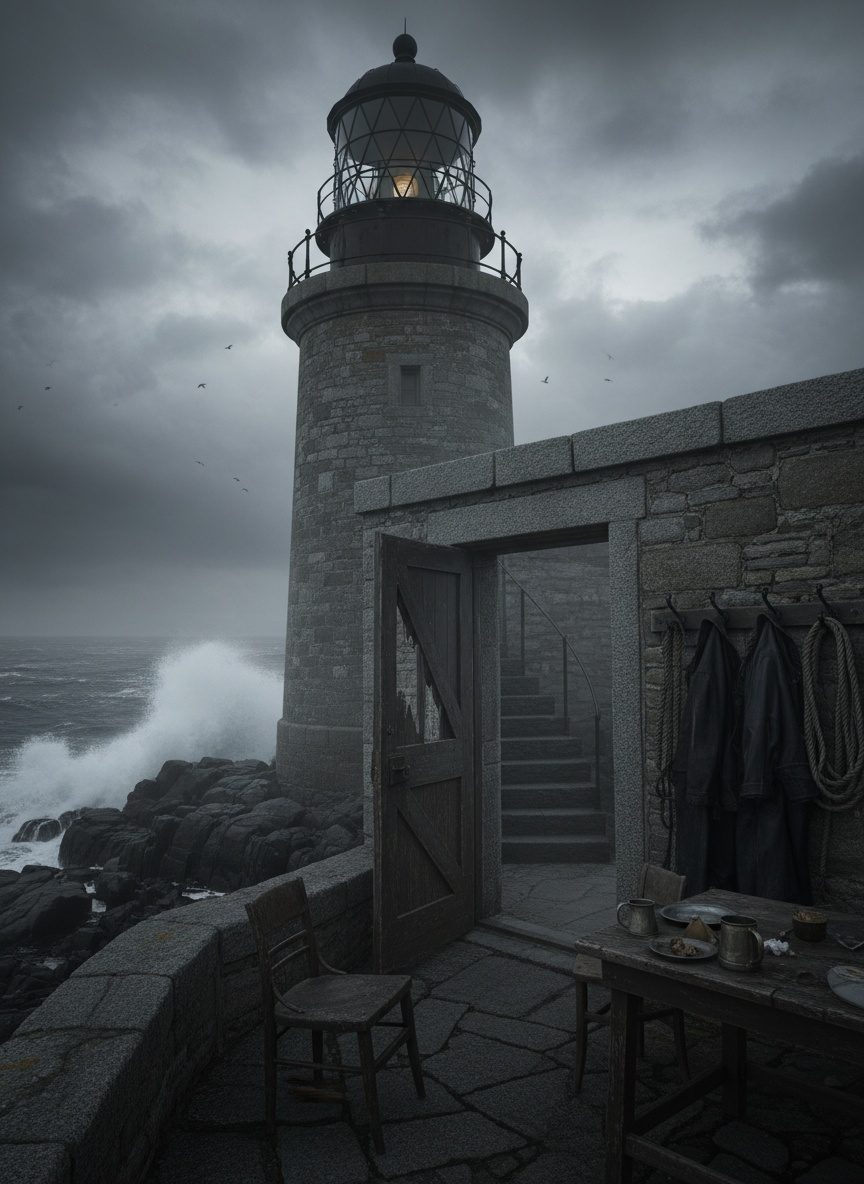
On a biting December day in 1900, just as the world was teetering on the brink of a new century, a small, weather-beaten boat set sail for the desolate Flannan Isles, west of Scotland’s Outer Hebrides. The relief crew aboard the boat, led by Captain James Harvey, anticipated a routine visit: a resupply of food and fuel, and a chance for the weary lighthouse keepers they were replacing to find relief from their isolation. But as they approached the towering stone structure of the lighthouse, an unsettling silence greeted them. The lighthouse stood eerily dark against the somber sky. A signal was sent, then another, but no answering call was heard. The keepers of the light—James Ducat, Thomas Marshall, and Donald McArthur—had vanished into thin air.
The Remote Sentinels: Lighthouse Life on Eilean Mor
The Flannan Isles, wind-battered and often shrouded in mist, are a group of rocky islets of which Eilean Mor is the largest. Here, the construction of the Flannan Isles Lighthouse was completed in 1899, illuminating the treacherous waves for sailors who dared the North Atlantic waters. The lighthouse, a beacon of safety, was manned by a trio of seasoned keepers, tasked with maintaining the light that would guide ships through the merciless seas.
The life of a lighthouse keeper was one of solitude, marked by routine and resilience. Supplies arrived only once a fortnight, with keepers rotating every few weeks. The lighthouse’s isolation was both its essence and its peril. Three men, isolated from the vibrancy of human life, surrounded instead by howling winds and crashing waves, were the only sentinels in this remote outpost.
The Chilling Discovery: A Silent Lighthouse and a Haunting Clue
The disappearance of the Flannan Isles lightkeepers might have remained a footnote in history, were it not for the compelling mystery it left behind. When Captain Harvey and his crew reached the lighthouse on December 26, 1900, the eerie absence of any greeting was their first clue that something was amiss. Landing assistant Joseph Moore, the first to disembark, climbed the steep cliffs to investigate. As he entered the lighthouse, a shiver crawled down his spine.
Inside, the scene was baffling. The beds were unmade, as if the men had left in haste. A meal sat unfinished on the kitchen table—salted mutton, potatoes, and pickles lay cold and untouched. And most disturbingly, the lighthouse lamp, the keepers’ sacred duty, was cold to the touch. The evidence suggested a swift and unforeseen departure, but to where, and why, was a mystery trapped as tightly as the Atlantic fog.
The Enigma Deepens: Theories and Speculations
News of the disappearance spread like wildfire, capturing the public’s imagination and igniting a storm of speculation. Several theories surfaced, each more fantastical than the last. Had a rogue wave crashed upon the island, sweeping the men away to a watery grave? The geography of the isle made this plausible, though no such rogue waves had been reported.
Some hypothesized an alien abduction, while others speculated about supernatural forces at play, pointing to the eerie local legends of spirits and ancient curses that haunted the evocative landscape. Another theory, more grounded but equally eerie, proposed that one of the keepers succumbed to “lighthouse madness,” a mental breakdown induced by isolation, leading to a tragic confrontation.
Despite the strangeness and theories, official investigations found only scant evidence. A logbook hinted at ominous weather leading up to the disappearance, contradicting reports of clear skies—a ghostly inconsistency that deepened the enigma.
Unrevealed Truths: Silent Testimonies of Stone and Sea
The lighthouse keepers' fate remains an inscrutable puzzle. The stone tower stands testimony, gazing stoically over the water as ships pass by. Without any bodies, signs of violence, or credible witnesses, the disappearance of the three men lives on as an unsolved mystery. The men, the diary of wind-swept thoughts held captive within strong walls, left behind only questions and the whisper of their presence in the salty air.
The Flannan Isles and their elusive mystery live on in maritime folk songs and whispered tales of curious tourists who brave the remote waters for a glimpse of Eilean Mor. The grievous enigma resonates with us, a story cast away in time yet ever surfacing in imagination, speaking to our enduring fascination with the unexplained.
Why This Matters Today: More Than Just a Mystery
The haunting saga of the Flannan Isles’ lost lighthouse keepers continues to stir intrigue over a century later. Beyond the enduring mystery lies a deeper reflection on human endurance and the vast, sometimes cruel, unpredictability of nature. It serves as a sober reminder that despite modern technology and advancements, there remain forces and mysteries beyond our grasp.
The vanished lightkeepers of Eilean Mor serve as symbols of the age-old tension between humanity’s desire to conquer nature and the indomitable power of the world around us. As we continue to explore the edges of our world, their story encourages us to respect and understand the delicate balance between preservation and exploration, illuminating not just the past but our present and future paths as well.