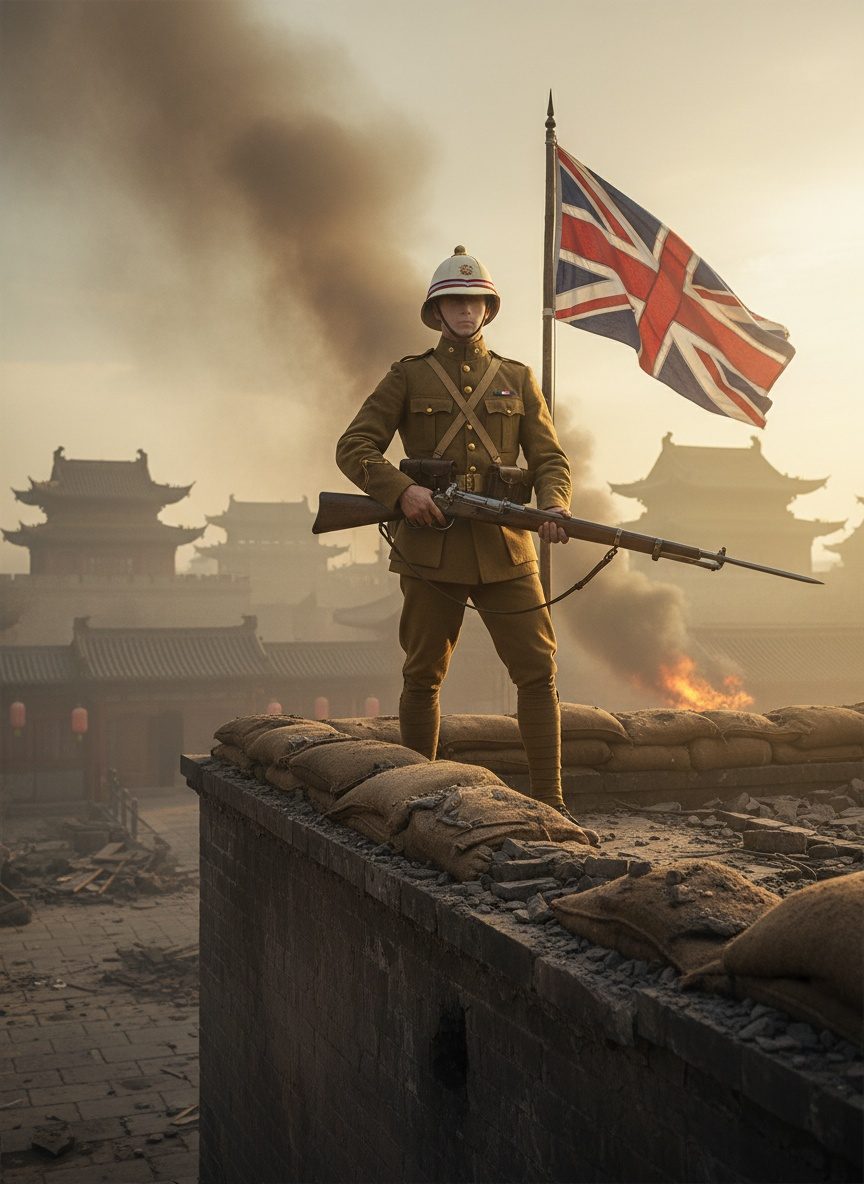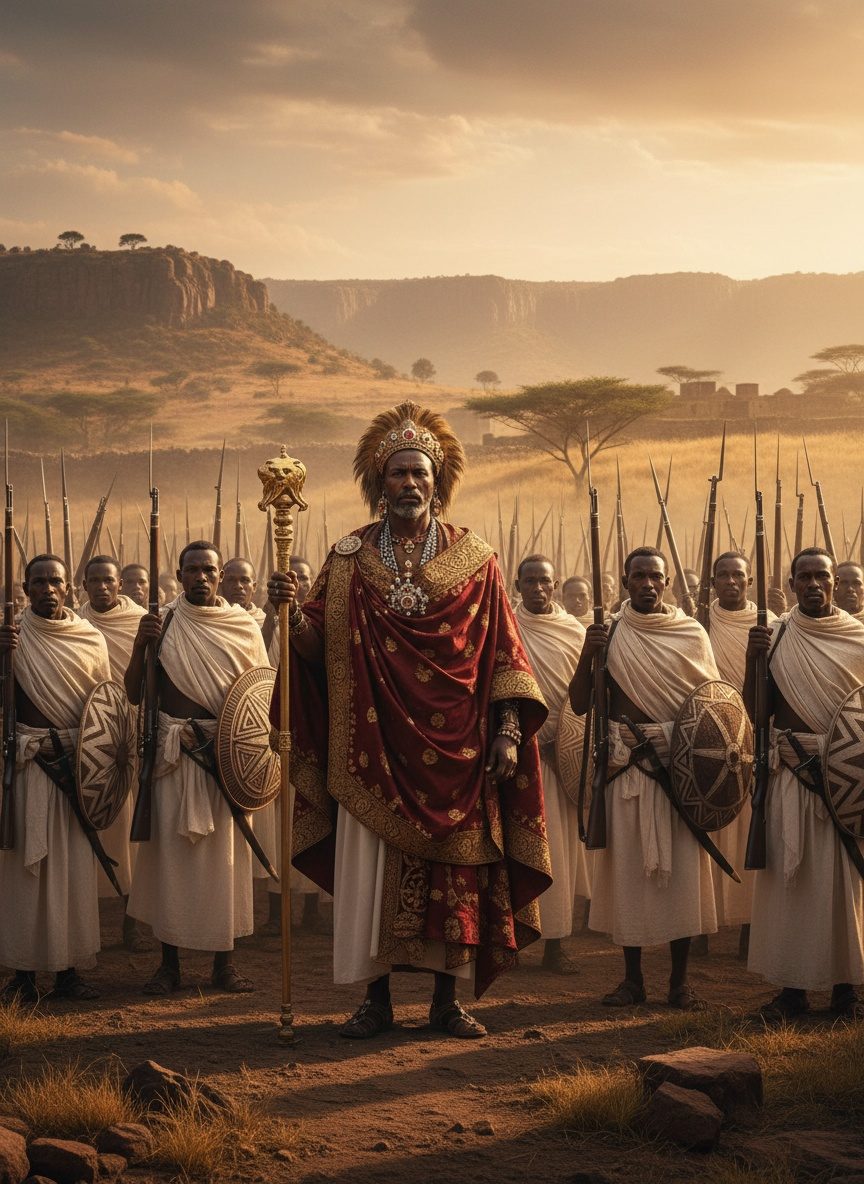
On a chilly morning in March of 1896, beneath the shadow of the towering Ethiopian highlands, two armies prepared for war. The Italian army, polished under the European sun and bristling with modern weaponry, advanced with confidence. They were certain of victory over what they regarded as a mere African kingdom. But awaiting them was not merely an African force; it was an army of one hundred thousand warriors led by a formidable leader, Emperor Menelik II. What unfolded was a staggering clash that not only determined the fate of a nation but also sent shockwaves across the colonial world.
The Road to Conflict
The roots of the Battle of Adwa lay in an unassuming but potent document—the Treaty of Wuchale, signed in 1889. This treaty was intended to define relations between Ethiopia and the Kingdom of Italy. However, a critical discrepancy in its Amharic and Italian versions sowed seeds of conflict. The Amharic text suggested Ethiopia had the option of using Italy's services in dealing with other European powers, while the Italian version implied that Ethiopia was a protectorate of Italy. Emperor Menelik II, a ruler with shrewd diplomatic acumen, rejected the Italian interpretation, viewing it as an affront to Ethiopia's sovereignty—a stance that would soon bring Italy to war.
By the early 1890s, Italy, eager to expand its fledgling empire, set its eyes on Ethiopia. Its military leaders expected a swift and decisive campaign. But Menelik was not just another African chieftain to be subdued. He was a master strategist who had spent years building diplomatic alliances and bolstering his military might with modern weaponry purchased from European dealers, often buying rifles from the very powers eager to divide Africa among themselves.
Menelik II: The Shrewd Strategist
Emperor Menelik II, a Gudit of the political landscape, was astute and visionary. Born on August 17, 1844, as Sahle Maryam in Shewa, he understood his enemies better than they understood him. While maintaining a veneer of compliance with European powers, Menelik steadily built alliances with other Ethiopian nobility and negotiated secret treaties. His ability to unite Ethiopia's often fractious provinces was nothing short of miraculous. Through shrewd maneuvering, Menelik united warriors from diverse ethnic backgrounds into a formidable combat force.
As Italy mobilized its forces for the Ethiopian conquest, Menelik called upon his vast network of relations and alliances. Under his leadership and that of his equally formidable queen, Taytu Betul, who played a crucial role in foreign policy and military tactics, Ethiopia was not only ready but resolute in its independence. This Ethiopian alliance was not just a coalition of warriors; it was a tapestry of tribal strength woven together with the thread of national pride.
The Clash at Adwa
On March 1, 1896, the mountainous terrains near Adwa witnessed one of the most spectacular sieges in African history. The Italians, caught in a trap laid by Menelik’s strategic prowess, found their superior weaponry at odds with the harsh geography and brutality of Ethiopian resolve. The Ethiopian army, swollen to staggering numbers and fervently determined to protect their homeland, executed a multi-pronged attack that left the invaders bewildered.
Overwhelmed by the Ethiopian forces' vast numbers and strategic cunning, Italian troops fell into disarray. Shouts of courage echoed through the valleys as the Ethiopian soldiers, wielding rifles as well as traditional spears and shields, charged with unparalleled fierceness. By the day’s end, the Italian campaign lay in tatters, and the full weight of the defeat was thrust upon the European consciousness. Approximately 7,000 Italian soldiers were killed, and thousands more were captured, a loss that dwarfed any colonial misadventure of its time.
The Echo of Victory
For Ethiopia, the triumph at Adwa was not merely a military victory. It was a testament to the indomitable spirit of freedom and a resounding declaration of sovereignty in a continent shackled by colonialism. News of the humiliating defeat reached Europe, stirring embarrassment and shock. King Umberto I of Italy and his government faced public outrage, leading to political upheaval and the resignation of Prime Minister Francesco Crispi.
The significance of Adwa resonated far beyond the wrestling grounds of European politics. It kindled the flicker of hope in African leaders and intellectuals, inspiring figures within the Pan-African movement. For Africans both on the continent and in the diaspora, Adwa stood as a beacon of resistance and an assertion of dignity against colonial subjugation.
Why Adwa Matters Today
The victory at Adwa was not just an Ethiopian triumph; it was a defining moment in world history. It proved that with unity, strategy, and indomitable courage, a small nation could preserve its sovereignty against the might of a colonial power. Today, Adwa’s legacy reminds us of the power of unity and resilience against oppression, a message as resonant now as it was over a century ago.
In a modern world still grappling with issues of sovereignty, identity, and resistance against domineering forces, the Battle of Adwa serves as a herald of possibility for nations and peoples striving for self-determination. It is a narrative of defiance, not taught in every school, but one that continues to inspire and illuminate paths to freedom.