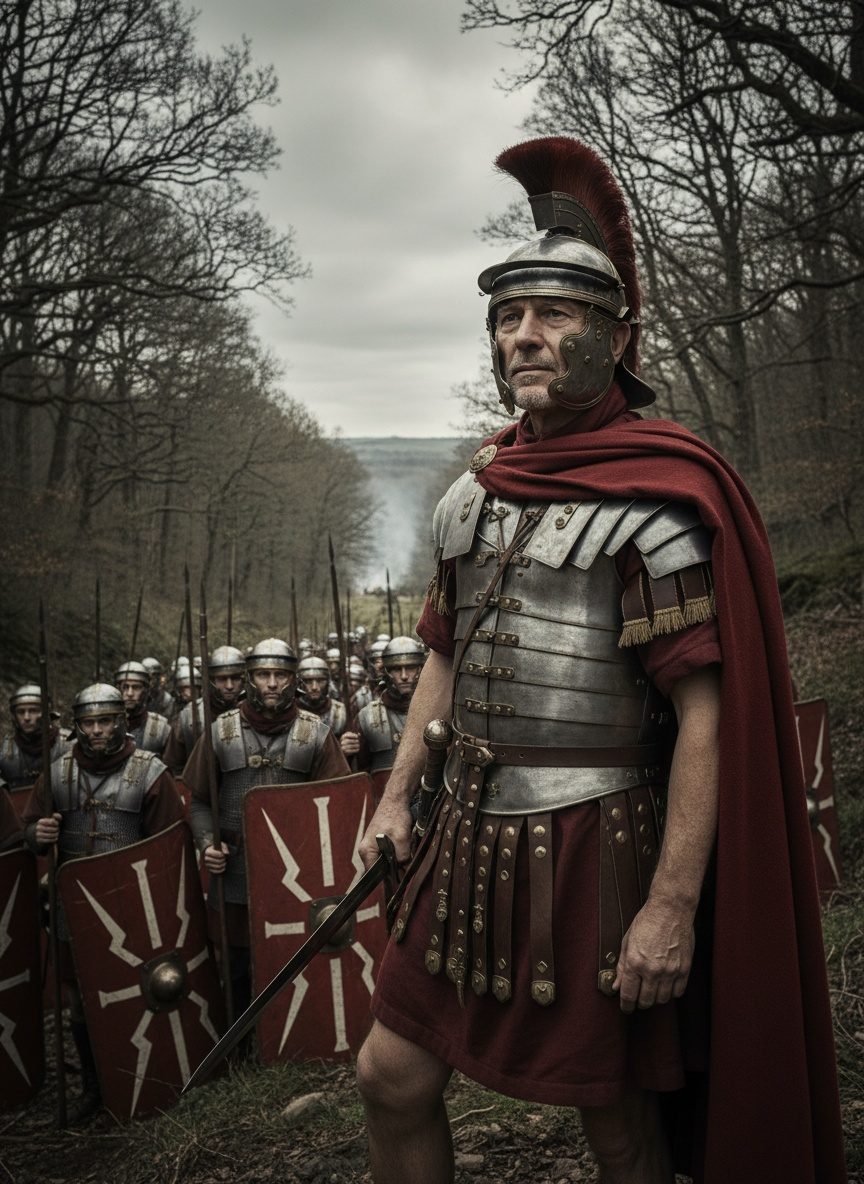
In the shadow of chaos, a defiant roar erupted from the depths of a narrow forest valley. It was not the cry of the Celtic warriors who had laid waste to Roman Britain, but the steely resolve of a single Roman commander who would defy the odds. It was AD 61, and as Britain burned under the fury of Boudicca’s rebellion, one name stood resolute amidst the embers: Gaius Suetonius Paulinus.
The Rising Tide of Rebellion
Londinium lay in ruins, its vibrant life reduced to ash and echoing screams. The cities of Camulodunum and Verulamium shared the same grim fate, their Roman inhabitants slaughtered or driven into a panicked frenzy. Boudicca, queen of the Iceni tribe, had unleashed a torrent of rebellion against Roman rule, inflamed by personal vendettas and the collective grievances of her people. Her warriors, numbering in the tens of thousands, swept across Roman Britain with an unstoppable fervor. Such was the scale of destruction that Imperial Rome, for the first time in its dominion over Britannia, feared the loss of its province.
The rebellion in AD 61 was a calculated onslaught, a historic uprising triggered by Roman injustices against the Iceni and their allies. When her husband Prasutagus died, Boudicca found herself brutally flogged and her daughters violated, igniting a fire that would soon consume three proud cities. Boudicca’s army, swelled by disaffected tribes, surged southwards towards Londinium, a burgeoning port left defenseless and quickly razed to the ground. But even amid such devastation, not every Roman lost faith.
The Unyielding Purpose of Gaius Suetonius Paulinus
In these perilous times, the burden to restore Roman dignity fell on the shoulders of Gaius Suetonius Paulinus, the governor of Britain. An accomplished general, Suetonius had previously earned his laurels in campaigns across Mauretania and elsewhere within the sprawling Roman empire. Adroit in the art of warfare, he was absent from Londinium during its demise, having led his legion north to quell an uprising on the Isle of Anglesey.
Upon hearing the news of Boudicca’s rebellion, Suetonius immediately returned to the mainland, rallying what men he could. Despite the grim losses and a stark imbalance in numbers—his forces comprising around 10,000 against Boudicca’s rampaging multitudes—he remained undeterred. Where others saw the collapse of civilization, Suetonius envisioned a strategic stand. His foresight and experience honed in every battle played a crucial role in preparing for the ultimate showdown that awaited him.
The Valley of Fate: A Gambit of Strategy
With no time to waste, Suetonius selected a narrow valley as the battlefield, a calculated choice based on its strategic advantages. The constricted space would serve as a natural bottleneck, neutralizing Boudicca’s numerical superiority. Showing a firm grasp of terrain and tactics, this location near Mancetter (today near the village of Atherstone in Warwickshire) was ideal for his legions to hold the line against fearsome odds.
Suetonius assembled his forces with the precision of a chess master—troops anchored on each flank by dense woodland, ensuring Boudicca’s chariots had no room to maneuver. Archers and javelin throwers lined up behind the infantry, their salvoes ready to rain death upon the advancing horde. The Romans formed their defensive lines, shields locked and unyielding, a bulwark against the oncoming storm. Here, in this tactical fortress, the fate of Roman Britain would be decided.
The Battle of Watling Street: A Fortress of Flesh and Iron
As the sun crept aloft, Boudicca’s army surged forward with ferocious energy, their war cries bewitched by hopes of victory. They thundered onto the Roman fortifications like waves crashing against impervious rocks. Yet, the discipline of the Roman legions held firm, their measured advance unleashing a withering hail of javelins and arrows.
When the time was right, Suetonius commanded a counteroffensive, his legionaries advancing in the formation known as the testudo, or tortoise, with shields raised for protection. The Roman line pierced through Boudicca’s ranks, their gladii cutting a deadly swath. Panic ensued among the Britons, compounded by the clutter of chariots and wagons hemming them in on the battlefield.
What ensued was a scene of pandemonium and relentless carnage. Thousands of Britons fell that day, estimates quoting as high as 80,000. In stark contrast, Roman casualties were minimal, legends suggesting fewer than 400 dead. Boudicca managed to escape, but soon after, according to Tacitus, the weight of defeat drove her to commit suicide by poison—her last defiance to avoid capture.
A Legacy of Iron Will
The clash at Watling Street was a pivotal moment in Roman history, a testament to the strategic genius of Gaius Suetonius Paulinus. His calculated risk and leadership not only saved Roman Britain from dissolution but also signified the indomitable resolve that defined Roman military ethos. Although Suetonius was later relieved of his command due to the extensive civilian losses during the revolt, his victory fortified the Empire’s grip on Britain, ensuring Roman civilization would endure and flourish.
Today, the story of Suetonius and his stand at the Battle of Watling Street resonates as a powerful symbol of resilience and strategic acumen. In a time when leaders face intense pressures and swift decisions can shape destinies, Suetonius’s ability to assess, adapt, and act serves as a timeless lesson.
As we reflect on these ancient echoes, we are reminded that within the annals of history lie not just chronicles of triumph and tragedy, but also enduring teachings in leadership, courage, and the tenacity to choose principled action over compromise.