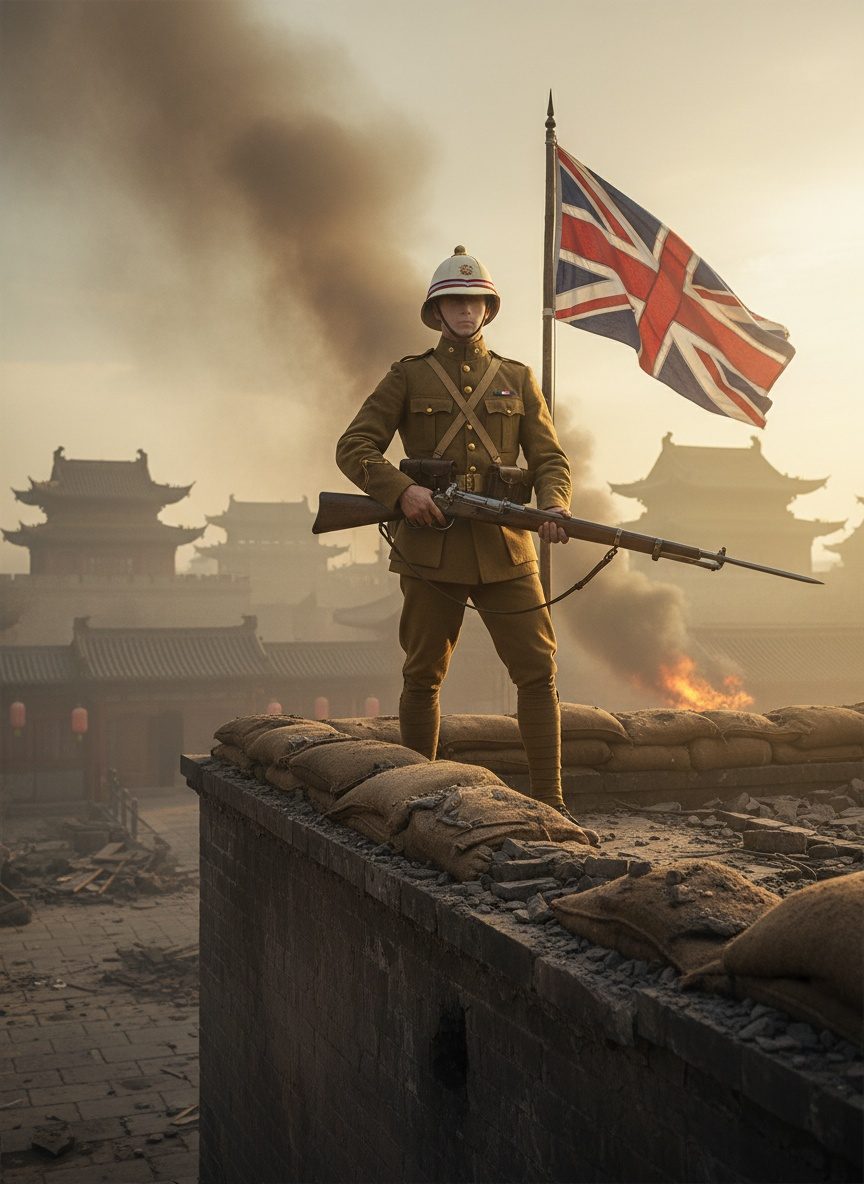
As dawn broke over the bustling city of Peking on June 20, 1900, a solitary figure stood resolute behind the walls of the British Legation, eyes scanning the horizon for the menacing shadow of encroaching chaos. Sir Claude Maxwell MacDonald, a man of steely resolve, was no stranger to diplomatic challenges, but the crescendo of violence from the Boxer Rebellion was unlike anything he had faced. Just beyond the confines of the legation, a storm brewed, ready to engulf all in its path. Yet, within the walls, one man's unyielding spirit refused to falter.
The Gathering Storm
The Boxer Rebellion was a volatile mix of nationalist fervor, religious zealotry, and anti-imperialist sentiment, exploding across China in a bid to expel foreign influence. By summer's ascent in 1900, the movement had reached the ancient city of Peking (now Beijing), where allegiance was divided and trust scarce. Thousands of Boxers, a secret society named for their emphasis on martial arts and spiritual rituals, saw foreign diplomats and missionaries as existential threats to their cultural identity. As tensions spiraled, any glimmer of diplomacy seemed extinguished.
Amid this brewing hostility, the British Legation in Peking became both sanctuary and fortress. On May 31, with the rebellion gaining momentum, MacDonald, the British Minister to China, made a decisive move by summoning a force of 75 British Royal Marines to bolster the legation's defenses. As chaos unfurled, widespread panic took hold, but not for MacDonald. A seasoned diplomat, his resolve was profoundly tested in the crucible of those 55 stifling summer days.
Fortress Under Siege
June 20, 1900, was marked by the start of a nearly two-month siege that defied the expectations of all. Surrounded by an overwhelming force of thousands of Boxers and Imperial Chinese troops, the foreign occupants of the legation quarter—a collection of eleven international enclaves—found themselves isolated, abandoned to fate beyond the reach of friendly aid. With roughly 450 military personnel and civilians inside, fears of annihilation loomed large.
MacDonald assumed command not only through authority but by earning the deep respect of those barricaded with him. As bullets riddled the walls and incendiaries threatened to reduce the legation to cinders, Sir Claude's presence was a bastion of calm, his voice a guiding beacon cutting through the rising panic.
His guiding strategy was hinged not on aggression, but on strategic defense. Limited supplies necessitated rationing, while scouting officers constantly gauged the resilience of the legation's perimeter. Despite their limited numbers, MacDonald's determination meant surrender was inconceivable.
The Human Element: Courage Amidst Crisis
The valor displayed over those 55 days extended far beyond military action. Civilians became stalwart defenders—clerks and secretaries bearing arms, nurses tending tirelessly to the wounded, and children policing younger ones as fear became their shadow. Conditions inside were grim: disease and malnutrition were rampant as essential provisions dwindled. MacDonald’s leadership became crucial in maintaining morale among the trapped ensemble.
The story of 21-year-old Herbert Goffe exemplifies the indomitable spirit that MacDonald inspired. As a consular officer, Goffe spent sleepless nights translating documents and negotiating crucial intercepts, proving that heroism is not confined to the battlefield.
Under MacDonald's stewardship, a network of underground communication channels with other legations bolstered their collective resolve, with each new day of survival sowing the seeds of hope that someone out there was listening, that help was on its way.
Relief and Resolution
By August 14, relief forces finally breached the Iron Wall of Peking, putting an end to the protracted siege. The once-isolated voices gained amplification as their tales reached global ears. MacDonald emerged not just as a seasoned diplomat, but a true custodian of British fortitude. Years later, stories of the siege would be retold, with MacDonald's unwavering nerve becoming emblematic of a chapter that doesn’t easily fit within the standard pages of textbooks.
Surprisingly, the tale of the legation siege is replete with alliances across intended divides. Despite widespread anti-foreigner sentiment, several local Chinese citizens chose humanity over propaganda, actions that risked their own safety to aid those at the legation, going as far as securing food supplies and shelter.
Legacy: Lessons from Behind the Walls
Reflecting upon the siege over a century later raises provocative questions about international diplomacy, colonialism, and resilience in the face of overwhelming odds. MacDonald’s resolve serves as a poignant reminder that even the most isolated of bastions can become beacons when human resolve staunchly refuses to capitulate.
The enduring lesson from Peking's burning legation is not one of grandiosity but of solidarity and the innately human capability to unite against formidable adversity. This account transcends the notion of a lone stand and instead encapsulates the spirit of communal survival and cooperation—universal truths that remain largely relevant in today’s fractured geopolitical landscape. Behind Peking's fiery horizon lay stories that, once uncovered, illuminate the unyielding fortitude latent within the human spirit.