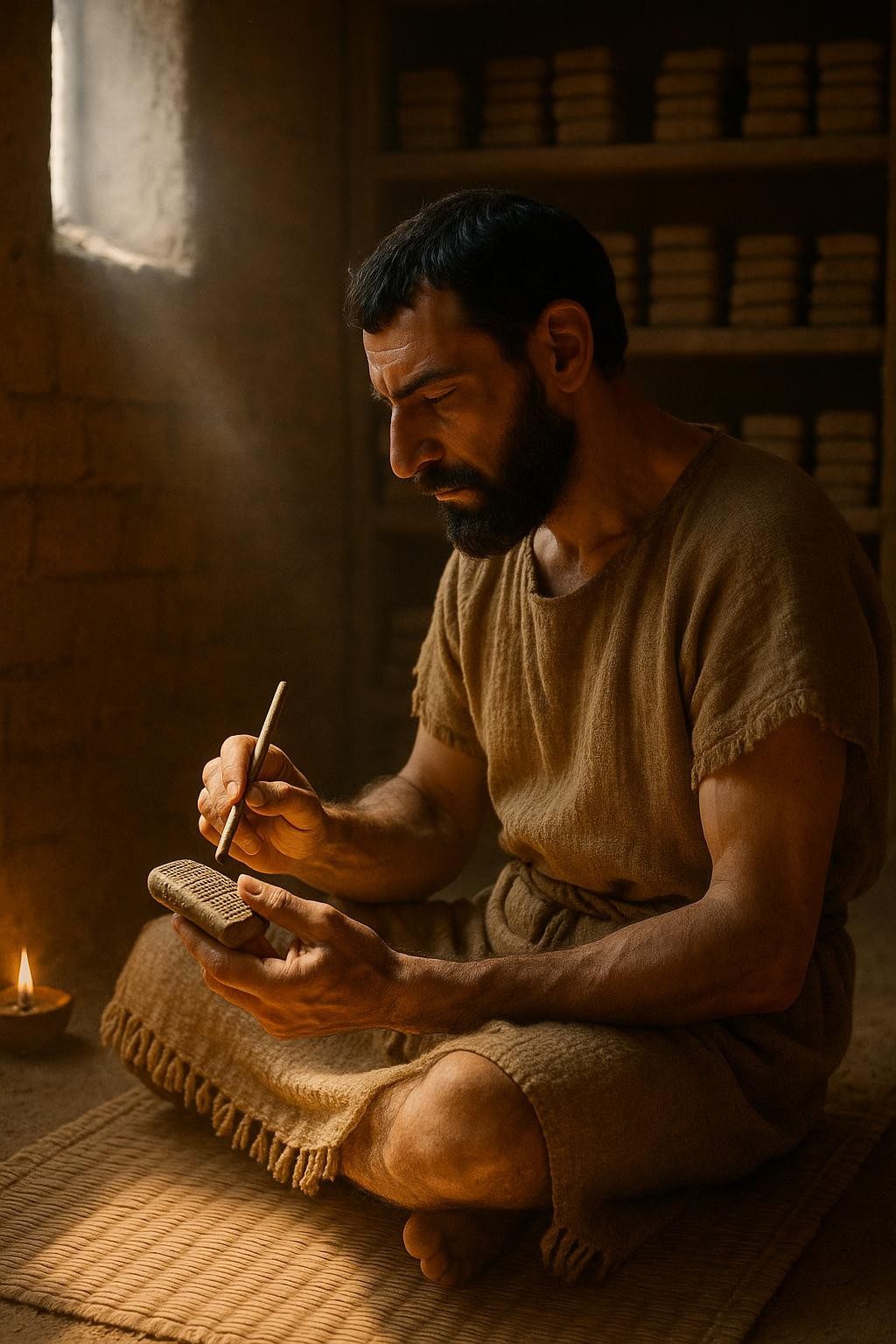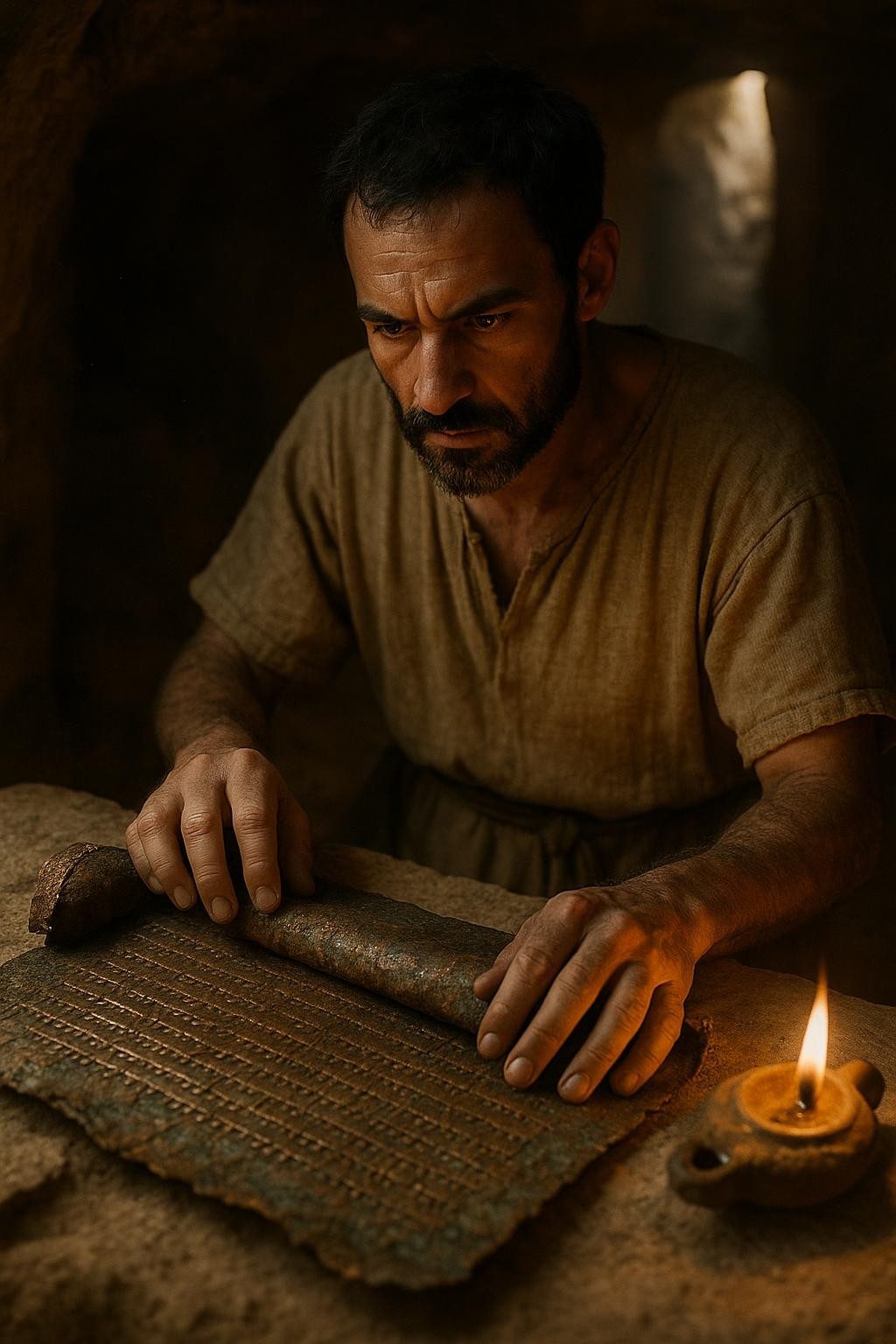
The sky above Qumran is a piercing blue, unbroken by clouds, and the rugged hills surrounding the Dead Sea bask in the relentless sun. Silence pervades the landscape, interrupted only by the faint whisper of wind over ancient stones, each relic of a distant past. It was here, in 1952, among these tangled cliffs and hidden caves, that archaeologists stumbled upon an extraordinary artifact—a copper scroll. Unlike the papyrus and parchment of the Dead Sea Scrolls, this document was hammered from metal, intended to survive in a manner befitting the treasures it purported to conceal. A list of sixty-four locations was etched into its surface, each one a vault of gold and silver amassed before the Romans razed Jerusalem. Yet, despite the detailed directions carved nearly two millennia ago, the treasure eludes discovery, leaving behind a trail of speculation and tantalizing mystery.
The Scroll Unrolled: A Glimpse into Antiquity
The discovery of the Copper Scroll unfolded in the spring of 1952, within the sacred labyrinths of Cave 3 near Qumran. Among numerous fragments of parchment and papyrus, battered by time yet carrying the whispers of ancient texts, this scroll was unlike any other. The copper sat impenetrable, buried beneath dirt and debris, holding secrets inviolable to decay. Unlike the other Dead Sea Scrolls, which were religious texts steeped in the mysticism of prophecy and scripture, this was a crude catalog of wealth waiting to be unearthed.
As the scroll was painstakingly unrolled over the course of several years, its text revealed little in the way of narrative. Instead, it offered coordinates and measurements to riches scattered across the landscape, written in an ancient tongue with a precision that seemed to guarantee discovery. Locations varied: beneath citadels, within reservoirs, and near monumental stones. The locations, thirty-eight specifically noted with detailed specifics, promised unimaginable bounty, including hundreds of talents of gold and silver. Each destination listed was imbued with meticulous instructions—pacing distances, landmarks crafted by the ancient hands that had long since turned to dust.
Despite the allure of this long-buried treasure, attempts to uncover the caches stand unsuccessful. The stark desert remains quiet, withholding its secrets in a paradox that has puzzled scholars and treasure hunters alike. Various expeditions conducted meticulously, with high hopes and modern technology clashing against the scroll's archaic script, have turned up empty-handed. Every failure results in deeper layers of intrigue, as if the land itself chooses not to yield its wealth, perpetually guarding the mystery of its past.
From Riches to Ruins: Riddles of a Vanished World
The Copper Scroll, an anomaly among its finds, is estimated to have been created between 50-100 CE, just as the Second Temple succumbed to the vicious onslaught of Roman legions in 70 CE. Historians surmise that the hoarded treasure may have belonged to the Temple itself, hidden hastily as Jerusalem burned under Roman siege—a desperate attempt to preserve a culture's glories against the inevitability of conquest.
The context of these times is crucial to understanding the scroll's significance. During the Jewish Revolt, societal structures crumbled, religious centers were annihilated, and artifacts of faith were scattered. The Copper Scroll serves as a remnant—a tangible piece of a shattered past speaking to the wealth and faith of its era. But with ambiguity rife, the question remains: was it truly possible to amass and hide such treasures under duress, or is it a cunningly woven tale of illusion spun by the ancient world?
Explorers have attempted to reconcile the scroll's cryptic directions with modern geography, though many sites detailed by the scroll remain enigmatically lost to history or altered beyond recognition. Some scholars theorize that subtle errors in translation or geographical shifts over millennia may have relocated or entirely obscured the treasure. Others argue the treasures may have already been found and silently integrated into the shifting fortunes of subsequent centuries—or dubiously, that they never existed at all.
The mental picture painted by the Copper Scroll—its reference to ceremonial spaces, walled cities, and storehouses—is an evocative window into the concerns and aspirations of a bygone culture. Gold isn’t just a material of wealth; in this context, it's a symbol of divine devotion, power, and resistance—a manifestation of ancient labor, coveted and safeguarded against the impermanence of time.
The Mystery Endures: Echoes of an Unclaimed Past
Even in modern times, as research continues and technology advances, the Copper Scroll remains an unsolved puzzle. Metal detectors and ground-penetrating radar have rejuvenated efforts, but they have added little more than fresh layers of ambiguity and hype. The mountains maintain their austere vigilance, while researchers sift the sands of time in search of truth.
This unsolved mystery serves as more than just an archaeological curiosity—it is a compelling reminder of the human penchant to search for meaning and material possession, and the timelessness of such quests. The allure of the Copper Scroll is rooted as much in its undiscovered treasure as in the unanswered questions it poses about history, culture, and identity. As each expedition returns empty-handed, the enigma of the scroll magnifies the potency of human imagination coupled with hope—a testament to our enduring fascination with the past and a continuation of the narratives it harbors.
In the shadows of the Judean wilderness, under the relentless watch of a scorching sun and timeless rocks, lies the enduring call of a copper script. While the treasures remain hidden, their story continues to shine brightly, igniting the eternal journeys of seekers and scholars who tread both known paths and uncharted territories in pursuit of the world's elusive mysteries. What is left unsolved becomes part of the heritage—a metronomic reminder that not all treasures sought are found, and not all found are fully understood.