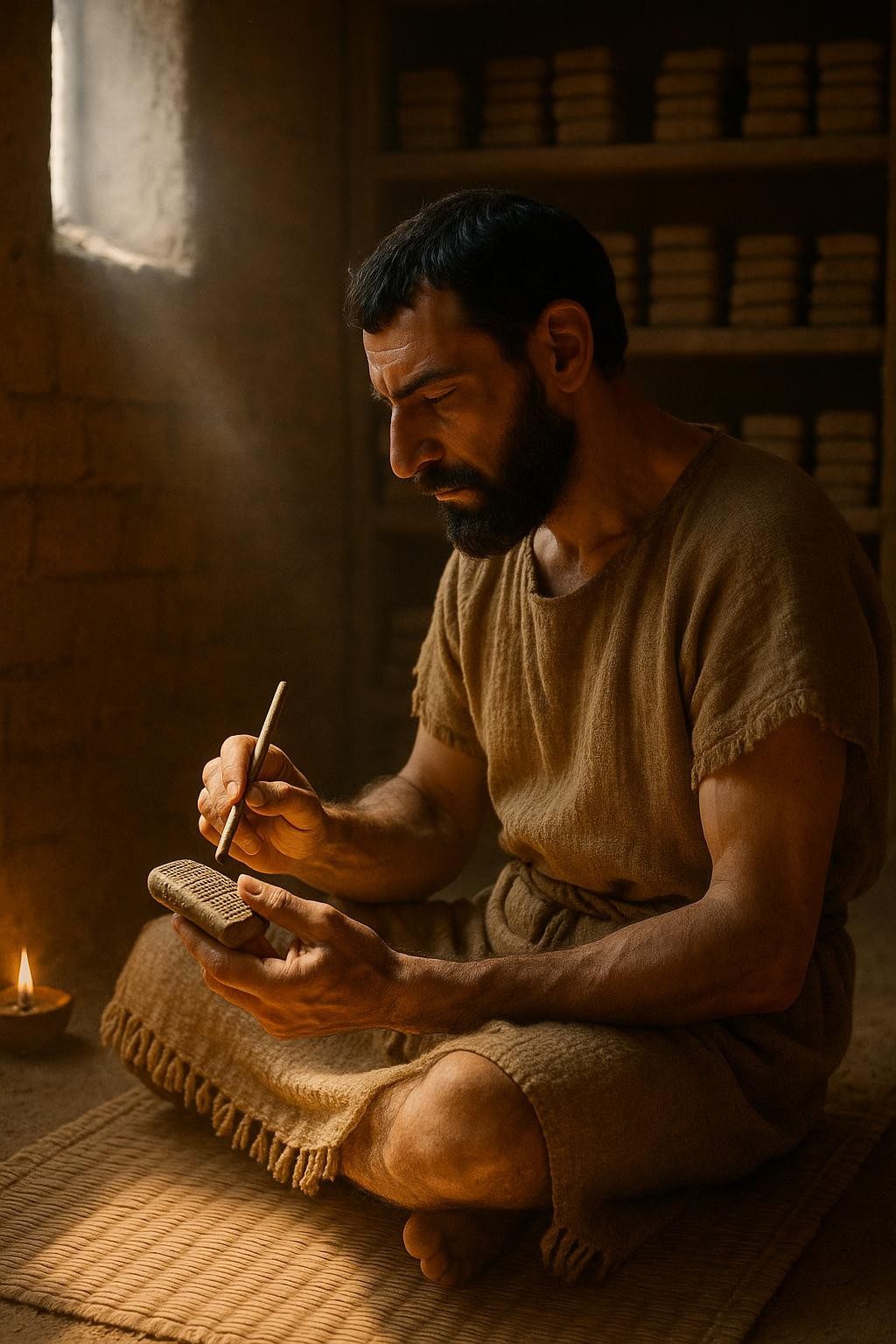
He was an invisible city. Thought to be mythical, Urkesh was just an echo from ancient tablets. Yet, it was fully real.
The Mysterious Tablet
In the ancient lands of Mesopotamia, where the Tigris and Euphrates rivers caress the earth and civilizations were born, a lone clay tablet whispered secrets from 1800 BCE. This unassuming relic, etched in the cuneiform of its time, bore a narrative that many considered mere myth. It spoke of Urkesh, a grand Hurrian city of gods and kings, a capital-filled splendor and might. For a century, scholars and archaeologists poured over maps and scrolls, attempting to reconcile this ancient lore with the known world. Yet, Urkesh remained a phantom, consigned to the realm of legend.
The tablet itself was a relic of a bygone time, its surface covered in what seemed an indecipherable web of symbols to the untrained eye. But to those who could read its script, it was a vivid chronicle of a city that played a crucial role in its age, a hub for trade, religion, and politics among the Hurrians. Despite the detail captured by the scribes of yore, the physical city had vanished without a trace, leaving behind only stories and skepticism.
Archaeologists Dismissed
For decades, the academic community largely dismissed the tablet's account of Urkesh. Towns and cities of the early second millennium BCE had left their mark on the landscape, each ruin's shattered stones and artifacts speaking volumes. Yet, Urkesh was the exception. Repeated expeditions into the East confirmed little beyond the known territories of other Mesopotamian marvels, like Babylon and Ur. The disenchantment grew palpable; for those steeped in ancient history, Urkesh seemed to mock their efforts with its stubborn elusiveness.
To dismiss Urkesh was to deny the richness of a culture intertwined with the early narratives of humanity. The dismissive laughter from classrooms and lecture halls may have echoed louder than any physical clue left behind; after all, how could a city described in such illustrious terms elude those who searched for it? And yet, in the hills of contemporary Syria, the answer lay waiting.
The Great Discovery
It was in the Northern Syrian plains, with their fertile horizons and sun-baked soil, that a team of determined excavators shifted the sands of time. Armed with a passion that rivaled ancient architects and traders, they unearthed the city exactly where the mysterious clay tablet suggested. The site, now identified with the tell of modern-day Tell Mozan, unfolded brick by brick, revealing fortifications, temples, and even palatial structures that matched the descriptions captured so long ago.
The sense of triumph was electric. Digging down these layers revealed a story cemented in the physical realm, as roads and remnants spoke of Urkesh’s glory. It became clear that Urkesh had not only been a center of political power but also a vital spiritual hub. Temples dedicated to the storm god Teshub attested to the city's religious significance, while intricate artifacts suggested a society rich in culture and influence.
Suddenly, the academic laughter faded. The echoes of Urkesh had burst from the myth into reality, taking its rightful place among the ancient jewels of Mesopotamian civilization.
Why It Matters
The rediscovery of Urkesh is not just a tale of lost cities and scholarly vindication. It is a poignant reminder of the tenacity of human existence and expression. Every buried brick or hidden chamber is a testament to a time when human hands shaped them against the backdrop of divine and royal aspirations. Urkesh invites modern civilization to reimagine its own forgotten stories and reconsider the places labeled as myth merely because their voices have become faint over time.
In today’s world, where the lines between fact and fiction blur with ease, Urkesh serves as a beacon. It reminds us that the ancient past holds many truths yet to be unveiled and that patience, curiosity, and a willingness to listen to even the smallest whispers from history can lead to profound discoveries. By bridging the gaps between the tales of old and the landscapes we tread, Urkesh offers a lesson in humility and a vibrant illustration of how much more there is to discover about the world that was once thought fully mapped. The streets of Urkesh may not buzz with life as they did millennia ago, but they hum with wisdom and mystery, urging us to remember that some stories are just beginning to be told.