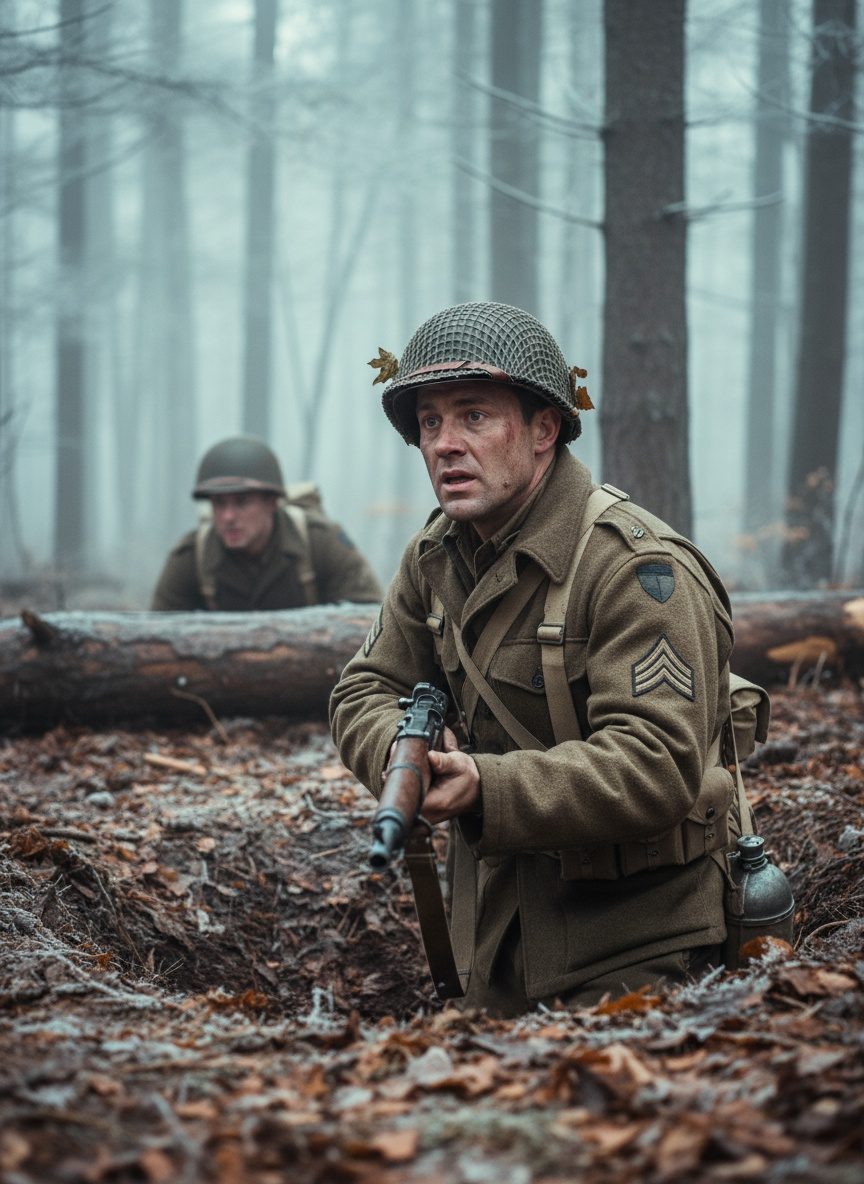
In the mist-shrouded stillness of the Vosges Mountains, the early morning light filtered through dense canopies, casting fragmented shadows across the forest floor. The air was crisp with the bite of autumn, each breath mingling with the earthy scent of fallen leaves and damp moss. For four days, this seemingly serene landscape concealed the deafening chaos of war. As the mist rolled off the hills, the scene was set for a clash that would test the mettle of a handful of American riflemen left clinging defiantly to strategic high ground against relentless enemy attacks.
Locked in the Fog of War
In October 1944, the ancient Vosges Mountains became the stage for a strategic showdown as Allied forces pushed through eastern France. Nestled within this rugged terrain, a small contingent of American riflemen found themselves encircled on a forested hilltop. Their objective was clear: to hold the hill at all costs and prevent the German forces from reclaiming control over this critical vantage point. The stakes were dire, and the consequences of failure were unthinkable given the ongoing Allied struggle to break the Siegfried Line further ahead.
In this hostile and densely wooded environment, visibility was limited, compounded by the dense fog that often wrapped around the hills like a suffocating shroud. The sounds of approaching tanks, grinding metal on gravel, were often the first indication of an enemy assault. A misfired bazooka here, a concentrated burst of machine-gun fire there, the clashes with German forces were sporadic yet intense. Ammunition supplies dwindled alarmingly with each passing skirmish, leaving only determination as their most abundant resource.
Standing Their Ground
Under such dire circumstances, it was the leadership and quick thinking of Technical Sergeant Charles Coolidge that perhaps turned the tide in favor of the beleaguered Americans. Coolidge, though faced with relentless pressure, exuded calm in the eye of the storm. He walked among his men, urging them forward, his words piercing the oppressive silence that often pervaded between assaults. It was not just weapons that fortified their position; Coolidge's leadership was the invisible bulwark against the rolling tide of German aggression.
The German forces, equipped and determined, launched repeated tank assaults on the American-held hilltop. These weren't just tactical engagements; they were concentrated efforts designed to crush the American spirits and force a withdrawal. The metallic clatter of approaching tanks sent chills down spines, a sound that soon became all too familiar. Yet Coolidge maintained his composure, encouraging his men with a mixture of grit and humor, even as their situation grew increasingly desperate. Such resolve in the face of overwhelming odds was not mentioned in textbooks but should be remembered as a testament to human tenacity.
The Battle of the Boulders
As the skirmish stretched into its fourth day, a new crisis emerged: the Americans had exhausted their supply of ammunition. The calculated German advance seemed poised to overrun their position. It was then that Coolidge made a decision as audacious as the stunning vistas surrounding them. With no conventional weaponry left, he ordered his men to pick up rocks and hurl them down the slope. To the outside observer, it may have seemed futile — an act of desperation. Yet, for those entrenched on the hill, it became a symbol of their unyielding resolve to hold out until reinforcements could arrive.
Rocks clattered and bounced down the forested slope, drawing curious hesitation from the advancing Germans. Was it a ruse or a trap? This unexpected maneuver bought the Americans time — precious moments wherein the enemy's uncertainty outweighed their firepower. The standoff on the hill became a psychological game as much as a physical battle, each side probing for weaknesses without the luxury of clear sightlines. Coolidge's daring decision was a gamble that paid off. Even when stripped of their armaments, the spirit and ingenuity of these soldiers held firm against the mounting odds.
Resilience in the Mountains
The ordeal in the Vosges Mountains stands as a soul-stirring chapter in the annals of military history. It was not merely a tale of survival but one of resilience, courage, and an unbending belief that the hilltop must be held, even as the resources to do so faded. The story of Technical Sergeant Charles Coolidge and his men is an encapsulation of the essence of human endurance — an ability to adapt, to inspire, and to find strength when the tangible means of defense seem exhausted.
As historians sift through the chronicles of World War II, these brief, intense encounters might be minor footnotes when viewed against grander strategic maneuvers. Yet, they reflect the microcosm of war — where decisions crafted in moments of such helplessness and inhospitable conditions illuminate the broader tapestry of conflict. Such stories remind us that heroism is not always grand nor widely recognized. Sometimes, it rests in the quiet decisions made on fog-laden hillsides, where rocks become weapons and steadfastness shapes the outcome of battles yet to come. The tale of this resilient defense in the Vosges Mountains serves to underscore an enduring truth: in the crucible of conflict, the human spirit can transform the impossible into the possible.