The Bronze Age thrived with locally sourced materials. But a child on Whitehorse Hill defies that notion.
Unraveling Time on Whitehorse Hill
High upon Dartmoor, a region shrouded in mist and myth, lies Whitehorse Hill, a place of stark beauty and ancient whispers. Here, archaeologists made a discovery that unveiled the hidden intricacies of Bronze Age Britain—an era that has often felt remote and isolated to modern observers. On this windswept hill, the fragile, woven contours of a small basket persisted through millennia to be uncovered, revealing the remains of a child who lived over three and a half thousand years ago, in approximately 1550 BCE.
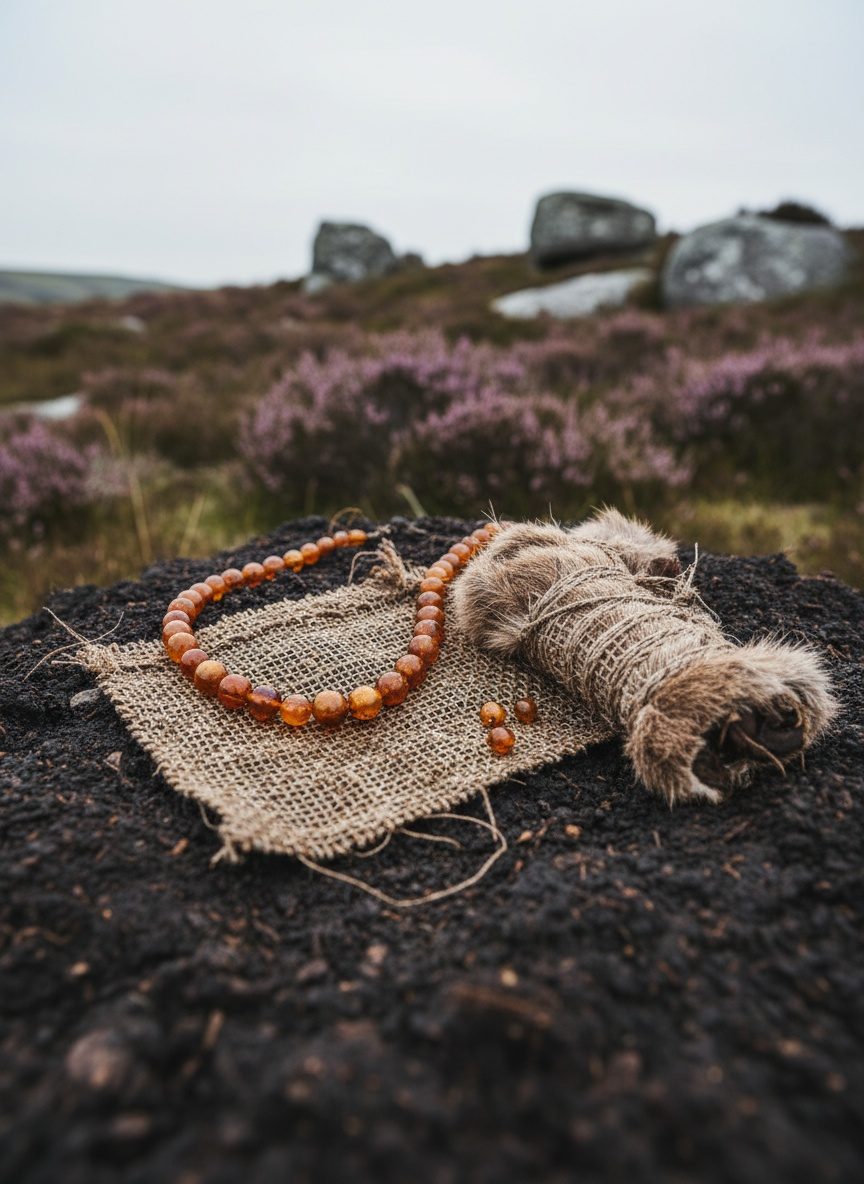
The excavation of the burial site was meticulous, each layer peeled away like pages of a forgotten book, revealing more about the society that once thrived here. Within the basket, the remains were wrapped in soft animal pelts, their texture and purpose indicating the care and reverence accorded to the deceased. This was not merely a burial; it was **a rite of passage**, carefully orchestrated by those who held strong beliefs in the journey to another world.
Yet the most startling discovery lay not in the ritualistic placement or the child's own relics, but in the adornments interred alongside — a shimmering amber necklace. Fashioned from beads that glowed with an otherworldly light, each piece traced back its origins not to nearby coasts, but to the distant shores of the Baltic Sea. Thousands of miles separated this boy's final resting place from the cold, northern waters where his necklace began its journey. It was a testament to the vast web of trade and connection that interwove Bronze Age Britain with distant lands, a web mostly hidden from our eyes until a chance excavation revealed its enduring threads.
Amber's Journey Across Ancient Lands
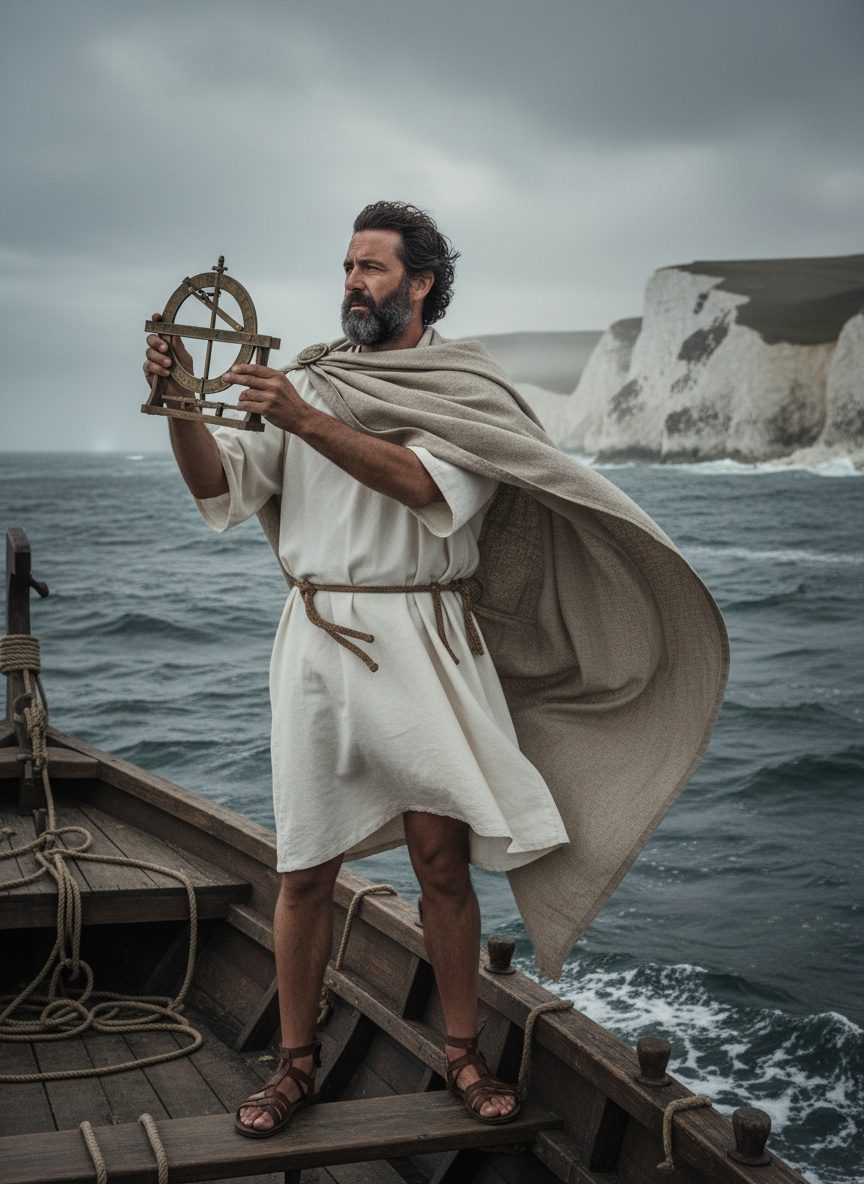
The necklace on Whitehorse Hill was far more than a decorative remnant; it was a symbol of the expansive and dynamic networks of trade that existed during the Bronze Age. Amber, with its warm, golden hue and almost magical ability to capture time within its depths, was a highly prized commodity in the ancient world. Its journey from the Baltic Sea to Southwestern Britain is a testament to the enterprise and daring of ancient traders who bridged cultures and continents.
Moving across vast swathes of territory, amber likely exchanged hands numerous times, passing through the great river systems of Europe, and along perilous land routes. Caravans of goods would have traveled these circuits, carrying not only amber but ideas, technologies, and cultural practices. Each trading post along the way was a melting pot of ancient society, where local goods like tin and copper—a key ingredient in bronze manufacturing from Britain—could have re-entered the sprawling web of commerce.
The mere presence of Baltic amber on Dartmoor reveals how even the remotest parts of Britain were part of this sophisticated trade network. It challenges the perception of Bronze Age Britain as an isolated island culture and instead presents it as a player on the broader stage, contributing to and absorbing from the great currents of commerce flowing through the ancient world. With each bead of amber, we can imagine the hand that passed it along, the stories swapped by firelight, and the shared human experience reaching further back in time than we might have realized.
Threads Weaving a Global Tapestry
The careful burial of the child on Whitehorse Hill speaks both softly and powerfully about how connected Bronze Age societies truly were. While our modern perspective insists on viewing ancient civilizations as primitive and separate from one another, this burial defies such simplistic narratives. The choices made by those Bronze Age Britons, in honoring and adorning their dead, underscore an unparalleled respect for connections stretching beyond their immediate geography.
This story matters because it invites us to rethink how we perceive human history. It is easy to fall into a narrative of cultural isolation, focusing more on wars and conquests than on the rich tapestry of everyday life interwoven through trade and shared artistry. Yet, the intercontinental journey of an amber necklace across Europe to its resting place on Dartmoor reveals the earliest inklings of a global community. It is an echo reverberating through time that, even in an era defined by local survival and small communities, people reached out—forming unseen bonds that helped shape the foundation for later civilizations.
In reflecting on that lonely grave atop Whitehorse Hill, with its encompassing silence and forgotten vistas, we are reminded of our own interconnected existence. Much like the path taken by that ancient amber, human migration, exchange, and interaction continue to define the continuous, evolving story of humankind — a narrative as remarkable as it is endless.