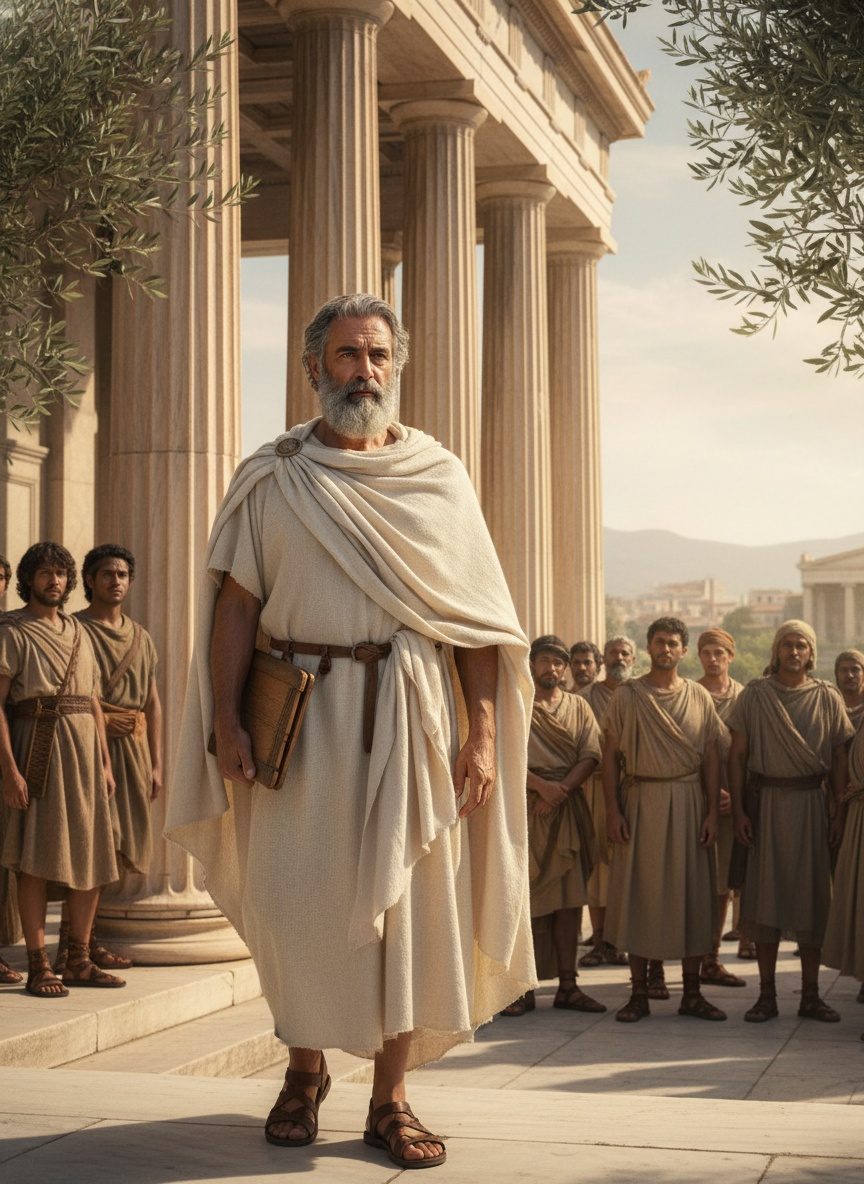
The sky over Athens hung heavy with the golden hue of the afternoon sun, its rays casting long shadows over the bustling Agora. The air buzzed with the cacophony of merchants hawking their wares, the clip-clop of sandals on worn stone, and the distant clang of metal from the blacksmith's forge. This was a city crackling with energy, yet beneath its vibrant surface, a seismic tension simmered—a division so deep it threatened to tear Athens apart. It was 594 BC, and Athenians stood at a volatile crossroad.
Amidst this unrest, Solon, a man as deeply respected as he was painfully aware of the city's turmoil, emerged as a beacon of hope. A poet, a philosopher, and a statesman, Solon was tasked with an unprecedented mission: to save Athens from itself. The chasm between the rich and the poor had widened perilously, with the wealthy aristocracy tightening their grip on power while the impoverished struggled beneath a mountain of debts and servitude. Operating under ancestral laws that favored an oligarchic rule, Athens faced a bleak future. Enter Solon, with his unyielding resolve to fundamentally rewrite the legal and social structure from the ground up.
While Solon's appointment as archon was nothing short of momentous, the boldness of his legislative overhaul was extraordinary. He crafted laws to alleviate the dire straits of the indebted, freeing those who had fallen into slavery to pay their dues and banning the inhumane practice of securing loans on one's own person. Yet these moves aimed to more than just realign societal balance; they were a calculated dance to ensure the survival of a state teetering on the brink of chaos. In his wisdom, Solon understood that realignment would stir resentment on all sides—an outcome that was both inevitable and necessary.
Across the city’s sun-dappled streets, reactions to Solon's reforms were as fiery as the midsummer sun. Wealthy landowners and creditors decried the annulment of debts as an assault on their very livelihood, while the poor, eager for more radical change, found themselves yearning for greater equity. Solon became a figure both revered and reviled, a man whose impartiality earned him few allies but whose visionary policies began to weave a delicate social fabric capable of withstanding the pulls of the opposing forces.
And then, in an astonishing twist, Solon stepped down from the helm. His parting decision was as enigmatic as it was unprecedented: he would leave Athens. It was a calculated gamble, for if he remained, the pressure to modify or dismantle his fledgling reforms would mount, threatening the very foundations he was striving to lay. As he walked away from Athens, Solon placed immense trust in the city and its citizens to navigate the path he set forth. This ten-year voluntary exile was a radical experiment to prove that the health of the polis could endure without reliance on a single guiding hand.
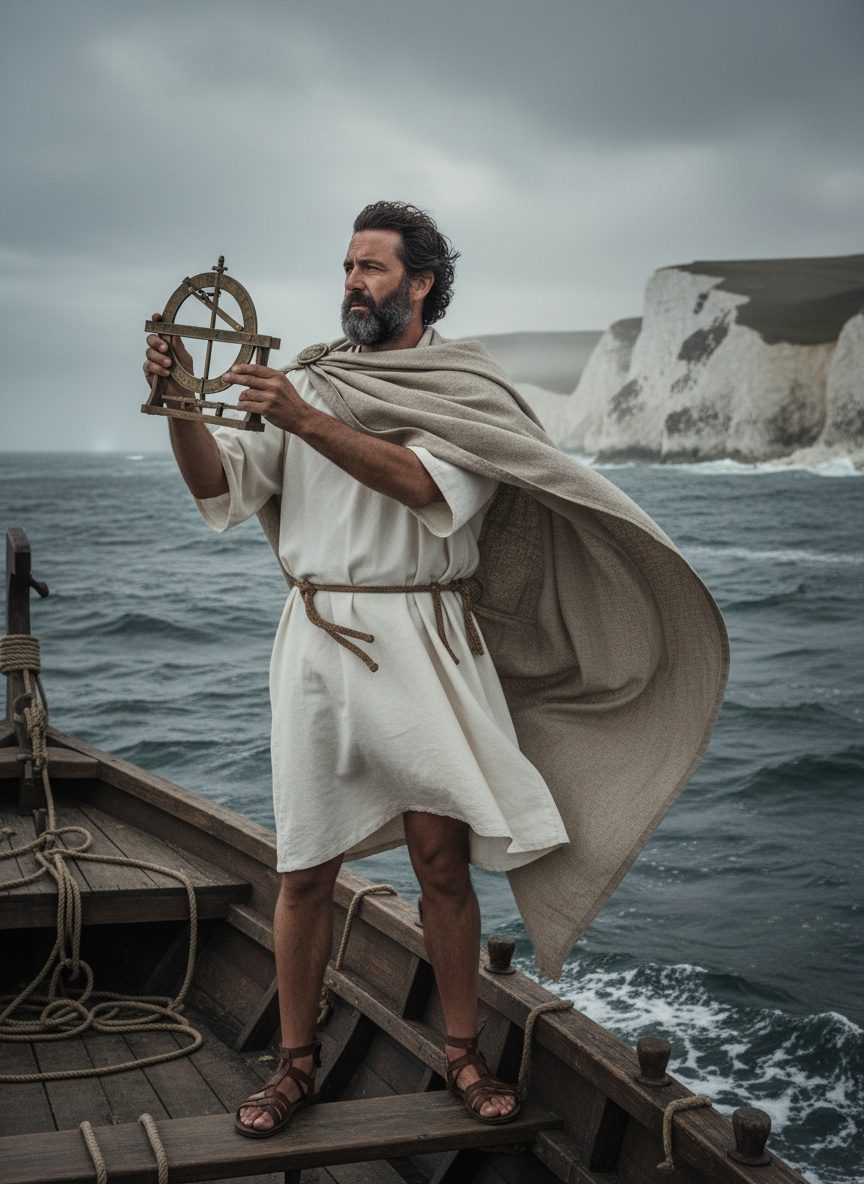
So, with the echoes of his sandals fading into the Hellenic night, Solon embarked on a journey that promised both exploration and introspection. Where most saw borders, Solon saw opportunities to immerse himself in the ways and wisdom of foreign lands. His travels took him across the seas to the banks of the Nile, where Egyptian civilization whispered secrets of antiquity few Athenians could comprehend. From the bustling markets of Lydia, where vibrant Persian textiles mingled with the aromas of Eastern spices, to Phoenicia's coast where stories of seafaring adventures were exchanged as commonly as currency, Solon absorbed the rich tapestry of the ancient world.
Meanwhile, back in Athens, Solon’s laws took root. The city-state, though still gripped with strife and dissatisfaction, began to navigate a path towards stability. Solon's laws, designed to be unyielding in their fairness, served as a lifeline around which the Athenians could rally. The wealthy, though grumbling, found the newly flattened social hierarchy a more reliable foundation on which to leverage their influence. The poor, now unburdened from the shackles of oppressive debts, found space to breathe and aspire within this newly structured society.
Over time, Athens metamorphosed, overcoming the rigid shackles of a system that had long kept its citizens in bonds of conflict. Though the reforms did not immediately usher in prosperity, they instilled a keystone—a burgeoning sense of demokratia, or the 'rule of the people'. It was this burgeoning spirit of democratic governance that future statesmen like Cleisthenes would refine and expand, eventually laying the groundwork for the birth of Athenian democracy.
Solon returned to the city he had bid farewell to a decade before. What greeted him was a city transformed, a city that had withstood the tides and tempered the storms. Athens stood intact, its social fabric redefined and its political landscape prepared for the dawn of a new era. Solon, once at the heart of the storm, now found solace in the steady progress his absence had cultivated. His vision had not only survived; it had flourished.
In remembering Solon’s legacy, we witness the profound impact of foresight and faith in the collective will of a community. Solon's story is a reminder of the power and peril of revolutionary change and the resilience of human society when anchored in shared ideals. In a world still grappling with divides, where governance often succumbs to the ebbs and flows of power struggles, Solon’s legacy prompts us to consider what can be achieved when boldness is coupled with trust, and when the courage to step aside becomes the truest test of leadership. In the most unlikely of times and the most unlikely of places, Solon’s Athens shows us that even amidst tumult, there lies the seed of transformation.