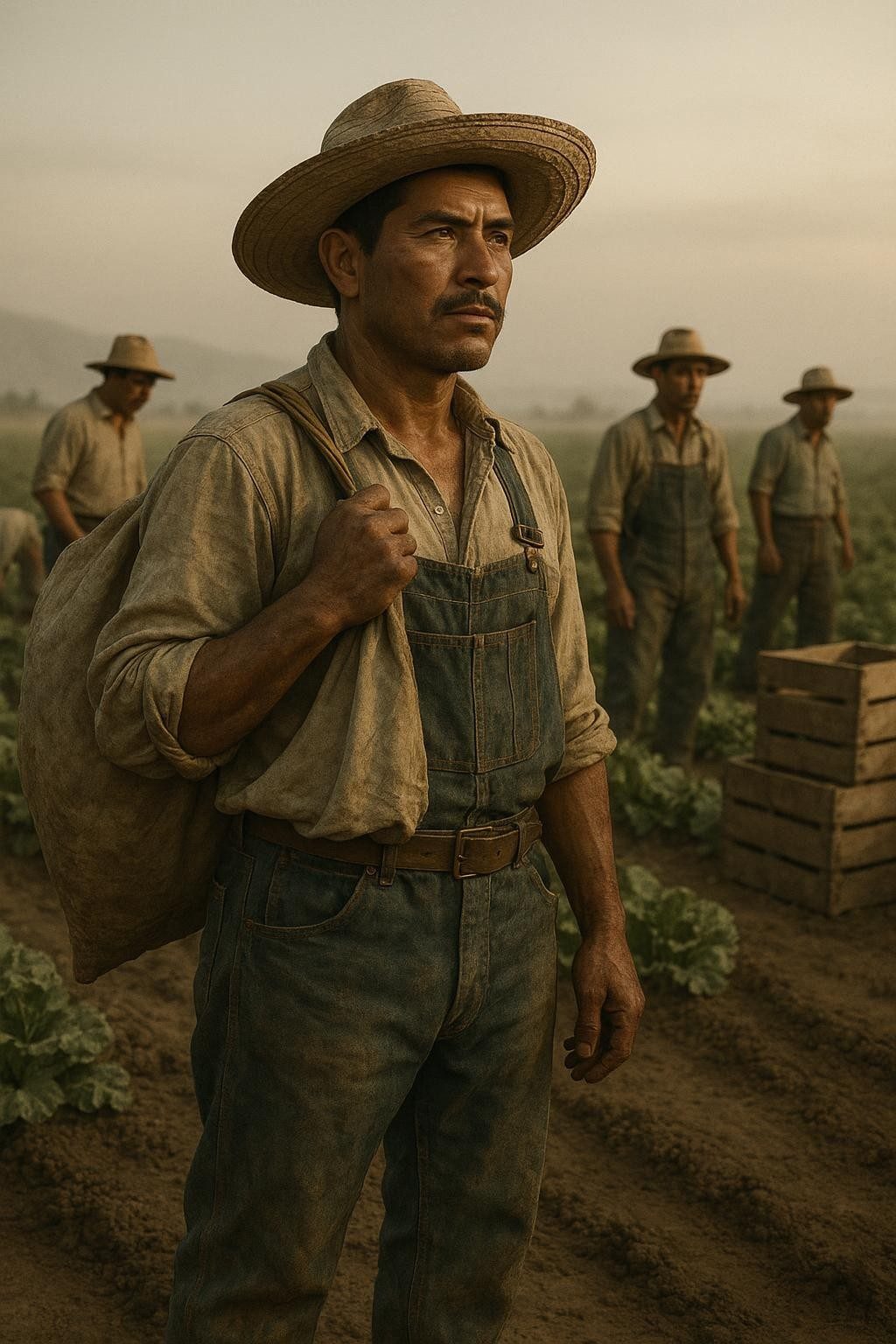
The sun blazed overhead as bare hands grasped at the stalks of verdant, towering corn. Sweat dripped from sun-kissed brows onto the parched earth of the Californian fields, where the Bracero men, with calloused hands and stoic expressions, bent to the relentless labor of feeding a nation at war. The rhythmic rustle of crops being gathered blended with the subtle murmur of Spanish, a reminder of the promise forged across borders — a promise now at the heart of America's food lifeline in the days of World War II.
The Origins of an Unexpected Alliance
Before the steel-spined plows of these determined men turned the American soil, there loomed a growing crisis. As the United States plunged into the global conflict of World War II, manpower shortages became stark against the backdrop of blooming fields left to wither. Domestic workers were whisked away to the frontlines, and the nation faced an agricultural dilemma of unprecedented proportions. From these dire straits emerged a pact forged not in steel, but in necessity and hope— the Bracero Program.
The agreement, struck in 1942 between the U.S. and Mexico, aimed to alleviate the labor void by permitting Mexican men to work in American fields and railroads, a testament to wartime exigency and cooperation. Yet, entangled within was a complex tale of promise and exploitation, woven with vibrant images of trains arriving from the south carrying hopeful men, eager to contribute to a war effort that was not theirs. For these men, the Bracero Program was an unexpected tide, carrying them to the sprawling fields of the American landscape.
Sweat and Sustenance on Foreign Soil
The very air hummed with effort as Bracero workers fulfilled roles far from home, where their hands coaxed crops from the earth, supplying a nation hungry for sustenance. It was here, among the furrows and rows, that these men emerged as invisible giants of an agricultural revolution, harvesting citrus in California, cotton in Arizona, and sugar beets in the broad expanses of Texas. It was a Herculean task shouldered with dignity and diligence despite the paltry wages that underscored a pervasive inequality inherent in the program.
Life for the Bracero men was spartan; dormitory-style barracks were their refuge after long days laboring under unforgiving suns. Often, stories trickled through the fields of the struggles faced within this temporary abode — unfair treatment, reductions in pay, and conditions far harsher than promised. Yet, resilience bloomed in their hearts, as each man toiled not only for the remit earned but for the promise of payment to families left behind, families who depended upon the wages for survival amidst the socio-economic reckonings of the era.
The Unseen Tendrils of Cultural Exchange
While fields blossomed under their care, the Bracero men also sowed seeds of cultural influence across America, their presence a harbinger of the diverse surges that would later shape the nation. Markets brimmed with the produce of their labor, but more subtly, communities transformed as the echoes of Mexican culture began resonating within the American tapestry. Culinary flavors in small towns enriched dinner tables, and Spanish phrases slipped naturally into local parlance, weaving a vivid cultural exchange unnoticed amid the roar of wartime urgency.
Yet, beneath this exchange lay a simmering discontent, as the Bracero men often faced prejudice and had to navigate a landscape parched not only of labor but of hospitality towards those defined as 'other.' This dual existence, of toil and cultural contribution on foreign soil, underscored yet another layer of unspoken sacrifice within the narrative of the men who sowed prosperity into America's agricultural heartland.
The Quiet Dismissal from the Fields
As the war ebbed and the winds of change swept like cyclones across the globe, the need for the Bracero men began to dwindle. Their once-urgent role, stark against a backdrop of absent soldiers, faded into the pages of forgotten paperwork and muted train departures. By the program’s closure in 1964, these men—once considered invaluable—became unsung echoes amongst rows of harvested corn and tilled soil.
The deportation that followed stood in stark contrast to their years of service and integration. It was as if the chapters of their lives had been neatly sealed, sorted, and set adrift without the closure of recognition. The empty fields they left behind served as mute testimonies to a transient dream, planted in fertile ground but never destined to bear fruit beyond its immediate harvest.
The story of the Bracero men speaks to the complexities of migration, the demands of nations, and the unheralded contributions that shape societies. In their calloused hands, they cradled not just produce, but the essence of a nation’s capacity for survival amidst global conflict. Their legacy, once unacknowledged, now manifests in every bite of history lingering within America’s foodways — a quiet testament to the sacrifice of those who, for a brief yet vital moment, held the sustenance of a nation within their grasp only to slip into the footnotes of history when the wars they did not fight concluded.