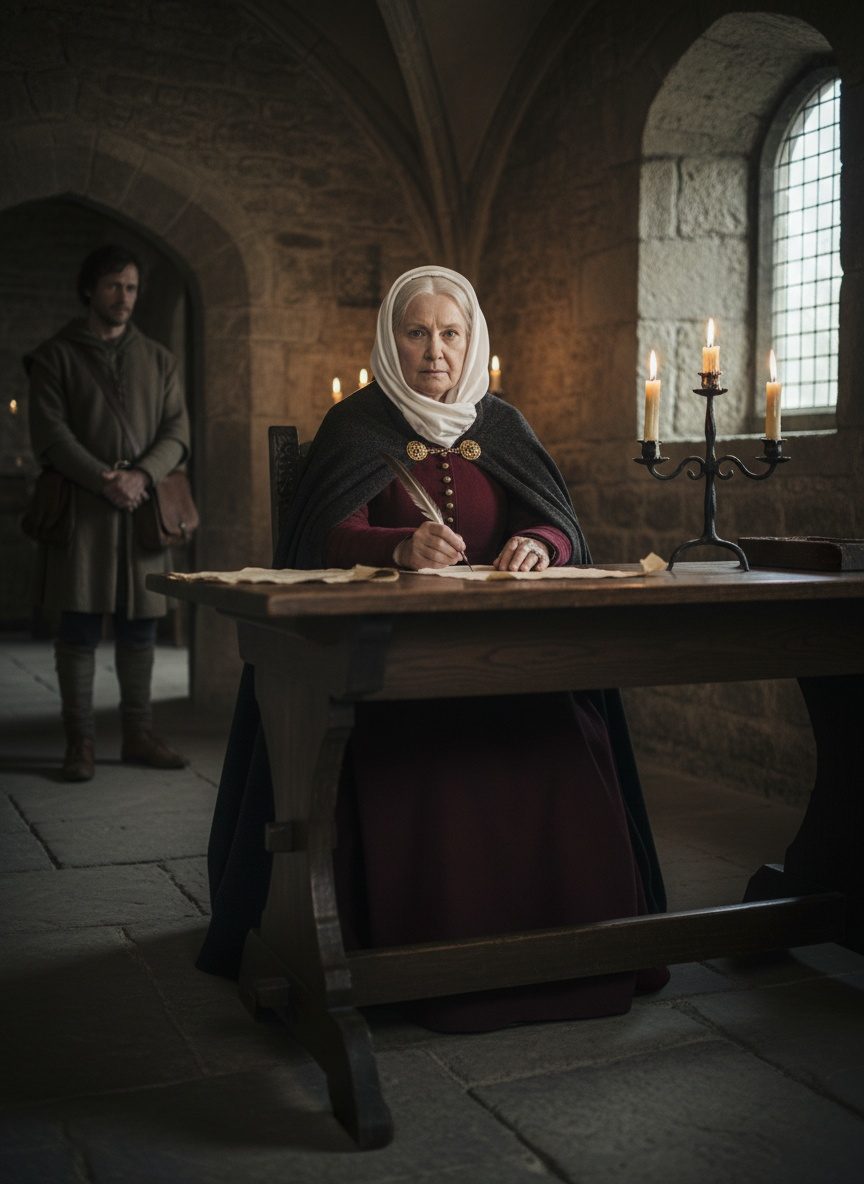
November 12, 657 AD. The sea mist clung to the ragged cliffs of Yorkshire.
The Founding of a Scholarly Sanctuary
In this misty November of 657 AD, a remarkable woman made a defining step that would echo through the ages. Hild of Whitby, born to noble lineage in the kingdom of Northumbria, founded a monastery on the rugged cliffs of the Yorkshire coast, a place that would metamorphose into the foremost beacon of learning in England during the early medieval period. When the synod of Whitby met within its wooden halls, its influence radiated not just across the northerly realms but throughout the lands we now call England.
Hild herself was an extraordinary figure, exemplifying leadership and piety. Following her baptism at the age of 13 by the renowned Bishop Paulinus, she chose a life devoted to religious studies and Christian service. The monastery she established was unique for its time, welcoming both men and women into its community. Under her watchful guidance, Hild transformed Whitby into a hallowed hub of education, attracting youths from noble families wanting to equip themselves with the wisdom to govern and lead.
Learning Amidst the Otherworldly
The day-to-day life at Hild’s monastery was a blend of ascetic discipline and intellectual rigor. The monastery perched on its solitary cliffside, often sighted by fishermen navigating the treacherous North Sea, was a place where the sound of seagulls mingled with the chants of psalms. Kings and nobles sent their sons with the hope of learning not just scripture and Latin, but understanding the laws of the land, a crucial skill set for future rulers.
The influence of Hild’s monastic school extended beyond just pure academics. She nurtured the talents of those like Caedmon, the illiterate cowherd who was moved in spirit to compose religious poetry, revealing the vibrancy and diversity of intellectual pursuit encouraged under her roof. Such stories of transformation became legendary, illustrating Hild’s belief in the intrinsic potential of each individual. It is from this nurturing environment that five monks would rise to become bishops, spreading the teachings they absorbed under Hild’s tutelage far and wide.
Wisdom, Power, and the Synod of Whitby
Not merely a center for learning, Whitby became a fulcrum in the unfolding political and religious landscape of 7th century England. It was in 664 AD that the synod of Whitby convened, a pivotal ecclesiastical assembly called to resolve disputes between the Roman and Celtic practices of Christianity. Chaired by King Oswiu of Northumbria, himself a product of the monastery’s vast educational influence, the synod sought Hild’s guidance for aligning theological and cultural practices.
Though ultimately the synod favored the Roman customs that set the course of English Christianity, Hild’s diplomacy during the proceedings was evident. She wielded her profound understanding of both traditions, serving as a mediator who managed to retain the monastery’s spiritual integrity while encouraging unity. Her ability to navigate such complex matters with grace and wisdom entrenched her reputation as a formidable leader, respected by rulers and religious figures alike.
Hild’s Enduring Legacy
Long after her passing in 680 AD, Hild’s influence continued to reverberate. The educational principles and structures she established at Whitby became a foundation for subsequent monastic schools, an essential pillar for the preservation and dissemination of knowledge during a time often referred to as the Dark Ages. Through her commitment to learning and spiritual care, she played a crucial role in transitioning Anglo-Saxon England from its runic past towards a literacy reliant on the Latin script.
Hild of Whitby’s remarkable legacy cannot be solely quantified by her direct accomplishments. Instead, it resonates through the ripples of learning, culture, and governance she influenced, paving the way for the academic and religious doctrines that sculpted medieval England. Her story, that of a woman who defied the constraints of her time to become a beacon of knowledge, reminds us that education's power is in its ability to transcend personal and societal bounds. More than a historical figure, Hild serves as a symbol of the relentless pursuit of wisdom against the odds of historical inertia.