February 1192. The chill wind swept across the snow-dusted hills of central Europe.
The Vanished King
The grandiose ventures of Richard I, known as Richard the Lionheart, had begun in the smoldering heat of Jerusalem and now found themselves swallowed by the icy shadows of a wintry Europe. After surviving the perils of the Third Crusade and securing his place in Western history as a lion-hearted knight, Richard mysteriously disappeared on his journey home. His trail vanished somewhere between the torn lands of the Holy Roman Empire, casting a pall of uncertainty over England's throne.
As rumors of his capture began trickling through the courts of Europe, it became evident that Richard had been seized and held for ransom. The request for his release demanded an astronomical sum that threatened to impoverish England. Richard’s enemies reveled in the chaos, and his absence was felt in every corner of Christendom, from the warring states on the Mediterranean shores to the bustling streets of London. Amidst this turmoil, one determined woman would not be swayed by fear or age—a woman whose resolve had been tempered through decades of political tumult and personal tragedy.
Eleanor’s Daring Enterprise
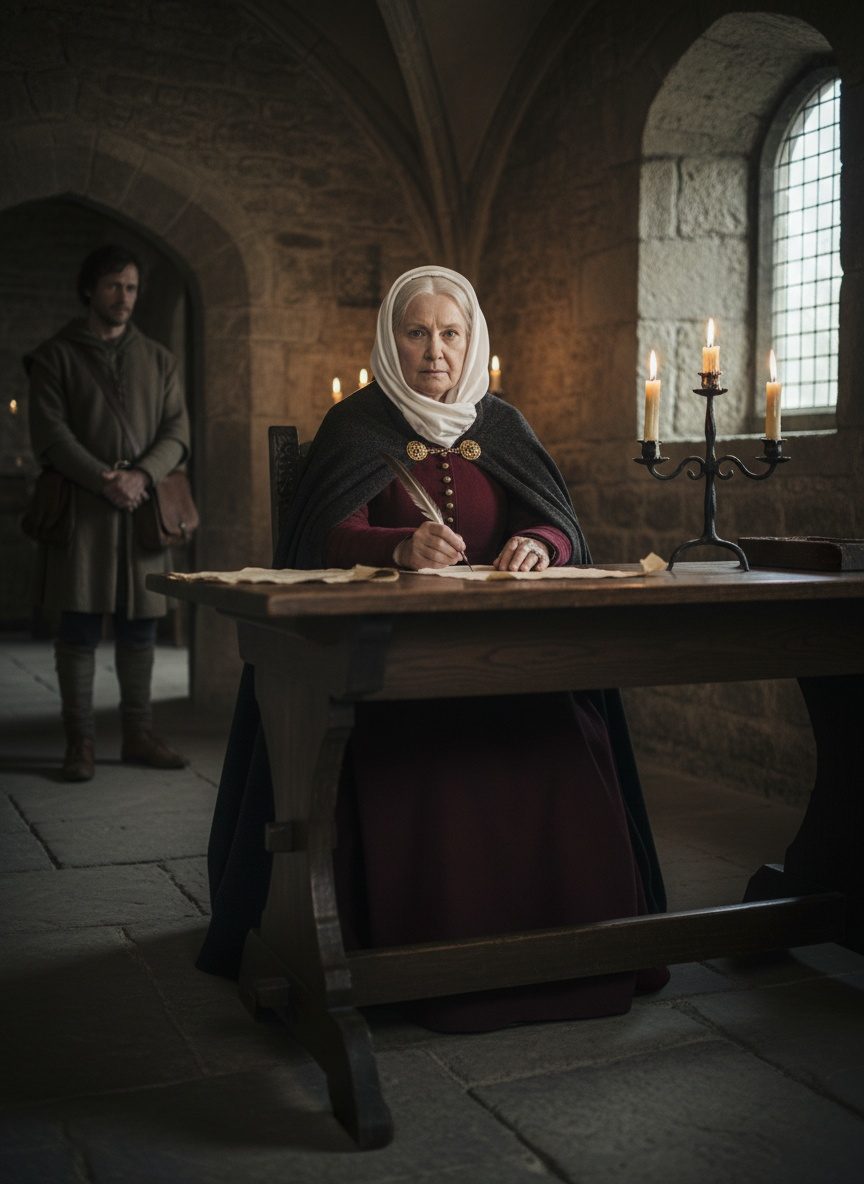
Eleanor of Aquitaine, Richard’s mother, was undeterred by her seventy years. Twice a queen, to Louis VII of France and Henry II of England, Eleanor had seen empires rise and fall. Under her influence, the courts of Europe flourished with the rich tapestry of troubadour songs and chivalric romance, yet her strength was unmatched in matters of statesmanship. Now, as clouds gathered over her son’s fate, Eleanor embarked on an unprecedented mission—the ransom of a king.
The silver she required was immense. Eleanor’s resourcefulness saw her emptying coffers, taxing subjects, and bargaining relentlessly with Europe's most powerful allies. The operation was as much a political campaign as it was financial. She traversed the domain that her late husband had once ruled, rallying barons and clergy to her cause. In a time when traveling itself was fraught with danger, Eleanor’s relentless pursuit cut through the heart of Europe as she negotiated with monarchs and minstrels alike, wielding diplomacy as her finest weapon.
The Fortress of Dürnstein
Richard’s captors, led by Leopold V, Duke of Austria, had housed him within the stony confines of Dürnstein Castle. Perched precariously above the Danube River, the fortress was an impenetrable bastion, its mere silhouette casting a long shadow of intimidation. Here, amidst its cold stone walls, Richard awaited an uncertain fate, his defiance stilled but not extinguished by chains.
Eleanor’s advance upon Dürnstein was a spectacle underscored by determination and grit. She had arranged for her passage into these hostile lands, negotiating with princes and church officials, each deal inching her closer to her son. With the sizable ransom in toe, Eleanor walked into the imposing fortress, breaking the barriers of age, expectation, and peril.
Inside the halls of Dürnstein, beneath the watchful eyes of his captors, her presence was not of an aging matriarch, but of a formidable queen enacting her will. It was Eleanor’s tactical acumen, polished by the fires of political strife, that shattered the chains confining her son. The coins that clinked on the fortress floors were the song of her triumph, each one a testament to a mother’s resolve.
The Legacy of Lions
With Richard’s return to England, the Plantagenet dynasty celebrated a reprieve orchestrated by Eleanor's courage. The saga of Richard’s disappearance and ransom left irreversible imprints upon the medieval landscape, a dramatic episode where the power and position of women in society were called into significant focus. Eleanor’s tenacity and intelligence carved out a new narrative, one where a woman's capability could echo through the very halls of power, shaping the course of history.
This chapter, rich with chivalry and maternal devotion, underscores the transformative agency that Eleanor wielded in a world dominated by dynasties and warfare. It echoes in our understanding of the nuanced influences women had as shapers of history beyond their roles as mere figures behind crowns. Through winter's chill and over Europe's tumultuous avenues of power, the once queen now mother warrior emerged victorious.
And so, what might have been a tale of a lost king became the defining moment of Eleanor’s storied life—a reminder that the bonds of family, especially one destined to shape kings and kingdoms, are potent beyond measure.