January 1874. It was a time when the lush green canopy of the West African rainforests bore silent witness to a game of imperial power and local sovereignty that would echo through the annals of history. Deep within this verdant heartland lay Kumasi, the capital of the Ashanti Empire, resplendent in its golden opulence. Yet, as the British forces, led by their renowned commander Sir Garnet Wolseley, advanced with the might of Victorian military prowess, they discovered that King Kofi Karikari had orchestrated an audacious vanishing act that left Kumasi a smoldering enigma. The British sought conquest, but what they found was a testament to courage, strategy, and the unyielding spirit of an empire that would bend but not break.
The Looming Shadow of Empire
The mid-19th century was a time marked by the relentless expansion of European empires. Among them, Britain, with its formidable naval power and industrial might, sought to establish its dominance across the gold-speckled lands of West Africa. The Ashanti Empire, a powerful confederation of Akan-speaking peoples, had long held sway over this lucrative region, standing as a formidable barrier to British aspirations of control. Emerging from a series of complex interactions, including trade, diplomacy, and occasional conflict, the relationship reached a boiling point by 1873. It was here that British interests clashed with Ashanti sovereignty, sparking the third Anglo-Ashanti War.
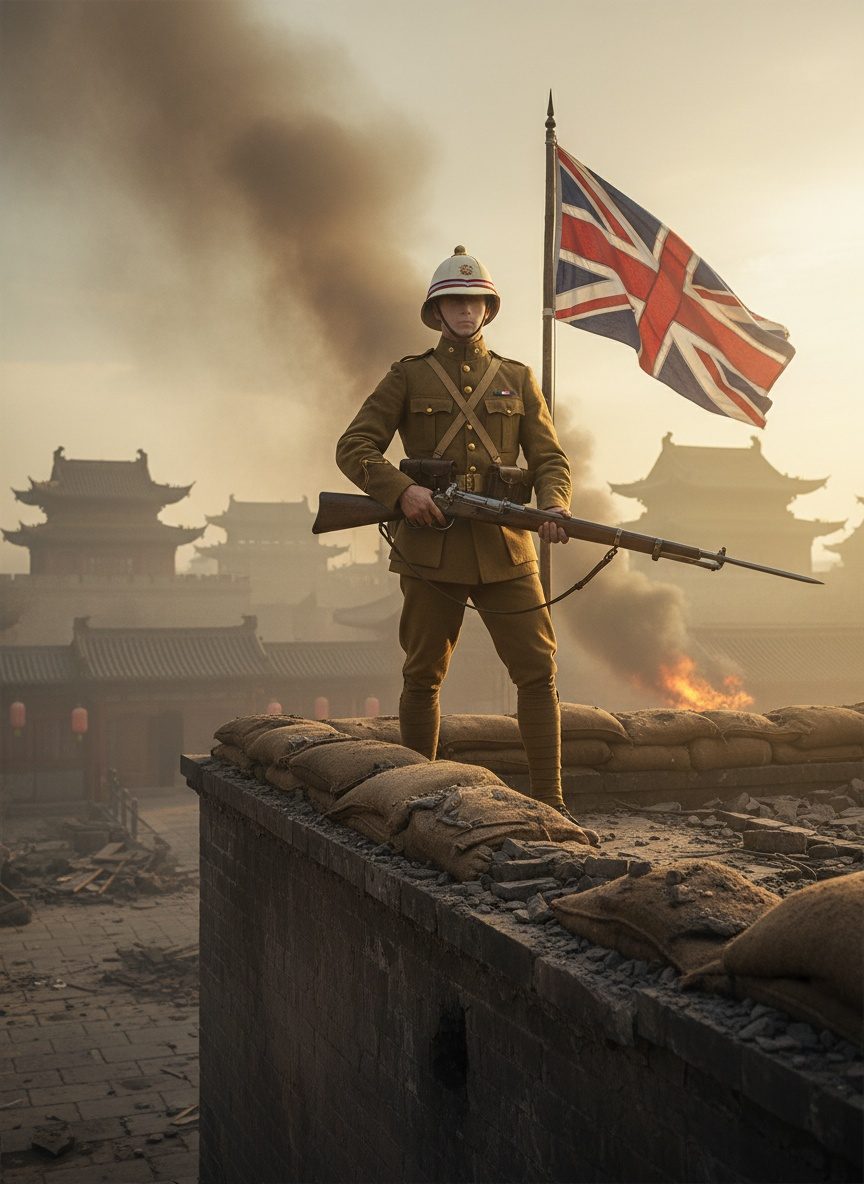
General Sir Garnet Wolseley, a soldier's soldier known for his unwavering resolve and tactical brilliance, was dispatched with the unenviable task of seizing Kumasi. Wolseley's forces, bolstered by over 2,000 European troops and thousands of local allies, faced a formidable journey through the unyielding African bush. The British believed their superior firepower and strategic acumen would crush Ashanti resistance swiftly. Little did they realize, Kofi Karikari had no intention of making it easy for them.
Kofi Karikari: The Enigmatic Monarch
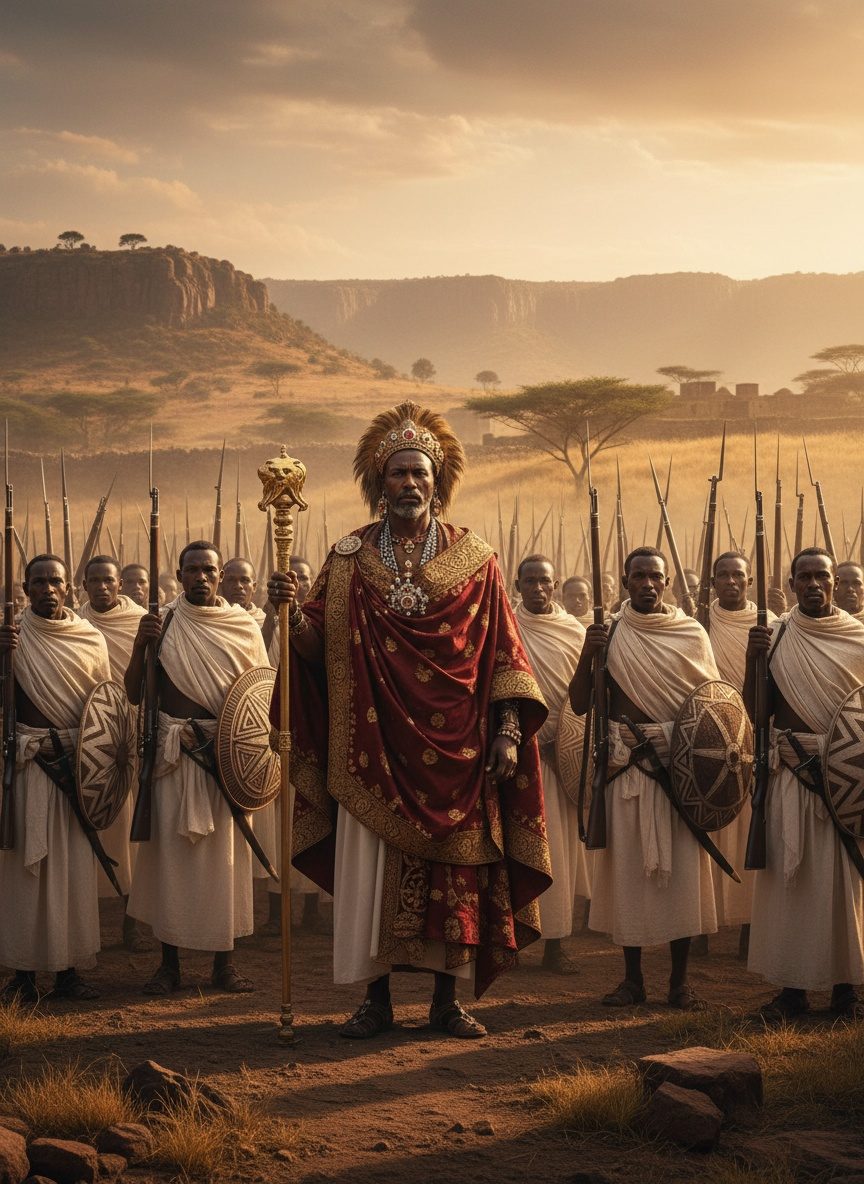
King Kofi Karikari, the Asantehene—the sovereign of the Ashanti—was a leader both revered and misunderstood. Born into the prestigious Oyoko clan, he ascended to the throne in 1867 and was immediately thrust into the tumultuous dynamics of colonial aggression. Described as astute and tenacious, Karikari recognized the threat posed by British encroachment yet understood the nuances of warfare beyond mere physical confrontation. Rather than meeting the Brits head-on in battle, he employed a chess-like strategy that prioritized the preservation of Ashanti sovereignty.
As the British forces approached, Karikari executed a remarkable mitigative maneuver. In anticipation of possible defeat or capture, he ordered the evacuation of Kumasi. Precious treasures, royal regalia, and most importantly, the revered Golden Stool—emblematic of Ashanti unity and spirit—were hidden away from imperial hands. In their wake, the Ashanti left only ashes, further fueling the enigma that Wolseley and his men would encounter amid the smoldering ruins.
A March Through the Jungle
The British march towards Kumasi was a trial like no other, a grueling test of endurance and logistics in an unforgiving environment. Unlike the neatly drawn battle lines of European fields, the dense greenery of the West African jungle was an adversary in its own right. Malaria and dysentery took almost as great a toll as any engagement with the Ashanti warriors, highlighting the hubris of campaigns fought in ignorance of local conditions.
The Ashanti didn’t make it easy either. Employing sophisticated guerilla tactics, they harassed the advancing British forces, striking under cover of darkness, dissolving into the dense foliage before retribution could ensue. Contrary to expectations, the campaign became less a clash of arms and more a battle of attrition where each side sought to outlast the other in a landscape marred by nature and the specter of imperial ambition.
The City of Gold—or Ashes?
By the time British forces arrived in Kumasi in early February 1874, the city they expected to capture resplendent and gold-laden had been transformed into a ghostly fireplace. Wolseley’s men found empty streets, wisps of smoke curling from the charred remains of structures, and an eerie silence that taunted their efforts. The grandeur of Kumasi as the heart of the Ashanti, brimming with vibrant life, was replaced by an unsettling void. Yet, the disappearance of the Ashanti treasures, notably the Golden Stool, was not just a strategic retreat— it was a statement of defiance.
This strategic withdrawal rendered the British victory hollow. They may have occupied Kumasi for a moment, but the elusive Ashanti resistance, coupled with the symbolic preservation of their cultural icons, meant that the empire's heart still beat strongly beneath the façade of defeat. The Ashanti's ability to withhold their culture and dignity in the face of overwhelming odds left an indelible mark upon the colonial narrative of success.
Legacy of Resistance
The Anglo-Ashanti wars, and particularly the 1873-74 campaign, reveal more than just a confrontation between empire and colony. They shed light on the complexities of resistance—where imperial dogma overlooks the cultural depth and tenacity of those it seeks to subdue. The Ashanti’s resistance under Kofi Karikari, and their strategic retreat, demonstrate a sophisticated understanding of power dynamics and underscore the significance of cultural sovereignty in colonial history.
In the broader historical context, these events remind us that the stories of resistance and resilience are often eclipsed by accounts of conquest and control. The Ashanti, through their courage and cunning, remind us that the narratives of history are woven from more than just the triumphs of the so-called victors, but from the enduring spirit of those who refuse to be broken.
Today, as we reflect on this episode, it becomes evident that the tales of African kingdoms like the Ashanti are vital for a nuanced understanding of history. They challenge us to recognize the agency and complexity of those often cast simply as obstacles to imperial expansion, teaching us lessons in resilience, cultural pride, and the unending quest for self-determination.