Nezahualcoyotl was no ordinary ruler. His kingdom was shattered, yet he rose from the ashes to become a lawgiver and a poet.
Fleeing to the Mountains
The city of Texcoco lay in ruins, a scorched remnant of its former glory, and its young prince was nowhere to be found. Nezahualcoyotl, barely more than a youth, vanished into the mountains, retreating from the clutches of Tezozomoc, the unrivaled warlord of the 15th century Mesoamerica. With his father murdered and his home reduced to rubble, the prince was now a fugitive. Stripped of his title and followers, he was forced to rely on sheer will and resilience to navigate the hazardous mountain trails, where each step could lead to survival or doom.
Few understand the gravity of his solitary ascent up the rugged terrain. For years, Nezahualcoyotl survived as a fugitive, constantly pursued. His only recourse was to forge alliances with other kingdoms, promising future rewards for immediate protection. To those unversed in his tale, he might seem a tragic figure trapped by fate. Yet, amid the harsh conditions, he cultivated the germinating seeds of vision and leadership. He observed the landscape not just with wary eyes of prey but with the analytical gaze of a strategist.
The Phoenix Returns
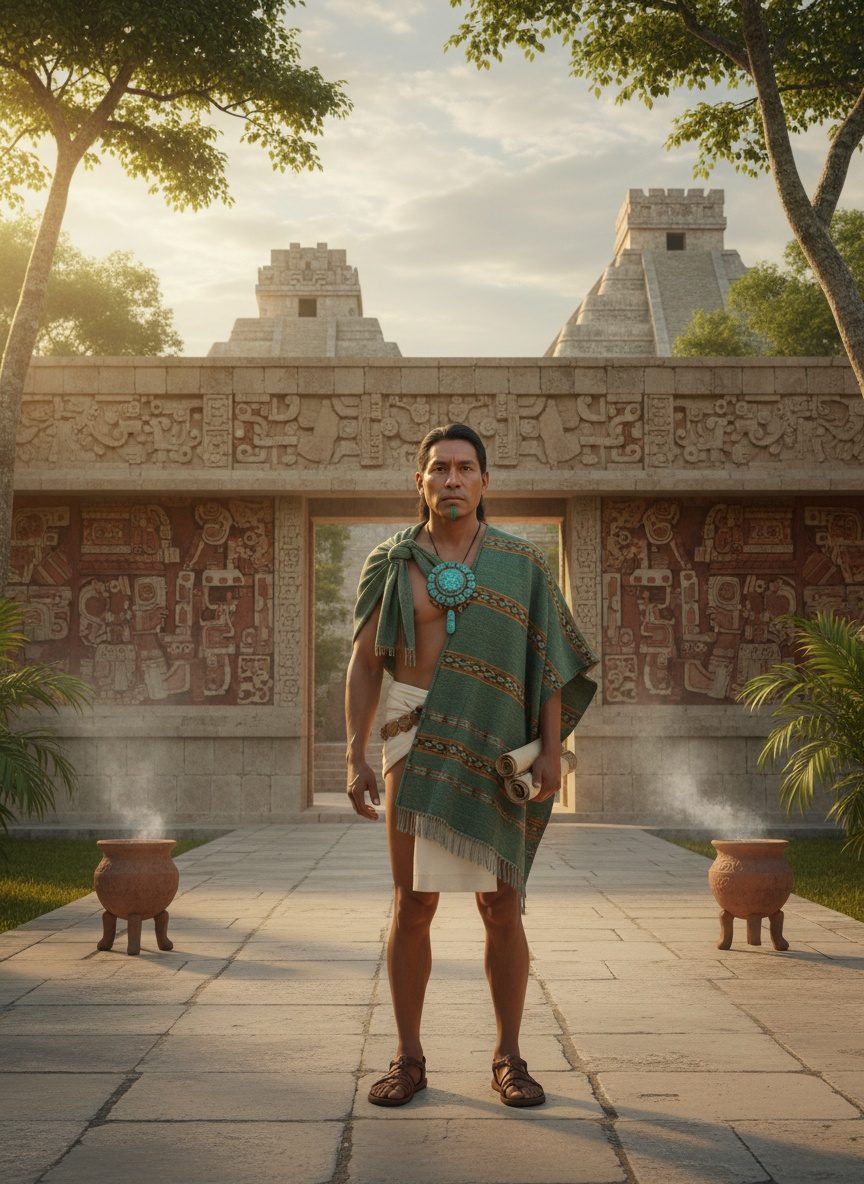
Years passed in a blur of survival and strategy. When at last Nezahualcoyotl emerged from hiding, it was as a man transformed. He returned to Texcoco not with an army but with a consortium of wisdom and alliances. Where many saw ruins, he envisioned a new dawn. His return heralded not merely the reclaiming of a kingdom but the birth of a renaissance.
In the tumultuous political landscape of the Aztec world, Nezahualcoyotl began rebuilding Texcoco from the ground up, stone by stone. The once-mighty city was revived under his guidance, blending traditional construction with innovative ideas. He encouraged the arts and architecture, making his realm a beacon of cultural flourish. Every statute he established, every temple he designed, and every structure he commissioned was imbued with layers of significance and purpose.
One of his most remarkable achievements was the creation of a sophisticated legal system that balanced justice with mercy, emphasizing fairness over retribution. Often referred to as the poet-king, he interwove legal reformations with cultural enrichment. Nezahualcoyotl understood that justice required not just laws but an enlightened populace.
A Blossoming Cultural Nexus
Nezahualcoyotl was a visionary who understood the power of culture as a unifying force. Under his rule, Texcoco became a cultural nexus teeming with scholars, poets, and artists. He fostered an environment where knowledge and artistic expression flourished. His court attracted wise men and skilled artisans from across the region, all eager to partake in the ferment of ideas and creativity that characterized his reign.
In this new Texcoco, poetry was not merely appreciated but revered. Nezahualcoyotl himself was a poet of remarkable talent, his verses expressing profound introspection and an appreciation for the beauty and transience of life—a striking contrast to the turbulence he had endured. His poetry, alongside the works of others he championed, became essential to the tapestry of everyday life and governance. Here, the echoes of Aztec drums beat alongside the whispers of quills on papyrus, weaving a unique societal fabric that resonated throughout the land.
Education became a central tenet under Nezahualcoyotl’s guidance. He believed in empowering the youth through knowledge, ensuring that his kingdom would not only flourish in the present but endure into the future. His influence transcended the borders of Texcoco, radiating to neighboring cities and sowing the seeds of cultural and intellectual transformation.
The Legacy of a Ruler Unshackled
The story of Nezahualcoyotl, who walked out of the bleakness of exile to become one of the most enduring figures in Mesoamerican history, is a testament to the power of vision and resilience. His life, marked by personal turmoil and triumph, encapsulates the incredible human capacity to rise above destruction and create anew. The laws he instituted, the knowledge he propagated, and the culture he cultivated were not just for Texcoco—they were for all who yearned for a society where art and justice could coexist.
Decades after his time, his legacy still echoes across history. Nezahualcoyotl's journey from hunted fugitive to revered lawgiver challenges the boundaries of fate and potential. It reminds us that even amid profound loss, it is possible to rebuild more than just physical walls. Nezahualcoyotl rebuilt the human spirit through art, justice, and intellect, crafting a legacy as imperishable as it is inspiring. It's time to rewrite the narrative of history's forgotten corners, to honor those who, like Nezahualcoyotl, crafted realms where none seemed possible.