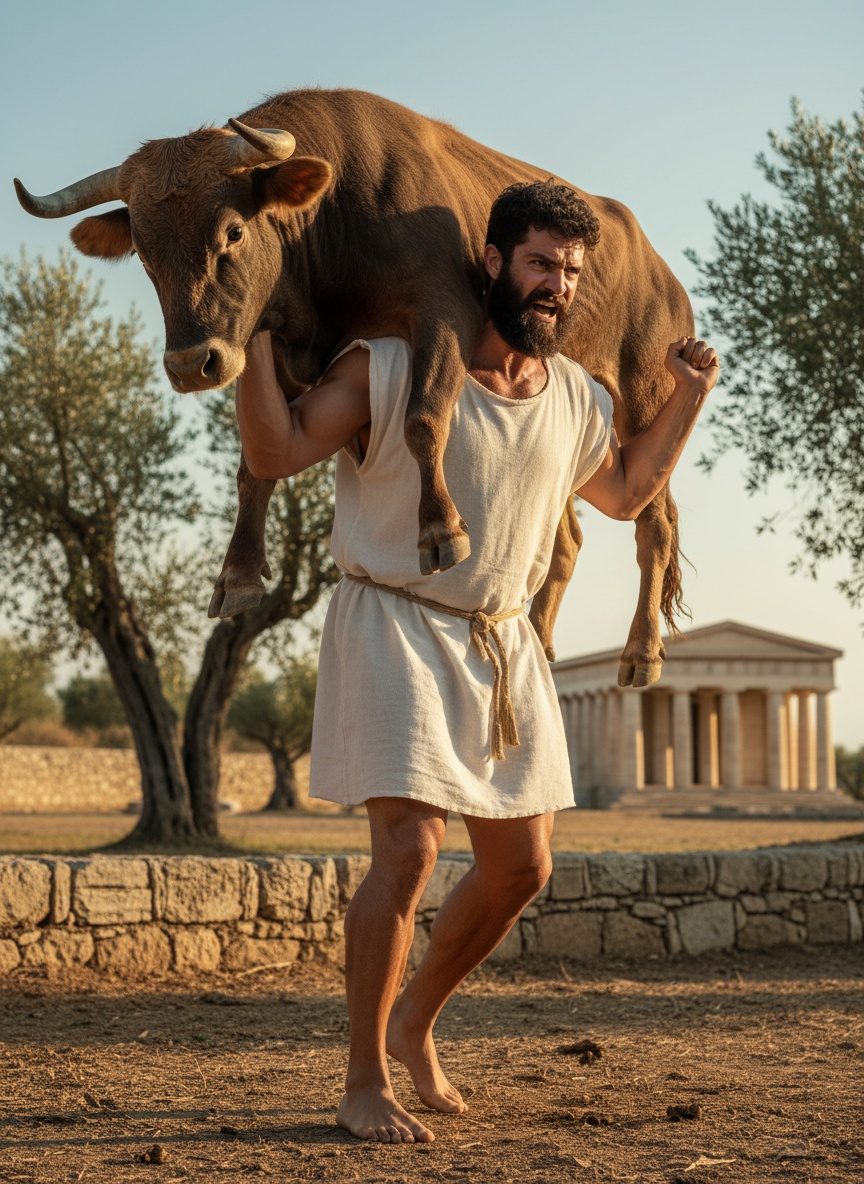
He grew up knowing the power of words more than the weight of gold coins. What truly set him apart was the farm he cherished more than any kingdom.
The Ambassador and the King
In the year 280 BC, the clattering streets of Rome hummed with stories of a new adversary in the East. A flicker of external threat was enough to stir the Roman Republic's resolve, but this latest challenge featured a formidable character – King Pyrrhus of Epirus. Known as both a strategic genius and a ruler with dynastic ambitions, Pyrrhus had a novel trick up his sleeve: war elephants. These giant beasts spurred fear just as swiftly as they stampeded across battlefields. As the Roman authorities pondered their next move, diplomatic measures took the form of an ambassador, Gaius Fabricius Luscinus.
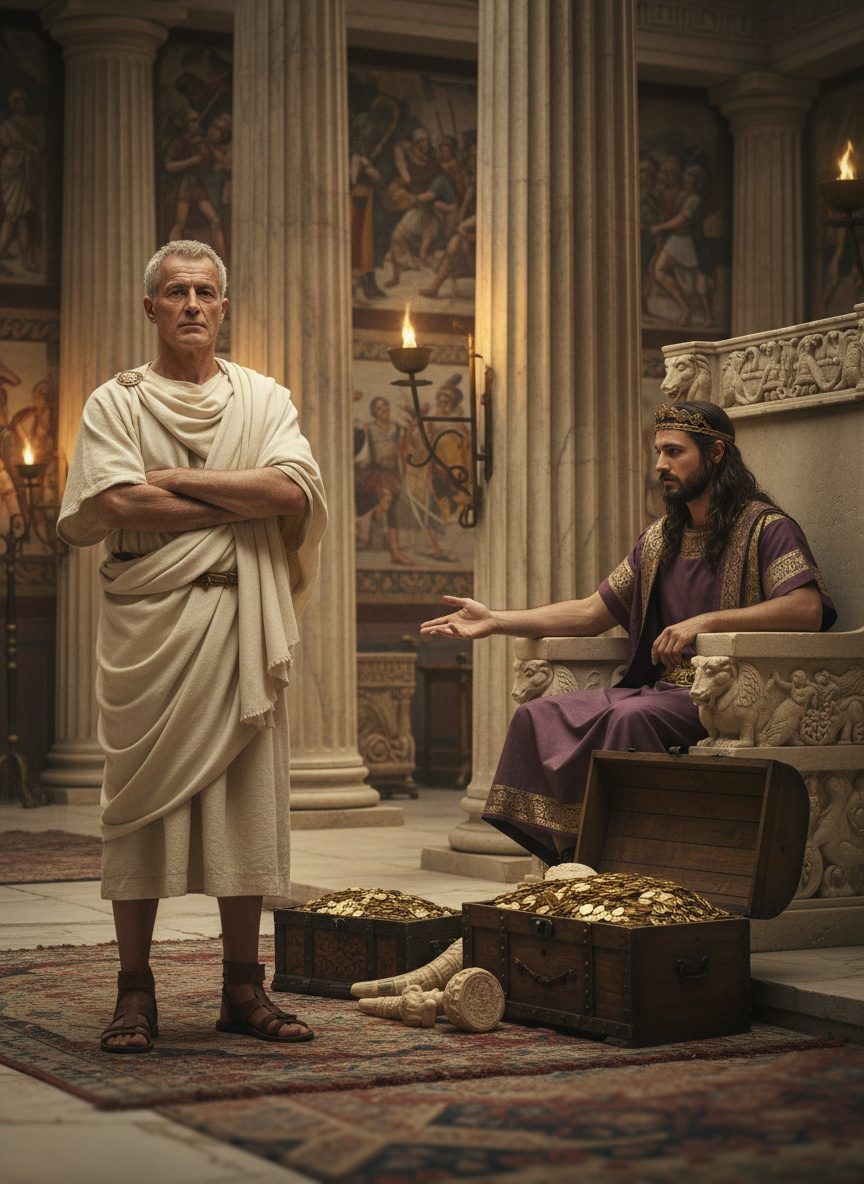
Fabricius was not your typical envoy—he was neither a wealthy patrician nor a privileged soldier. Instead, he was a testament to Roman values, a consul famed for his incorruptibility. As Fabricius landed in King Pyrrhus's court, the setting was ripe for a duel of sorts, not with arms, but with words and intentions. Pyrrhus, having previously won victories over other Greek states, believed he could extend his influence by securing Rome. As a tactician familiar with the battlefield, he'd encountered numerous opponents, but none quite like Fabricius.
The sparkling opulence of Pyrrhus's palace dazzled many, but Fabricius remained unperturbed. Over dinners laden with luxurious offerings and wealth, including the curious elephant, the king attempted to sway Fabricius's loyalty. His final offer was a veritable fortune and, astonishingly, a realm of his own within Pyrrhus's domain. To reject such a bounty seemed absurd, but Rome's seasoned envoy did more than that. With a mixture of sternness and humor, Fabricius laughed off the proposal, expressing a sentiment that was as bold as it was baffling to the king: true wealth was to be found not in gold but in one's principles.
Through the Eyes of Character
The tale of Fabricius's steadfastness is less about what happened and more about who he was. This moment serves as a lens through which the very soul of Rome, as perceived by its citizens, becomes apparent. As much as the Roman Republic was defined by its conquests, it was the underlying ethos of integrity, duty, and simplicity in public life that truly sustained it.
Fabricius was a farmer before he was ever a statesman. His hands were roughened by plows, not jewels. His integrity was forged in the peat of humble beginnings and curiosity-driven discussions in bustling Roman forums. When faced with Pyrrhus's dazzling temptations, he drew upon a moral compass set by generations of ancestors who revered honor over wealth. His credible persona was shaped by an era where the Senate's corridors echoed with stories of sacrifice and virtue.
For Pyrrhus, a king accustomed to a spectrum of behaviors—from sycophancy to betrayal—it seemed impossible for anyone to so flagrantly dismiss opportunity cloaked in gold. In offering his kingdom's gleaming fractions, the king wielded persuasion like a weapon, but he encountered something rarer yet: refusal based on conviction. Witnesses to the parley could almost sense the flurry of emotions in the room, yet within Fabricius's refusal lingered the essence of a Roman mythos. The fabric of that ancient republic—woven from acts of modest but resolute valor—revealed a confidence that stood undeterred even by the looming tusks of a war elephant.
A Legacy of Unyielding Resolve
If integrity had a face, that face would unwaveringly resemble Gaius Fabricius. Upon his return to Rome, Fabricius's actions cemented an image that transcended temporal victories. The prisoners, initially mere pawns in Pyrrhus's ploy, had been returned; and in turn, they carried home tales not just of endurance, but of a Roman unwavering in the face of temptation. Reinforcing Pyrrhic sentiment, the king reportedly admitted to his advisers that Roman fortitude was treacherous ground for any conqueror.
For Rome, this diplomatic episode wasn't simply about the dynamics of power and politics. It was a reaffirmation of values that defined an era, values that would one day lay the foundations for an expansive empire. To generations of Romans, Fabricius came to symbolize the virtues by which an ever-expanding republic aspired to govern: a profound interlace of steadfast determination and simplicity. His laughter, dismissing the bribery of grandeur, echoed in Senate deliberations and streets alike.
The enduring shockwave of Fabricius’s resolve established a precedent whose significance reverberated well beyond the confines of his farmstead idyll. It offered future leaders a lodestar: true authority was vested not through riches or animals of warfare but through the enduring light of incorruptibility. In an epoch of ceaseless flux, amidst shifting dominions and dynastic divergence, the greatest moment in Roman history was anchored not by empire but by a statesman's refusal—a testament calibrating the human need for integrity even amid the richest temptations.