Most people have never heard of K'inich Janaab Pakal. They should have.
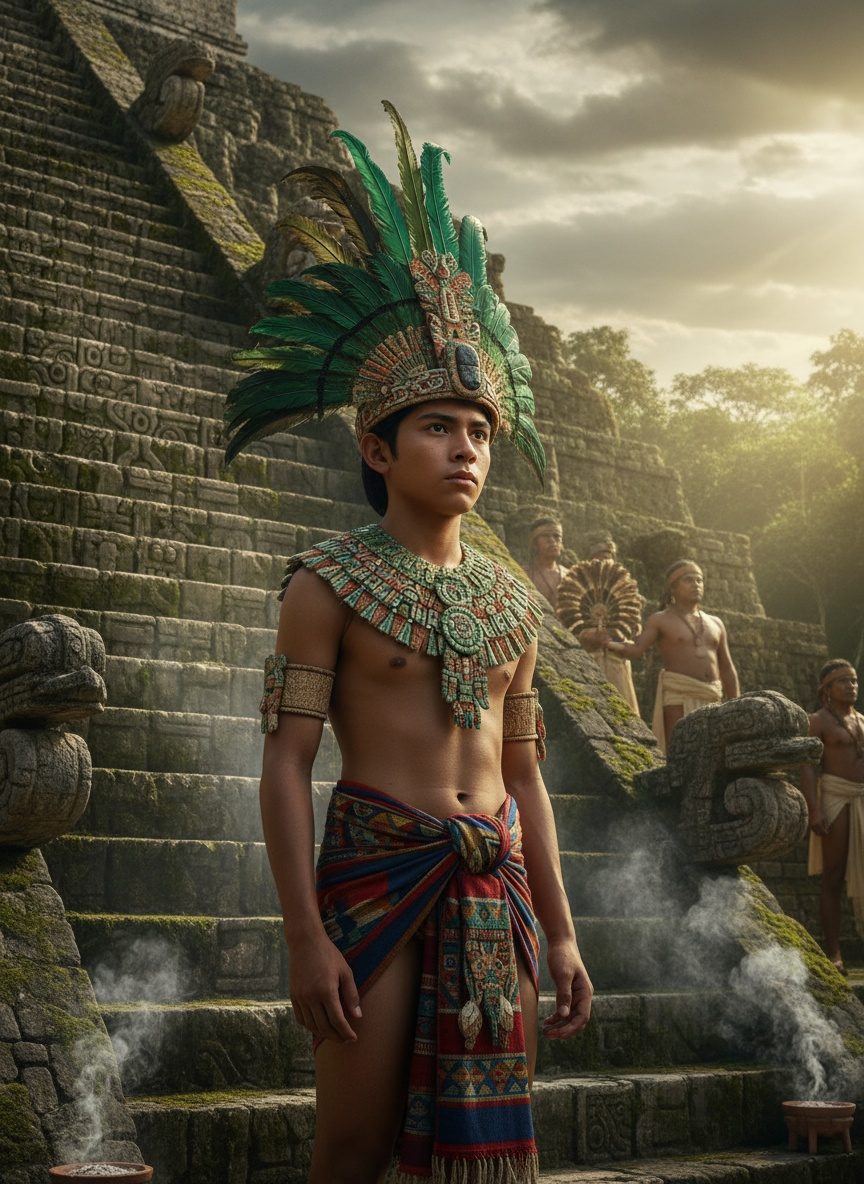
Picture a scene in ancient Mesoamerica: the humid air thick with tension, the grandeur of the dense forests threatening to swallow the remnants of a once-proud city. It is 615 AD, and Palenque, a city in the midst of the rainforests of modern-day Mexico, is gasping under the weight of internal strife and external threats. Amidst this crumbling backdrop, a boy of twelve stands on the cusp of destiny. His name is K'inich Janaab Pakal, soon to be known simply as Pacal the Great.
The kingdom he inherits is fragile, its glory days nearly forgotten. Once a beacon of Maya civilization, Palenque had suffered through a tumultuous history of invasions and struggles for dominance. The hope for its revival seems a distant memory, whisked away like the jungle mist in the morning sun. As the child king ascends the throne, the nobles surrounding him perceive nothing more than a fleeting shadow—a weakling destined to fade. They smirk, whispering predictions of doom.
Yet, buried within this boy lies a spark of unyielding determination and visionary brilliance. Pacal's reign ignites a flame that will burn brightly across the pages of history, driving Palenque's transformation from a derelict city to a powerhouse of Maya culture. Through fifty-two years of unwavering leadership from the time he takes the throne, Pacal erects monuments that rival the grandeur of neighboring rival cities and wields influence that stretches across the strategic trade routes of the Maya lowlands. He brings stability, prosperity, and an unprecedented architectural flowering.
Under Pacal's guidance, the heart of Palenque begins to pulse with renewed vigor. One can almost hear the rhythmic beating, mirroring the construction of magnificent temples and structures. Among these is the marvelously intricate Temple of the Inscriptions, a towering testament to Pacal’s vision for eternal remembrance. The stonework, detailed with elaborate carvings and hieroglyphic inscriptions, captures the very essence of the city’s revival and symbolizes its newfound strength. It is here, in this monument, that Pacal will ultimately seal his legacy, his message hidden for centuries within its depths.
Every detail within Palenque tells a tale of Pacal’s brilliant mind. He blends innovation with tradition, introducing novel architectural techniques and ideas. Flowing aqueducts carve through the city, bringing an abundance of fresh water; terraced platforms break the monotony of the landscape, lifting temples skywards. As the city's physical transformation takes shape, Pacal ensures the stories of his reign are carved in stone. His glory, and that of his revitalized kingdom, is etched across tablets that future generations might read and marvel at.
No corner of his kingdom is immune to Pacal's influence; his hand reaches the farthest fringes of his dominion through strategic alliances and marriages. He uses the weight of his lineage, tied deeply into the heart of Maya mythology, to bolster the city's stature among its neighbors. The bloodlines he introduces add ties that bind cities together, fostering both peace and prosperity across the region.
While outward expressions of power and artistry fill Palenque with renewed life, Pacal attends to subtler matters with equal devotion. His interest in spirituality manifests through an unparalleled dedication to the ceremonial aspects of rulership. Under his aegis, the intricate calendar systems and astronomical observations gain sophistication, unveiling a cosmos that bridges the divine and the earthly realms. Observatories such as the Palace's observation towers whisper secrets of the heavens to those who dare to listen.
But for all his magnificence, Pacal hides secrets within his stronghold. His mortal ambitions shroud a grand celestial dream. Pacal aspires to ascend beyond the realm of mere human status, to carve his name alongside the gods in the firmament. Historians believe this desire is immortalized within the artwork and symbols adorning his final rest. His burial site, discovered within the Temple of the Inscriptions, bears witness to this cosmic aspiration. Inside lies a sarcophagus lid cherished by archaeologists centuries later, depicting his transformation into a deity journeying into the afterlife.
For over thirteen hundred years, the intricacies of Pacal's tomb concealed messages not uncovered by scholars until the modern era. Deciphering the depths of the inscriptions, researchers unveil tales of Maya cosmic beliefs, spiritual metamorphoses, and dynastic pride. The messages embedded within—and the very existence of the artwork itself—echo Pacal's long-held belief: though flesh may falter, the essence of grandeur endures.
As we look back on Pacal's story through the lens of history, a silhouette of epic ambition unfolds—a narrative threaded with tenacity, artistic mastery, and divine pursuit. Though empires rise and fall, the echoes of his resonance linger, captured within the enduring beauty of Palenque. To this day, his temple stands, a testament to the power of a child-king who envisioned a kingdom that would touch the sky. Pacal’s legacy lies not merely in the stones and glyphs he left behind, but in the idea that even in the face of overwhelming odds, greatness can be grasped by the fingers of youthful vision.