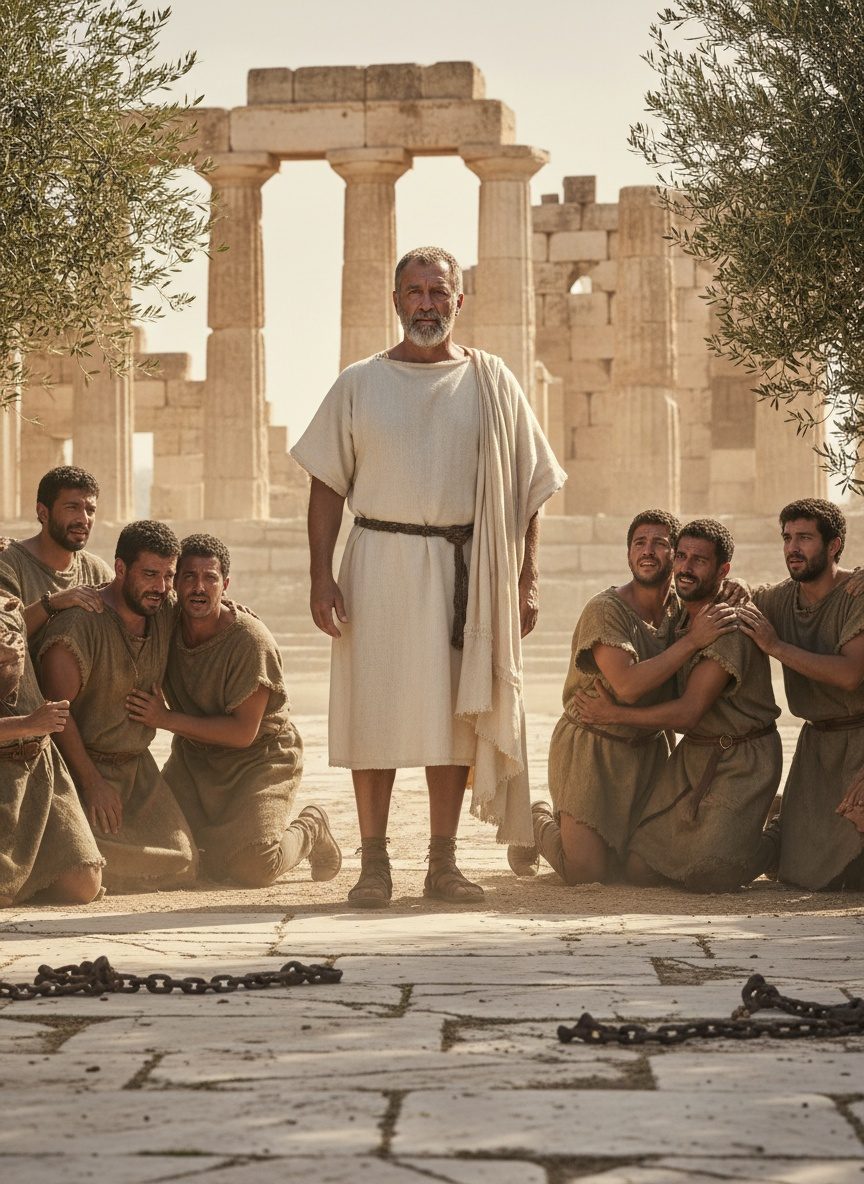
He was hunted from the moment he heard the thud of his father’s body collapse to the ground. At that moment, he was just a young man peering through the trembling leaves of a tree, carrying within him the weight of a legacy and the specter of vengeance. Nezahualcoyotl, the prince of Texcoco, had watched the world around him crumble with the execution of his father, the king. Aged just fifteen, he found himself thrust into a world of deception and danger. It was a reality he couldn't escape, but one he refused to let define him.
The year was 1418, and the air around Texcoco was thick with the tension of impending doom. Maxtla, ruler of the Tepanec Empire, had orchestrated a siege too overwhelming for the kingdom to withstand. Nezahualcoyotl's father, King Ixtlilxochitl, was captured, and within moments, the cruel finality of life severed. Nezahualcoyotl, perched in a tree, witnessed his father’s demise, and with it, the collapse of what he had known. As the forest provided a canopy of solace, he knew he had to flee, a young prince without his sovereignty, now forced into the shadows.
His escape was nothing short of a saga—a labyrinth of danger and narrow escapes, each moment steeping him deeper into a life unfamiliar. Pursued relentlessly by the merciless Tezozomoc, Maxtla's notorious father and a warlord of relentless intent, he was a prize they yearned to capture. For years, Nezahualcoyotl traversed the paths between hope and despair, weaving through the intricacies of survival, with grit as his guide. The years in flight honed him; deprivation taught him resilience, isolation bred introspection, and the memories of Texcoco, now a haunting phantom, stoked the embers of redemption in his heart.
It was in this torturous ballet between pursuit and escape that Nezahualcoyotl found allies in unlikely places. His quest for survival had awakened sympathies from other tributaries of the Aztec dominion, and soon he was not alone in his odyssey. With each narrow escape, each hidden channel crossed, he assimilated fortitude from those oppressed like him. Secrets traded in whispered conversations, safekeeping entrusted to the night winds, these people helped hide him from the relentless hunt. This crucible of life was not just his training ground but his forge, where the promise of a new order was being writ silently in the shadows.
Years unfolded, but they were not barren; they were laden with revelation. In his time away from the trappings of princely expectations and the perilous bounty on his head, Nezahualcoyotl matured into more than a displaced prince; he became an astute strategist and a visionary. The Aztec world, an intricate tapestry of cultures and rites, had tutored him as much as his royal heritage. His mind—once preoccupied with the grief of loss—was now a fertile ground for revolution. The world that had once hunted him would soon see him as a harbinger of change.
His return was not marked by grand scales of battle nor the clangor of a coup. Instead, it was the quiet call to a people who craved liberation that heralded his resurgence. Former allies, both visible and hidden, emerged, binding their hopes to a prince who had grown amidst their struggles. They united under the banner of a shared vision, one that promised retribution for not just personal loss, but for the collective anguish each kingdom had suffered under Tepanec oppression.
His reconciliation with Texcoco was a rebirth encapsulated in defiance. The blood-streaked saga that had begun under the tree all those years before found its counterpoint in the city’s awakening under Nezahualcoyotl's rule. He did not merely reclaim the throne from Maxtla's clutch; he redesigned the very heart of his kingdom. From the chaos birthed architecture, poetry, and codifications of law that would etch Texcoco into the firmament of greatness. His development of the city turned it into a bastion of Mesoamerican culture and intellect. Under his guidance, Texcoco became renowned for its libraries and centers of learning—splendid emblems of a civilization thriving despite past subjugation.
In overcoming years spent as a fugitive, Nezahualcoyotl had morphed the tragedy of his adolescence into a triumphant ode to survival and reinvention. The king who walked in from the shadows did so once not needed to hide, having eroded the barriers placed before him and around his people. He not only revived Texcoco but made it exceed what it had ever been under his father’s rule. It was a city that not only flourished economically but boasted cultural and legal reforms that set precedents even within the expansive Aztec Empire. Nezahualcoyotl's life was an undeniable journey from the shackles of fear to the helm of visionary leadership.
His story reverberates beyond the annals of history as more than a mere tale of vengeance accomplished; it is a testament to the resilience of the spirit and the transformative power of adversity. In the leaves above Tezozomoc’s wrath, and in the years adorned with isolating survival, a young prince became more than a king; he became an architect of dreams etched permanently onto history’s pages. This is why the story of Nezahualcoyotl remains compelling—his triumph was not only his own but the bequeathing of a legacy that entices us to consider the empires not built just by conquest, but by the profound reinvention of identity. It is a king’s journey back to a throne, but more so, it is the journey to reclaim self amid the ruins of the past.