Telemachus never held a sword. He didn’t need one that day.
The Day the Cheers Turned to Shock
It was January 404 AD in Rome, and the city was alive with the sounds of thousands of voices echoing through the mighty Colosseum. Gladiators, revered for their prowess and brutality, were the heroes of the arena, their deadly dance of combat a spectacle that had captivated Roman audiences for centuries. The air was thick with the scent of sweat, blood, and anticipation, as the crowd waited in eager anticipation for the next clash of steel. Yet amidst this cacophony of excitement, one man entered the arena with a different purpose altogether.
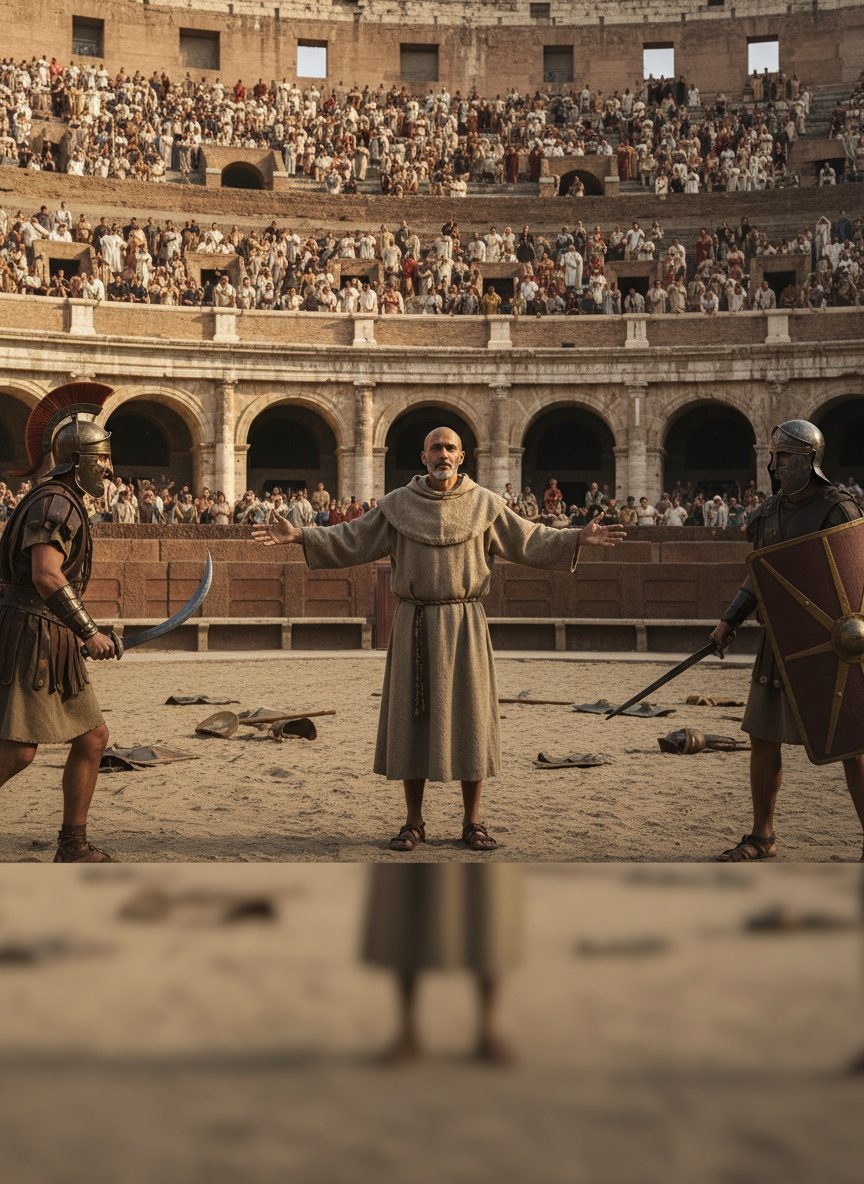
His name was Telemachus, a monk from the Eastern provinces. Unlike the finely honed warriors dueling before the masses, Telemachus was unarmed, garbed in the simple vestments of his order. He stepped onto the sands of the Colosseum's battleground as if he were stepping into a sanctuary, each step deliberate, each breath a prayer. The crowd's enthusiasm crescendoed into an uproar of confusion and disdain as they beheld this lone figure tarnishing the revered ritual with his presence.
Telemachus stood firm as he made his way to stand between two gladiators locked in fierce combat. His presence alone spoke louder than the clashing swords ever could. The small monk raised his arms, attempting to part the adversaries in a silent plea for peace amidst so much glorified violence. From the stands, a chorus of voices erupted, some in laughter, others in jeers, and soon, a more ominous cry took root: the demand for Telemachus's death.
The audacity of one man to interrupt such cherished entertainment was unthinkable to many. Yet, before the day's curtain could fall, something remarkable happened. The Emperor, hearing of this spectacle, saw the events unfold—not merely as an indecent disruption but as an opportunity to heed a moral calling that transcended the centuries of tradition.
A Tradition Turned to History
Why would Telemachus, a man removed from the hustle of such grand spectacles, march into the very epicenter of violence? For this monk, the vile nature of the gladiatorial games conflicted starkly with his vision of humanity and spirituality. Although he hailed from the peaceful environment of monastic life, Telemachus carried within him an unshakeable conviction that these games defiled the sanctity of human life.
The tradition of gladiatorial combat had its roots deep in Rome's storied past. For over six centuries, such brutal contests had shaped Roman culture, an enduring symbol of valor and human endurance. The games were more than mere entertainment; they embodied the Roman ideal of martial excellence and indomitable spirit. Gladiators, often slaves or prisoners of war, fought not only for their lives but for the hope of glory and freedom.
As a man of faith, Telemachus's actions marked the beginning of a new era. When word of his sacrifice reached the ears of the Roman Emperor, it rippled through the fabric of society. Perhaps it was divine providence, or perhaps it was the realization of a civilization weary of its own cruelty that prompted the Emperor's next move. By imperial decree, the games were abolished, and the last echoes of martial cheers gave way to a nascent peace.
In his defiance and sacrifice, Telemachus achieved what few could dare to imagine: an end to gladiatorial combat, a decree that forever altered the Roman world. His courage forced citizens and rulers alike to confront not only the nature of their entertainment but also the values of the empire itself.
A Legacy Borne from Courage
Telemachus's story, woven from sacrifice and bravery, offers a profound lesson from history—that the actions of a single, seemingly insignificant individual can bring about profound change. His act challenged the societal norms of the time and reshaped the collective conscience of an empire. In confronting a tradition that seemed larger than life itself, Telemachus exemplified the power of moral conviction against the entrenched currents of social custom.
The impact of Telemachus's death echoed beyond his time, providing a moral lens through which the world could view courage and compassion. What did this lone monk see from his vantage point amidst the blood-stained sand that so many, entranced by violence, could not?
His memory lives on as a testament to the enduring power of peace over conflict, compassion over cruelty. The end of the gladiatorial games marked not only the twilight of an era but also a beacon for the values that would shape future epochs. Telemachus walked amidst giants and stood against them, ushering in a future where perhaps swords would be made into plowshares, and the strength of one's heart would outshine the mightiest blade.