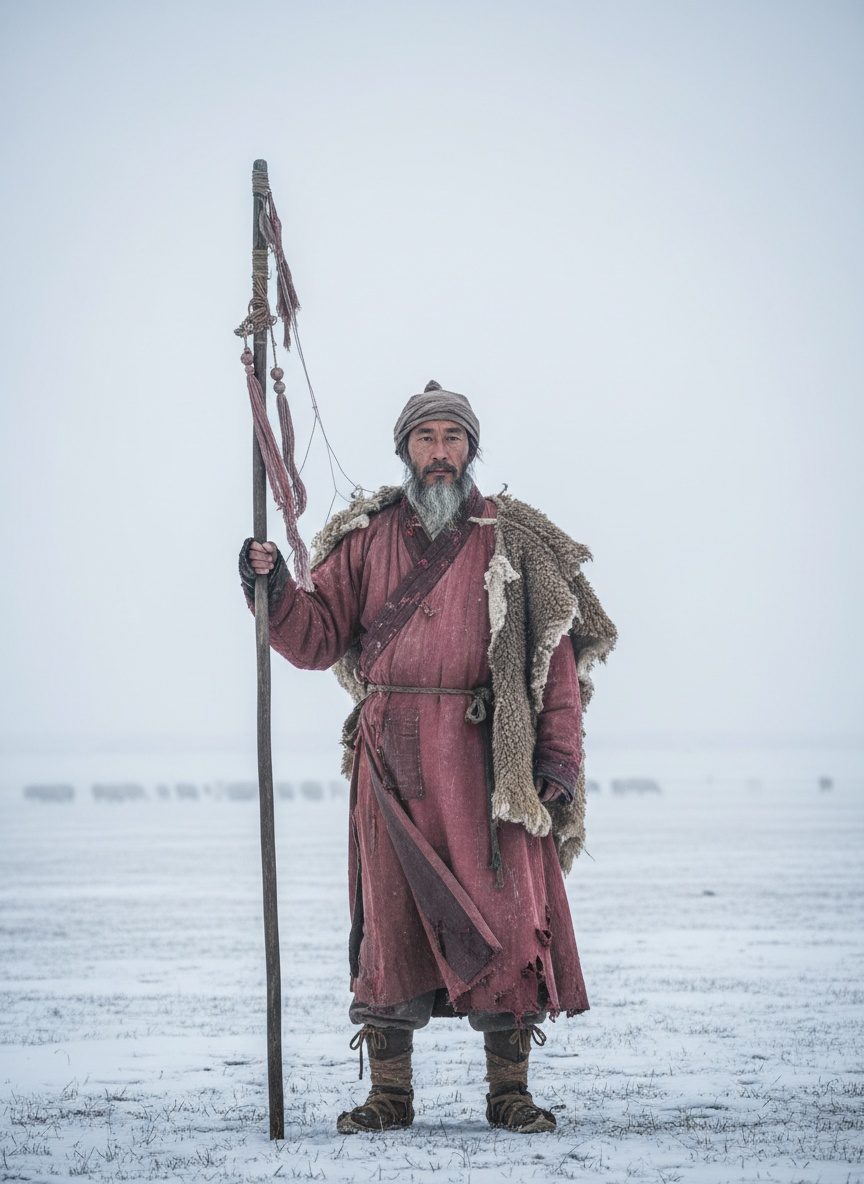
The icy winds swept across the desolate steppes of Siberia, howling through the sparse grass and rattling the frostbitten trees. Here, surrounded by the vast emptiness, stood a solitary figure, weather-beaten and resolute. For nineteen years, Su Wu had waited, enduring the unforgiving climate of the northern wilderness with unyielding determination. Sent by the Han emperor as a diplomat, he had become a prisoner of the Xiongnu. Yet, despite their offers of wealth and power, he refused to kneel, clutching the battered staff of his homeland as a testament to his loyalty and resilience.
The Diplomat's Mission
In 100 BC, the Han Dynasty was a beacon of Chinese civilization, rivaling the power of Rome in the West. Yet, the empire's northern border was constantly threatened by the Xiongnu, a confederation of nomadic tribes skilled in war and fiercely resistant to Han expansion. To quell these threats, the Han emperor sought peace through diplomacy and dispatched a trusted envoy, Su Wu, to negotiate terms. A scholar and official, Su Wu was steeped in the values of Confucian virtue, his allegiance to the emperor as unwavering as the mountains from which the Yellow River flows.
As Su Wu embarked on his journey northward, he carried the hopes of his emperor and the endurance of his ancestors. His mission was perilous, venturing into Xiongnu territory, where alliances shifted like sands and betrayals were common. However, armed with the emperor's decree and the gift of eloquence, Su Wu was prepared to forge peace, believing in the power of diplomacy to bridge even the widest divides.
From Envoy to Captive
The Xiongnu leader greeted Su Wu with the veneer of hospitality, and negotiations commenced under the vast tent of their great council. Yet behind this façade lay a plot to undermine the Han authority by breaking the spirit of its ambassador. Captured and accused of espionage, Su Wu found himself at the mercy of the Xiongnu, who sought to turn him against his emperor. They dangled offers of rank, riches, and power, promising freedom if only he would renounce his loyalty.
But Su Wu's heart remained steadfast. He rejected their offers with a quiet dignity that spoke volumes. "To abandon my emperor would be to cast aside my family, my ancestors," he reasoned, as the Xiongnu grew frustrated with his unwavering resolve. Enraged by his refusal, they banished him to a desolate land in the far north — a place where even hope seemed to have been frozen and forgotten.
The Exile in the Frozen North
Banishment to the Siberian steppe was a cruel sentence. The land was a vast, icy wilderness, inhospitable and merciless. Here, Su Wu lived in isolation, ordered to herd sheep far from any human settlement. Each day, the frigid wind cut through his ragged clothing, and the horizon seemed endless, stretched beyond reach. His only companion was the ancient staff of his office, the silk of its tassels eroded by time and the bitter climate.
Despite the harsh conditions and the solitude threatening to break him, Su Wu's spirit remained unconquered. He subsisted on meager rations, weaving sturdy garments from coarse wool, and adjusted to the silence that enveloped his world. His resilience in the face of such adversity was fueled by a singular belief — that his loyalty to the Han dynasty was the beacon that would guide him home.
The Long-Awaited Return
Nineteen years passed like a slow river under a frozen bridge. The Han dynasty, now under new leadership, did not forget Su Wu. A fragile peace treaty with the Xiongnu finally opened the gates to his return. The journey was long, but each step southward brought Su Wu closer to the warmth of familiar lands, to the embrace of his people.
When Su Wu finally crossed the border back into Han territory, he was welcomed as a hero. The emperor applauded his steadfastness, and tales of Su's unwavering loyalty spread rapidly, inspiring generations to come. In his hands, he carried the same staff he had taken into exile, now stripped of its silk tassels, but every bit as potent as the symbol of endurance.
Why This Story Endures
Su Wu's tale is not merely a story of survival; it is a profound testament to the power of unyielding faith. His nineteen years in isolation, when surrender might have brought comfort, illuminate a core tenet of us — an unwavering commitment to one's principles. In a world where power often shifts and allegiances are frequently tested, Su Wu's legacy is a reminder: integrity demands fortitude, and sometimes, the most silent acts of defiance echo the loudest through history. Today, Su Wu's courage in the face of despair resonates as an enduring symbol of loyalty, teaching us that steadfast spirit can conquer even the most unforgiving of circumstances.