1450 AD. The mist clung to the Andean peaks like a shroud, heavy with secrets and aspirations.
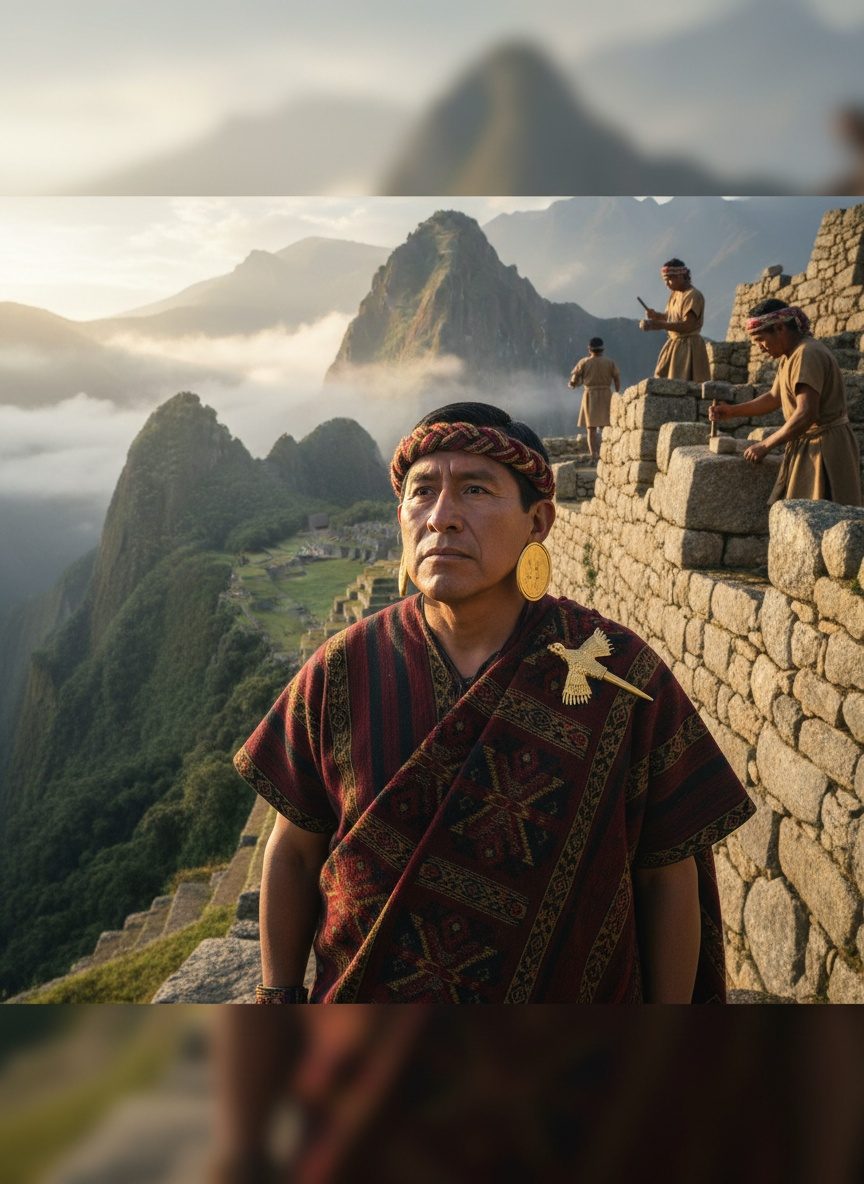
On a prominent ridge high above the heart of the Inca Empire, Pachacuti, the ninth Sapa Inca, known for his vision as much as his conquests, stood in contemplation. Before him was a landscape of unyielding stone and vertiginous slopes—a rugged canvas where others might see only inhospitable terrain. But to Pachacuti, it was the precise challenge he relished, an opportunity not just to showcase his empire's ingenuity but to communicate with the divine. At that moment, his decision took shape; they would build here, at the very top of the world, near enough to the heavens to touch the sun itself.
Historians suggest it was more than a desire for architectural magnificence that drove Pachacuti to this remote location. The site, likely uninhabited until then, was unimaginable for many as a seat of power. Practicality be damned, it was symbolic—a link between the abode of men and gods, a place where each breath tasted of the heavens. The name it would eventually bear, Machu Picchu, would echo through time as a testament to human ambition in the face of nature's daunting terrain.
The journey to construct this ethereal city began not with the chisel of a stone carver but with an overwhelming mandate: harness a landscape seemingly intended for the impossible. Commanding his labor force, drawn from all quarters of the vast Inca realm, Pachacuti pushed the limits of what was conceivable without the wheel, iron tools, or mortar. Instead, they would rely on a centuries-refined skill of masonry and the shared strength of thousands of hands.
Block by block, workers sculpted and fitted granite boulders with such precision that a blade of grass would struggle to find its way into the joints. Through an alchemy of simple tools and profound understanding of geometry, they not only mastered the stones but also the mountain. They shaped terraces that swept like green staircases along the mountainside—a cascading effect both utilitarian for agriculture and emblematic of a tiered heaven.
Imagine the daily labor as workers ascended the mountain ridge, the valley echoing with the clatter and murmur of souls in concert. Even without the aid of beasts of burden, their efforts were relentless. The Inca, masters of logistics and human organization, orchestrated this Herculean task with a seemingly inexhaustible resolve. They were not merely building a retreat; they were defining their cosmos in stone, each structure and stairway a piece of a celestial puzzle.
As much as the story of Machu Picchu's dizzying rise is one of human tenacity, it is equally about spiritual pursuit. It stood as a ceremonial site, a crossroads between the tangible and the ethereal. It is said that underneath its architectural beauty lay energy channels, connecting the terrestrial with the celestial, with stones strategically placed to align with astronomical events of cosmic importance.
The echoes of Pachacuti's creation extend far beyond the shapes in the stone. His dispatch sent ripples through time, influencing cultures long after the Inca faded into the pages of history. When Hiram Bingham, the American historian and explorer, arrived in 1911, he stumbled upon a relic enveloped in the grasp of nature. To his eyes, it was a "Lost City," a marvel of archeology and engineering—a matter of deep intrigue to the modern world that had long forgotten such achievements.
Machu Picchu now resonates differently. For the Incas, it was continuity—a place where the past met the present and, crucially, the future. For us, it remains a jigsaw of stone once elusive in our understanding and interpretation. What goes unspoken, beneath the awe of its construction, is the communal legacy of an empire that harnessed ingenuity not for conquest, but for creation.
Every carved stone at Machu Picchu is a testimony to transcendence—an echo of Pachacuti's gaze into eternity. Standing atop that same ridge today, with the Andes sweeping across the horizon, one might see more than a feat of human perseverance. They might glimpse an enduring conversation between people and the natural world, one that insists we, too, ask the same audacious questions about our future that Pachacuti did so many centuries ago.