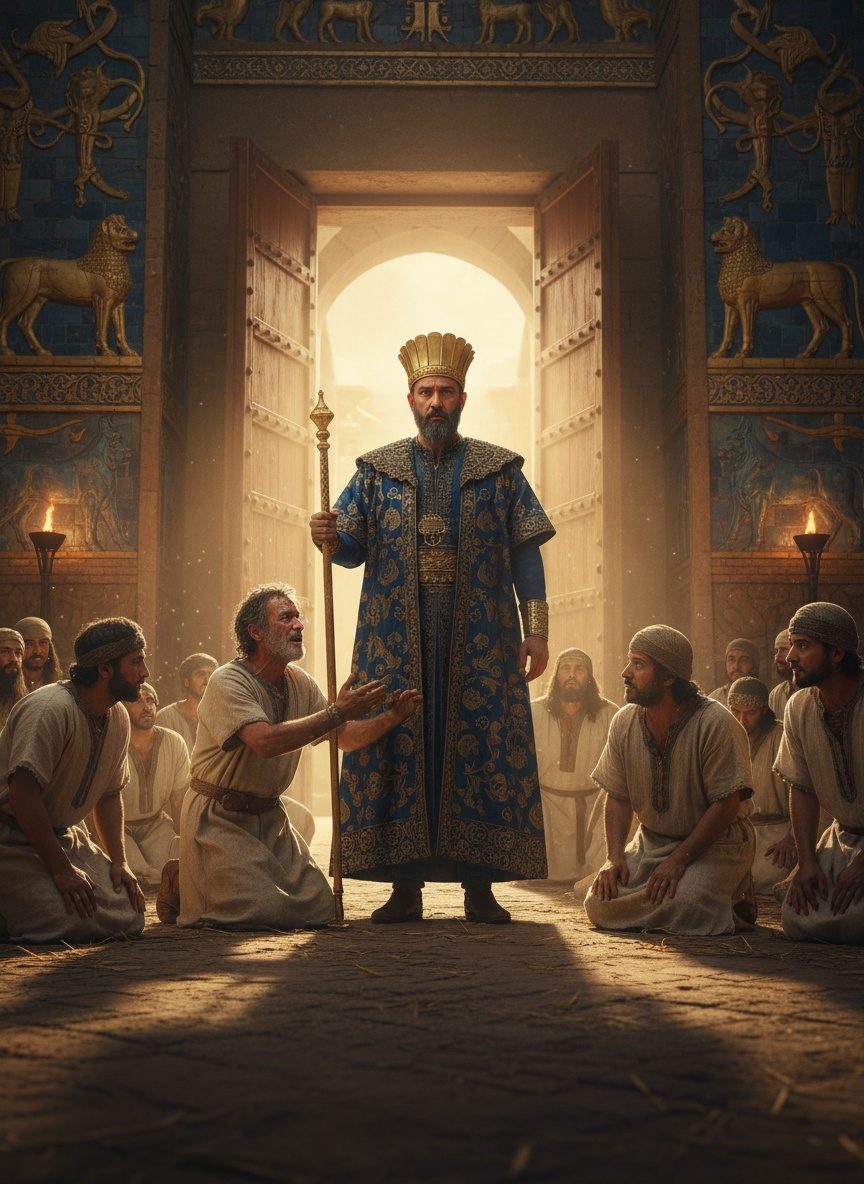
Democedes felt the heat of the torches on his face as he knelt before the stifling opulence of the Persian court. The whisper of silken robes and the shuffle of anxious bodies echoed through the marble hall. Beyond the golden throne, King Darius the Great towered on a dais, his regal visage marred by pain. Silent, hopeful eyes bore into him—since the authority of the Persian Empire had failed to alleviate the king's suffering, it was now upon Democedes, a slave, to succeed where others had not.
The Unlikely Healer
A man of Greek origin, Democedes of Croton was no ordinary slave. Known in his homeland as a skilled physician, his reputation rested on techniques that melded intuition with experience—an art lost on the many physicians of the Persian court who relied on methods that often lacked finesse. As Darius moaned in discomfort from an injury no Persian remedy could mend, Democedes hesitated, recalling the winding path that had brought him here. Captured during a raid, sold and re-sold, he had somehow landed in the luxurious yet merciless grip of the Achaemenid Empire.
Tasked now with healing the one who ruled the world stretching from Egypt to India, Democedes felt the weight of survival pressing on his shoulders. He worked with precision, mixing herbs, whispering ancient spells from his homeland, and manipulating the king's swollen limb with deft hands. Slowly, whispers of awe crept through the murmurs of concern. Darius felt the sharp edge of his agony begin to dull—a frank testament to Democedes' unique talents.
A Test of Favor
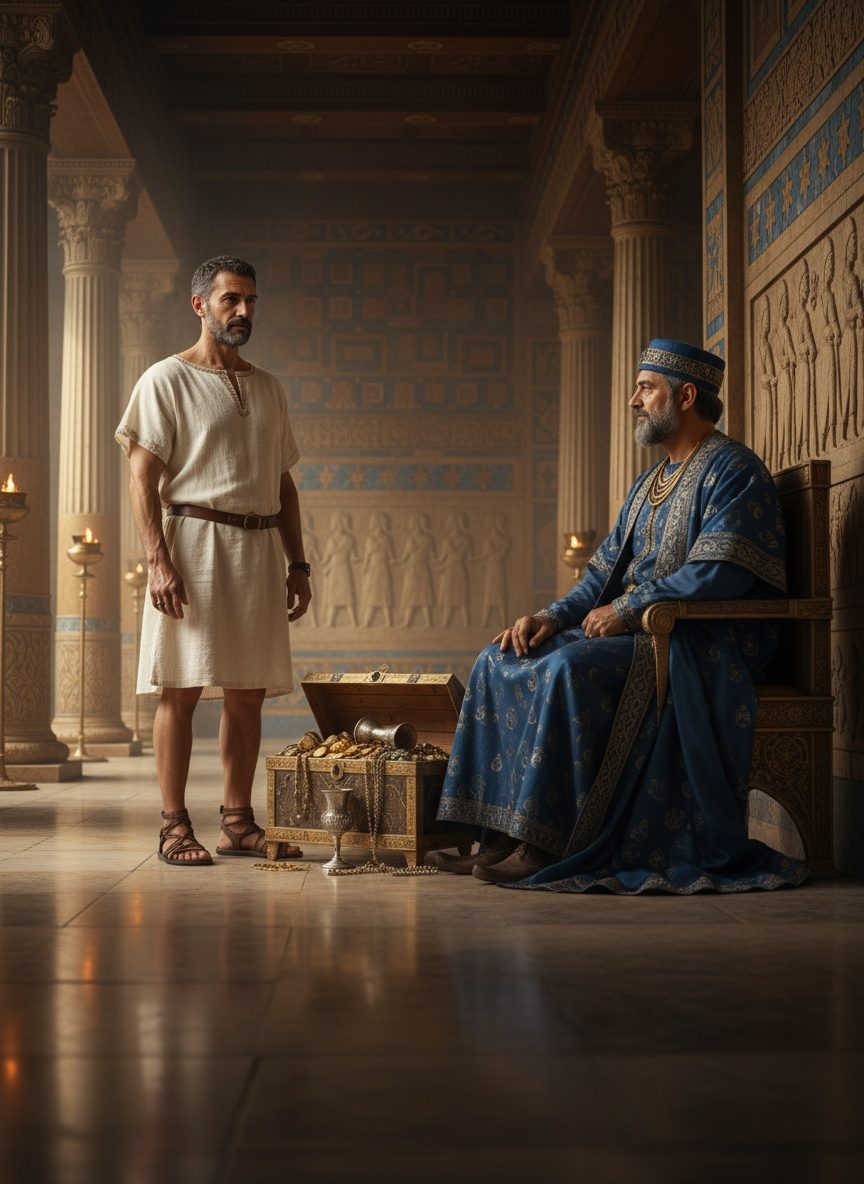
Days passed, and with careful treatment, Darius' wounds closed. The pain ebbed, then disappeared entirely. The court erupted in gratitude, yet behind their opulent masks, envy brewed in the hearts of those who had tried and failed. But Darius, now restored and grateful beyond measure, summoned Democedes to bestow a reward befitting a god. Gold illuminated the throne room—riches and slaves enough to establish Democedes as a man of prominence, even power.
Yet, when asked to speak of his heart's desire, Democedes didn’t bow to the allure of material wealth. The clink of golden promise felt hollow against the silent roar of longing that pressed from within. He sought only one thing—freedom, or more specifically, the freedom to return home to Greece.
His request drew startled gasps and a heavy silence fell, cut only by the rhythmic beat of anticipation. No one refused gifts from the Great King, yet Democedes stood unwavering, eyes reflecting not the shackles of present comforts, but the vibrancy of his past. For a moment, uncertainty flickered across Darius’ features. His empire was vast, a treasure trove of peoples and lands; yet Democedes’ longing for home was starkly unfamiliar—the kind of power Darius could not command.
Beyond Borders and Bondage
Darius' heart swayed, poised on the precipice of an unrecognizable compassion for a lowly slave from Croton. Throughout history, sovereigns had been great conquerors but seldom conquerors of their own hearts. In a gesture that would be whispered through corridors of power for generations, Darius acquiesced. Such mercy was not without condition; Democedes’ journey back to Greece would come with uncertainty.
He was to accompany a Persian expedition, a diplomatic mission armed with the dual charge of reconnaissance and goodwill, a vessel on which the king felt he could grant both favor and maintain chains. The conditions of this release shared their own burdens, tying Democedes to Persian aspirations of control even as he aimed to regain agency over his life.
A New Odyssey
The Aegean waves churned beneath the lumbering ship, scented winds singing hymns of freedom. Yet the looming presence of Persian guards became a stark reminder of the tenuous liberty. Each stroke of the oars that propelled Democedes closer to Greece signified the duality of hope tethered by vigilance. His journey, though deviating sharply from the heroic epics of Greek lore, became an odyssey of its own—a testament to a healer who managed to sway the mightiest hand.
Once ashore, Democedes faced a choice—complacency under subtle watch or defiance through escape. Greek cunning matched with the wisdom of experience led him to choose the latter. He evaded the Persians, slipping away like the folk tales his mother once weaved, back into the arms of his homeland, his odyssey shaping into legend.
A Story's Enduring Echo
In our time, the tale of Democedes stands not simply as a story of an acute medical success but as a narrative that compels reflection on the perennial human quest for home. It offers a lens to understand the complexities of favor and bondage, the delicate dance between power and compassion, and the timeless lure of one's roots. As Darius wept and Democedes sailed, they inadvertently taught that the greatest gift bestowed may not be gold or land, but the far-reaching impact of choice—both for the ruler who grants it and the one who receives. Today, this story carries an echo across centuries, defying borders even as it defines what it means to find one's place in the world.