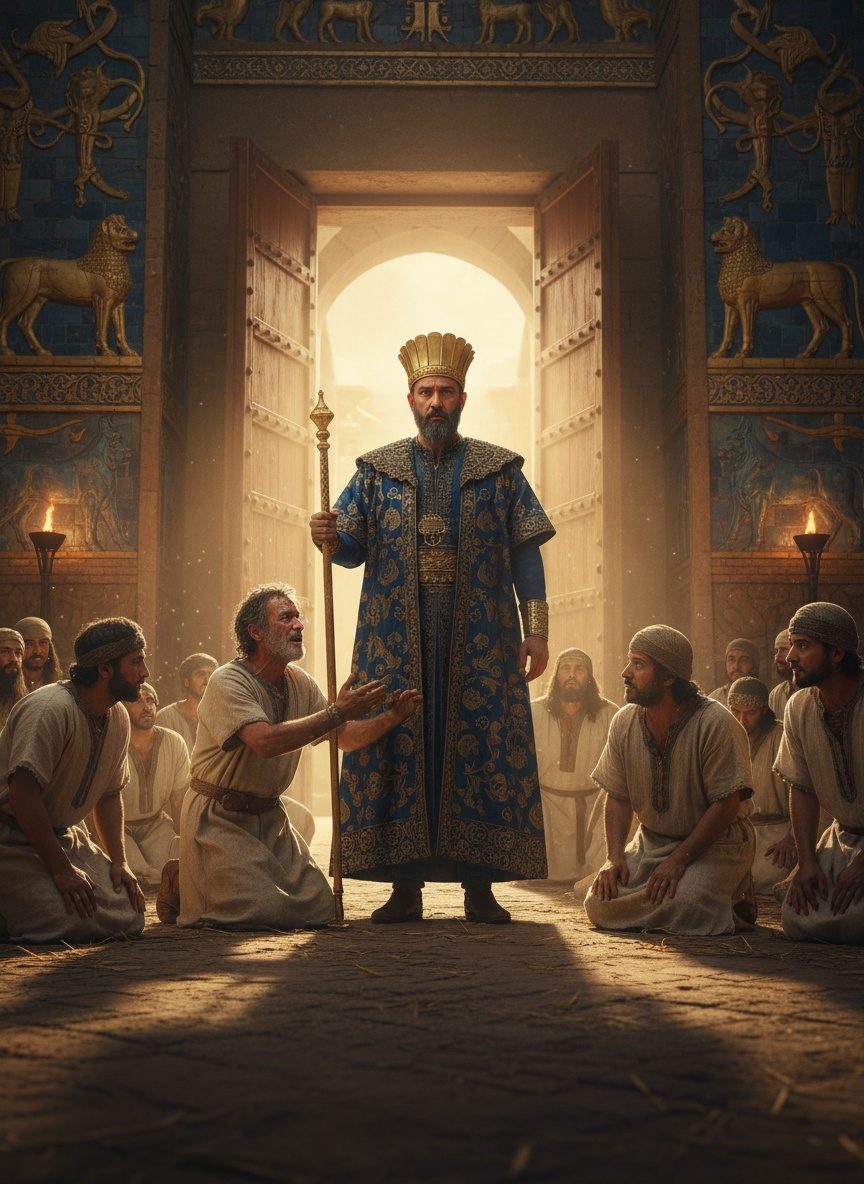
October 12, 539 BC. Silence blanketed Babylon's grand gates, where the anticipated clash of swords never came.
The Great City Awaits Its Fate
As the crisp autumn air settled over Babylon, the most formidable city of its time stood strangely hushed. Once bustling with merchants and scholars from across the known world, now its streets were occupied with an anxious anticipation. A city encapsulated by impregnable walls, Babylon had long been the jewel of the Mesopotamian plains, a fortress reputedly impenetrable. Yet on this day in 539 BC, those who called it home peered over ramparts and through curtained windows, unsure of the destiny that awaited them.
For months, the winds of change had been stirring across the empire’s western edges. Whispers of Persia’s rising power grew into a tempest of fearsome tales about Cyrus the Great, the young king whose military campaigns had already reshaped much of the ancient world’s political landscape. As the sun rose higher, illuminating the Euphrates River, it became ever more apparent—Babylon stood on the precipice of monumental change.
The Unlikely Alliance that Sealed a City’s Fate
At the heart of Babylon’s unexpected capitulation was a calculated move by a man named Gobrias. Renowned both for his insight and for once being a trusted Babylonian noble, Gobrias had turned against his city, aligning himself with Cyrus. History tells us little of Gobrias’s personal vendetta or strategic motivations, but his betrayal was critical. With precise coordination, he orchestrated the unthinkable—the opening of Babylon's mightiest defenses without the shedding of a single drop of blood.
Under the cover of darkness, as feasts and reveries diverted attention within the city’s splendid halls, Gobrias enacted his plan. The gates were thrown open, not with the fanfare of an invading force or the battering of soldiers’ fists, but with a whispered promise of transformation. Cyrus the Great entered Babylon as though passing through a threshold prepared for a guest, not an enemy. It was a conqueror's entrance unlike any the world had witnessed prior, a silent victory that spoke as much of cunning as it did of an evolving ethos: conquest through wisdom, not just warfare.
Cyrus the Liberator: Breaking Chains and Restoring Faith
Once inside, Cyrus embarked upon actions that would astonish the ancient world. Rather than subjugating the populace, he enacted policies of reconciliation and freedom, a stark contrast to the brutal suppressions typical of newly seized territories. The accounts, carved into history, tell of a king whose approach was as progressive as it was unexpected. At the heart of his strategy was the liberation of Babylon’s captive peoples.
Among those freed were exiled communities who had languished in Babylon’s shadow, their cultures and traditions suppressed under foreign rule. Chief among these were the Israelites, whose plight in captivity had echoed far and wide. Cyrus, with an edict that would resonate throughout the ages, decreed their freedom, granting them the opportunity to return to their homeland. Moreover, he restored their sacred objects, an act that demonstrated profound respect for their faith and identity.
This decree not only broke physical chains but also reignited spiritual fervor among the freed peoples. It was an act emblematic of Cyrus’s broader vision—an empire strengthened by diversity and guided by benevolence, contradiction of the brutal subjugation of the past. Thus, Babylon, once emblematic of captivity, became a symbol of liberation under his rule.
The Unseen Impact of a Silent Victory
Cyrus’s conquest of Babylon, accomplished without battle, reverberated through history. His unique approach fundamentally altered views on governance and empire-building. The era of oppressive monarchies started to sense the stirrings of change, as Cyrus's policies of cultural respect and religious tolerance reshaped conventional wisdom. This integration of diplomacy and military might created ripples throughout the lands, heralding a new era that redefined the relationship between ruler and subject.
Such unprecedented actions prompted ancient scribes and even contemporary historians to study this period closely for its lessons on leadership and human rights. The notion of setting captives free and celebrating rather than suppressing diversity planted the seeds of tolerance that would burgeon in later civilizations, capturing the imaginations of thinkers centuries later.
From Walls of Babylon to Walls of Time
As the silence of Cyrus’s conquest lingers through the corridors of history, we are reminded of an age where might often ruled, yet brilliance and humility had their decisive moments. In a world that had only known the force of weapons as a means of dominance, Cyrus's actions demonstrated how compassion, liberation, and respect could unite disparate peoples under a long-lasting peace.
The fall of Babylon without a battle, the freeing of captives, and the restoration of their autonomy resound not merely as an effective strategy but as a profound statement on human dignity. It serves as a testament to the possibilities of leadership that prioritizes humanity over hierarchy, and unity over division. In facing the towering walls of Babylon, Cyrus the Great reminded us that the strongest empires are not forged through sword and shield alone, but through the conscientious embrace of one's fellow man. A lesson that continues to beckon across time, urging each generation to find strength not only in conquest but in the liberation and dignity of every individual.