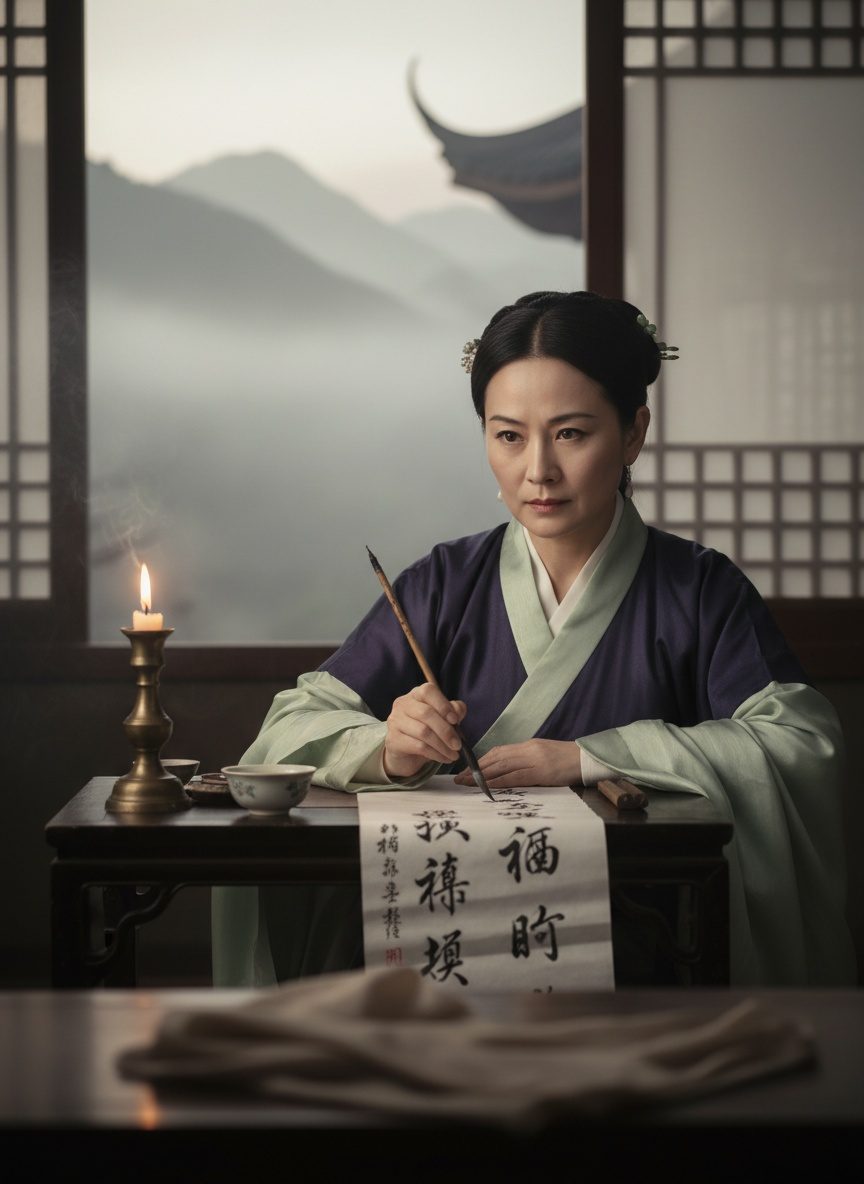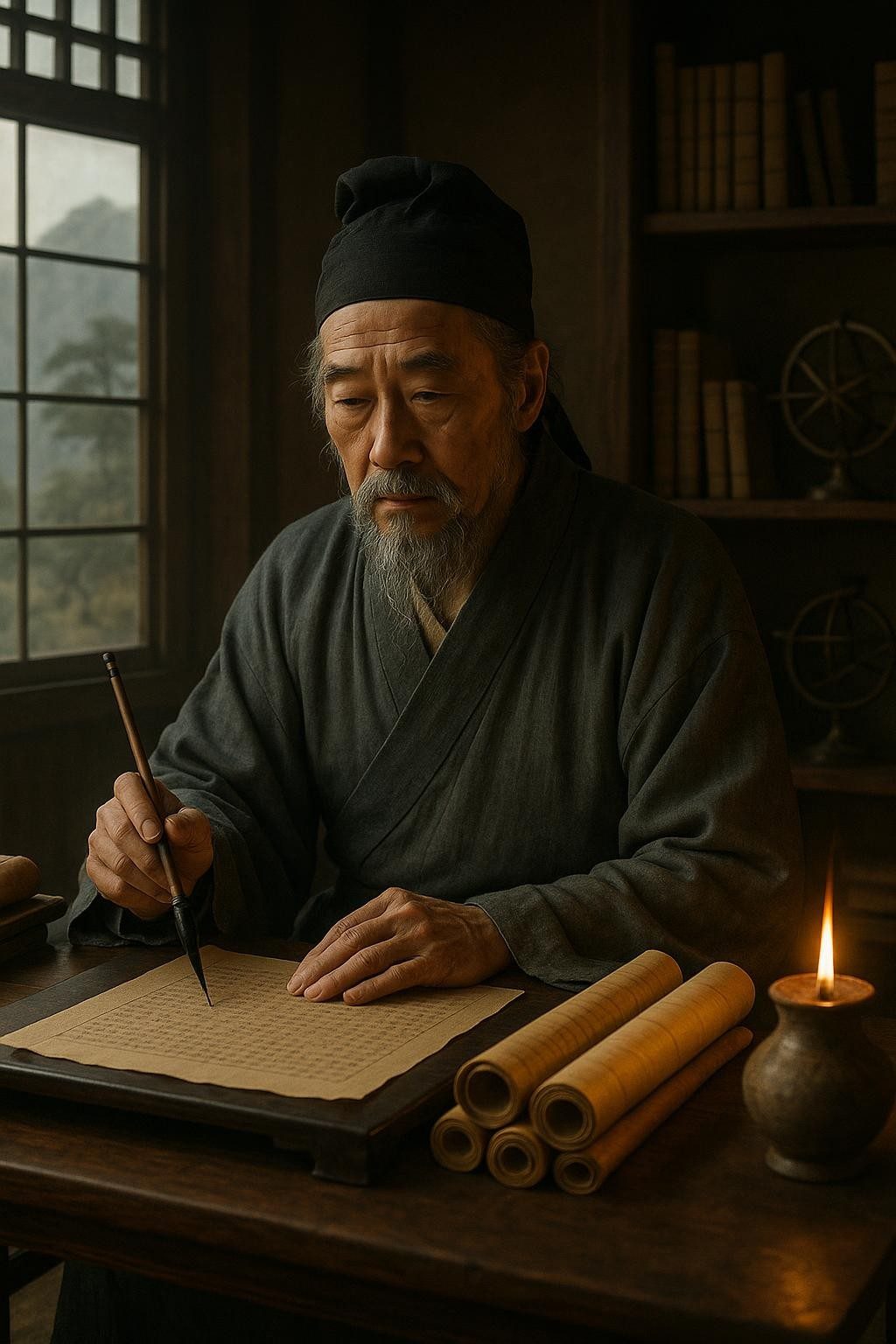
The air was crisp and thin atop the rolling hills of Huqiu, the morning mist cloaking the verdant landscape in a mysterious shroud. The only sound breaking the silence was the gentle rustling of bamboo leaves, whispering secrets under the pale light of dawn. It was in this secluded sanctuary, exiled from the imperial courts, that Shen Kuo gazed towards the heavens, where his focus pivoted not on the political turmoil that had cost him his status, but on the celestial ballet of stars and planets. It was here, on this remote estate, that Shen Kuo's indomitable spirit would pen a manuscript destined to transcend civilizations and eras, even if his homeland would offer him little gratitude.
Mapping the Frontiers of Knowledge
Before his fall from grace, Shen Kuo had been a figure of immense stature in the Song Dynasty's court, valued for his intellect and capability to transform the kingdom's understanding of the world. Born into a scholarly family, Shen was steeped in the arts and sciences from a young age. He journeyed across China's vast landscapes as a diplomat and military strategist, tasked with mapping the empire's frontiers, particularly those shared with restless neighbors. Amid dense forests and barren deserts, Shen unraveled the riddles of topography and geography, crafting maps that would guide generations to come.
Among his numerous accomplishments was his work on reforming the calendar, an endeavor driven by his observations of celestial bodies. Under a dynasty that valued harmony and precision in governance, the accuracy of lunar and solar cycles was paramount. The old calendar had begun to lag behind the actual seasons, sowing confusion and inefficiencies. Shen reformed this system, aligning human activities more closely with the rhythms of nature, showcasing an early intersection of science and administration. Yet his contributions went far beyond mere practicality; they forged a legacy of inquiry that persisted even as the memory of his name faded from China's collective remembrance.
The Book of Paramount Importance
Disgraced and isolated, Shen Kuo turned his gaze inward to his garden estate, where the natural world laid itself bare to his inquisitive mind. In these contemplative surroundings, he wrote the *Dream Pool Essays* (Mengxi Bitan), a compilation of his scientific and philosophical investigations spanning disciplines as diverse as astronomy, geology, meteorology, and archeology. Here, Shen explored with unique foresight thoughts about sedimentation and land formation, noting the shifting banks of China's mighty rivers. His analysis of fossilized bamboo, discovered beneath layers of earth, hinted at climatic changes long before such concepts were widely adopted.
Perhaps the most astonishing section of his work pertained to astronomy. Through laborious night readings and comprehensive calculations, Shen extrapolated the orbits of heavenly bodies, contributing significantly to the understanding of solar and lunar eclipses. His methods were not mere musings of an idle recluse; they rivaled the explorations that would only gain prominence centuries later in the Western world. Yet, among his contemporaries, these assertions and ideas found little recognition, eclipsed by the shadow of courtly politics that continued to spurn him.
Scientific Vision in an Age of Tradition
The intellectual landscape of the Song Dynasty was vibrant, standing on the cusp of ancient tradition and burgeoning innovations. It was an era marked by advances in printing, literature, and technology, yet these strides were anchored in Confucian thought, which prized hierarchy and stability. Shen Kuo, with his unorthodox ideas and cross-disciplinary analyses, embodied a spirit of curiosity that threatened the established norms.
This inclination towards scientific exploration was at odds with the ideological priorities of his times, resulting in his alienation. Even so, Shen's essays circulated quietly, passed among scholars who marveled at his insights but hesitated to challenge convention. As China grappled with external pressures and internal rigidity, the radical nature of scientific discovery was often relegated to the alcoves of whispers, leaving Shen Kuo's remarkable achievements largely forgotten within the annals of history. His work waited patiently for its due acknowledgment as tides of globalization brought new appreciation for his methodologies and findings.
A Legacy Reclaimed
Shen Kuo's journey from esteemed imperial adviser to obscured author in exile paints a picture of the paradox faced by prophets in their own homeland—esteemed yet isolated, prescient yet uncelebrated. His story reveals the intricate relationship between power, knowledge, and recognition, drawing parallels to other forgotten pioneers whose voices were often silenced by their societies. The *Dream Pool Essays* stand as a stark reminder of the human capacity to transcend adversity, as Shen's ability to explore, innovate, and articulate his extraordinary vision was not dampened by the isolation inflicted upon him.
Today, as scholars from around the globe rediscover the contributions of Shen Kuo, his work illuminates the layers of knowledge that laid dormant, urging us to look beyond our immediate horizons and consider the breadth of human understanding. In doing so, we honor not only those like Shen, who dared to chart the heavens from an obscure garden estate but all whose insights were dismissed by their contemporary societies. Shen Kuo may never have received China's gratitude during his lifetime, but his vision map remains vividly engraved across the arch of history's boundless sky.